swiss medicaXXI century S.A.
Behind every MS diagnosis is a personal story — one shaped by uncertainty, treatment decisions, and life changes. Several celebrities with MS have chosen to speak openly about their experiences, from the first symptoms and delayed diagnoses to career changes and the uncertainty of life with the condition.
Their stories remind us that there is no single “typical” MS journey. This article explores these experiences, explains when possible neurological symptoms should be evaluated, and examines how emerging approaches such as stem cell therapy are being studied as part of the future of MS care.
Why Stories From Celebrities With MS Matter
Public accounts from famous people with MS can help others understand a condition whose effects are not always visible. By discussing fatigue, pain, changes in mobility, cognitive difficulties, or the use of walking aids, public figures can challenge assumptions about what disability looks like.
Their stories may also encourage people to seek medical advice for persistent neurological symptoms and make it easier for patients and families to talk about diagnosis, work, independence, and support. Because MS can develop at different ages and stages of a career, these experiences also illustrate how widely its impact can vary.
Eight Celebrities With MS Who Shared Their Stories Publicly
These famous people diagnosed with MS have described different first symptoms, paths to diagnosis, and effects on their work and daily lives. The dates below refer to when each person publicly shared the diagnosis—not necessarily when MS was first diagnosed.
| Public figure | Known for | Publicly disclosed MS |
| Selma Blair | Acting | 2018 |
| Christina Applegate | Acting | 2021 |
| Jamie-Lynn Sigler | Acting | 2016 |
| Jack Osbourne | Television and media | 2012 |
| Montel Williams | Television and advocacy | 1999 |
| Teri Garr | Acting | 2002 |
| John King | Journalism | 2021 |
| Emma Caulfield Ford | Acting | 2022 |
Selma Blair
Selma Blair, known for films including Cruel Intentions, Legally Blonde, and Hellboy, disclosed her diagnosis in 2018. The actress with multiple sclerosis has described years of unexplained symptoms followed by difficulties with walking, balance, coordination, and speech. She has frequently appeared in public with a cane and spoken about mobility aids as practical tools rather than something to hide.
The 2021 documentary Introducing Selma Blair followed her life after diagnosis and gave viewers a personal account of treatment, parenting, and adapting to disability. Blair has continued to advocate for greater visibility and inclusion for people with chronic illnesses and disabilities.
Christina Applegate
Christina Applegate is among the celebrities diagnosed with MS while an important project was underway. The Emmy-winning actor, known for Married… with Children and Dead to Me, received her diagnosis in 2021 during production of the final season of Dead to Me.
Filming paused while she began treatment, and completing the series required changes to the schedule and the way some scenes were staged. The actress with multiple sclerosis has since spoken candidly about numbness, mobility limitations, fatigue, and pain, as well as earlier balance and coordination problems that she did not initially recognize as possible MS symptoms. She now co-hosts the MeSsy podcast with Jamie-Lynn Sigler.
Jamie-Lynn Sigler
Among female celebrities with MS, Jamie-Lynn Sigler offers a particularly revealing example of how long a diagnosis may remain private. Best known for playing Meadow Soprano in The Sopranos, she was diagnosed at around age 20 (in 2000) but did not disclose the condition publicly until 2016.
Sigler has explained that she initially feared the diagnosis could limit her acting opportunities. As walking became more difficult, hiding her symptoms required excuses and became increasingly stressful. She has described needing to rest after walking for extended periods, finding stairs challenging, and having to think carefully about each step. Since disclosing her diagnosis, she has spoken openly about MS, work, parenting, and accepting support.
Jack Osbourne
Television personality and producer Jack Osbourne was diagnosed in 2012 at age 26. He sought medical attention after experiencing visual changes and was found to have optic neuritis, with substantial vision loss in his right eye. He has also described numbness and other neurological symptoms.
As one of the famous people living with MS, Osbourne has used interviews and awareness initiatives to discuss the condition and challenge the assumption that it affects only women. He has continued working in television and participating in physically demanding projects, while emphasizing that the course of MS and the limitations it creates differ between individuals.
Montel Williams
Montel Williams, best known as the host of The Montel Williams Show, announced his MS diagnosis in 1999. He has described neurological symptoms that began years earlier, as well as the chronic pain that later became one of the most difficult parts of his condition.
As one of the famous people living with MS for several decades, Williams has used his public platform to support multiple sclerosis awareness, research, and patient advocacy. He has also emphasized that treatments or symptom-management strategies used by one person should not automatically be considered appropriate for another.
Teri Garr
The late actress Teri Garr was one of the earlier celebrities with multiple sclerosis to discuss the condition publicly. Known for Young Frankenstein, Close Encounters of the Third Kind, and Tootsie, Garr began experiencing unusual sensations in her right leg in the 1980s. The symptoms later affected her right arm, and she was diagnosed in 1999.
Garr disclosed the diagnosis in 2002 after initially fearing that it could affect her employment. She subsequently became a spokesperson for the National Multiple Sclerosis Society and used humor to challenge misconceptions about the condition. Garr died in October 2024 at age 79 from complications of MS. Her openness remains an important part of the history of MS advocacy.
John King
CNN journalist John King publicly disclosed that he had multiple sclerosis during an on-air discussion about COVID-19 vaccination in October 2021. He explained that he had been living with the diagnosis privately for 13 years and that medication used to manage his condition had left him immunocompromised.
King chose to speak publicly while discussing the risks COVID-19 posed to people with compromised immune systems. His disclosure connected a private diagnosis with a broader public-health discussion, illustrating how decisions made by others can affect people who are medically vulnerable.
Emma Caulfield Ford
Emma Caulfield Ford, known for Buffy the Vampire Slayer and WandaVision, was diagnosed in 2010 after waking with tingling and reduced sensation on the left side of her face. Like some other female celebrities with MS, she initially kept the diagnosis private because she feared losing acting opportunities.
Caulfield Ford continued working, but she later described how heat during the production of WandaVision worsened her fatigue and weakness. She disclosed her diagnosis in 2022, explaining that she wanted to be more open with her daughter and better able to request appropriate precautions at work. She has also expressed an interest in supporting MS awareness and research.
What These Famous People With MS Show About the Condition
Although these experiences differ, together they illustrate why multiple sclerosis can be difficult for other people to recognize and why its impact should not be judged by public appearances alone.
MS Symptoms May Be Invisible to Other People
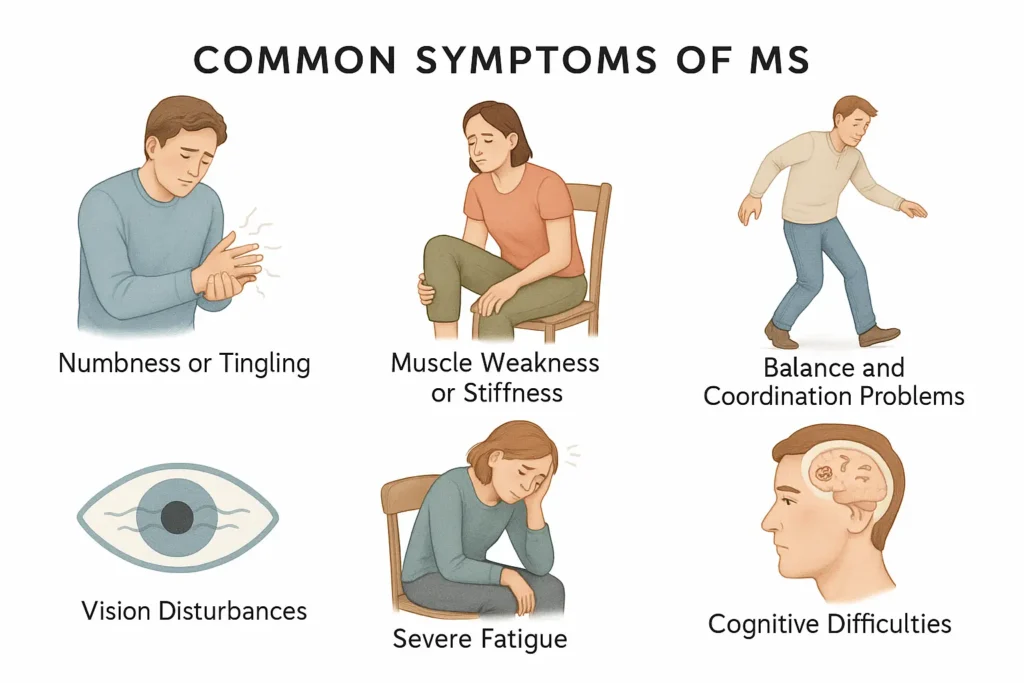
Some multiple sclerosis symptoms can significantly affect daily life without being apparent in a photograph, interview, or brief interaction. Fatigue, pain, numbness, altered sensation, visual disturbances, and cognitive difficulty may not produce an obvious external sign.
A person may also look well while sitting but experience balance problems, weakness, or difficulty walking when they stand. This gap between appearance and experience can lead others to underestimate the support or adaptations someone needs.
The First Symptoms Are Not the Same for Everyone
The famous people with MS profiles above have described very different early warning signs, including:
- loss of vision or other visual changes;
- tingling, numbness, or reduced sensation;
- balance and coordination difficulties;
- weakness or changes in walking;
- fatigue and pain;
- speech or cognitive changes.
These symptoms are not unique to MS and may have many other causes. Their significance depends on factors such as how long they last, whether they recur, which parts of the body they affect, and what neurological examinations and testing reveal.
A Public Career Does Not Mean the Condition Is Mild
A polished performance, interview, or social media post shows only a small part of someone’s life. Public appearances may be planned around periods of greater energy, while mobility aids, assistance, rest periods, or workplace accommodations remain outside the frame.
Some performers complete projects with adjusted schedules or modified scenes. Others reduce their workload or avoid conditions—such as physically demanding environments or excessive heat—that aggravate their symptoms.
Diagnosis Can Change Work, Family, and Daily Routines
An MS diagnosis does not automatically mean that someone must stop working or give up their independence. However, maintaining these parts of life may require changes. Flexible schedules, accessible environments, help from family members, and clearer communication with employers can all become important.
The appropriate adaptations depend on the person’s symptoms, occupation, family responsibilities, and how the condition changes over time.
What Can Life With MS Look Like?
People often ask, “Can you live a normal life with MS?” There is no single version of life after diagnosis. The experiences of celebrities living with MS show some possible challenges and adaptations, but they cannot represent the full range of the condition.
MS Is Different for Every Person
Multiple sclerosis varies in the symptoms it causes, their severity, the frequency of relapses, response to treatment, and the rate of progression. Some people continue working and remain independent for many years, while others develop limitations that require substantial changes to their routines and support.
Symptoms can also fluctuate. A person may have days or periods when activities feel manageable and others when fatigue, pain, weakness, or problems with balance make the same tasks more difficult.
Relapsing and Progressive MS Do Not Follow the Same Pattern
In relapsing forms of MS, periods of new or worsening neurological symptoms are followed by partial or complete recovery. Progressive MS is characterized by neurological function gradually worsening over time, although the rate of change and the symptoms affected still vary. Some people initially have a relapsing course and later develop secondary progressive MS.
Work and Independence May Require Adaptation
Continuing to work may involve flexible hours, remote work, planned rest periods, accessible transport, or changes to specific duties. Physical and occupational therapy can help people develop strategies for movement, energy conservation, and everyday tasks.
Symptom management, mobility aids, and workplace accommodations are tools for maintaining participation and independence—not evidence that a person has failed to manage the condition.
What Stories of Celebrities Diagnosed With MS Cannot Tell You
Public accounts can raise awareness and help people feel less isolated, but they cannot predict how the condition will affect another person or determine which treatment that person needs.
One Person’s Symptoms Cannot Predict Another Person’s MS
Celebrity experiences should not be treated as a diagnostic checklist. Similar symptoms can have many possible causes, while MS itself can begin in different ways. Even two people who report numbness, fatigue, or vision problems may have different clinical findings, disease courses, and support needs.
Personal stories are therefore most useful for increasing awareness—not for confirming or excluding a diagnosis.
One Person’s Treatment Is Not a Treatment Plan
An approach that appears to help one person may be ineffective or inappropriate for another. Treatment decisions depend on factors such as:
- the type and activity of MS;
- previous therapies and response to them;
- relapses and changes seen on MRI;
- current symptoms and level of disability;
- age, general health, and individual risks.
Medication should not be started, changed, or discontinued based on a celebrity interview or social media post.
Stem Cell Therapy Is Attracting Growing Interest—But Could It Be a Supportive Option in Your Case?
Complete the form to request a free preliminary case review. Our medical team will consider your MS diagnosis, disease course, previous treatment, recent test results, current symptoms, and general health to assess whether stem cell therapy may be a suitable option.

Medical Advisor, Swiss Medica doctor
Public Stories Rarely Show the Entire Medical Picture
Public figures may choose not to disclose their exact MS type, MRI findings, medication history, relapses, adverse effects, or reasons for selecting a particular treatment. They may also share an update at one point in time without documenting what happens later.
This missing context makes it impossible to determine the overall effectiveness of a treatment from a public account alone—even when the person describes meaningful improvement.
When Should Possible MS Symptoms Be Evaluated?
One lesson from the stories of celebrities with MS is that persistent or recurring neurological changes should not be ignored. Timely medical evaluation can help identify the cause and, if MS is diagnosed, support appropriate treatment planning. Seeking medical advice does not mean that MS is the most likely explanation; it allows a clinician to investigate the symptoms properly.
Symptoms That Deserve Medical Attention
A medical evaluation may be appropriate for symptoms such as:
- persistent numbness or weakness;
- loss of vision or pain with eye movement;
- unexplained balance or coordination problems;
- new difficulty walking;
- neurological changes affecting one side of the body;
- symptoms that last for days or repeatedly return.
Many conditions can cause these problems, including infections, migraine, nerve compression, vitamin deficiencies, vascular conditions, and other neurological disorders. Sudden severe symptoms—particularly weakness, difficulty speaking, or loss of vision—may require urgent medical attention.
How Doctors Investigate Possible MS
There is no single test that independently confirms multiple sclerosis. Assessment usually begins with a detailed medical history and neurological examination. Doctors consider the type of symptoms, when they began, how long they lasted, and whether separate episodes affected different parts of the nervous system.
MRI can identify lesions in the brain or spinal cord. Depending on the findings, additional investigations may include blood tests to rule out other causes, a lumbar puncture to examine cerebrospinal fluid, evoked potential testing, or an eye examination. The results must be interpreted together by an appropriately qualified clinician.
Where Stem Cell Therapy Fits Into MS Treatment
The term “stem cell therapy” can refer to different procedures. Autologous hematopoietic stem cell transplantation (aHSCT), which uses chemotherapy and blood-forming stem cells to rebuild the immune system, is not the same as therapy involving mesenchymal stem cells (MSCs). The potential benefits, risks, and appropriate candidates differ substantially.
MSC-Based Approaches Used in Treating MS
MSC-based approaches are being investigated for potential immunomodulatory and neuroprotective effects. Research examines whether MSCs and the substances they release can influence inflammatory signalling or support conditions involved in protecting nervous tissue.
These biological processes cannot be felt or observed directly by patients. In everyday life, a possible response is instead assessed through changes in symptoms and function. In follow-up interviews, some patients have reported less fatigue, pain, or muscle cramping; improved strength, balance, and walking; and a greater capacity for physiotherapy and everyday activities.
At the Swiss Medica clinic, MSC-based therapy is included in an individualized MS protocol following a review of the patient’s diagnosis and current health. It is provided as part of a broader program that may also include other cellular procedures, rehabilitation, and supportive therapies.
Swiss Medica does not present MSC-based therapy as a guaranteed way to stop MS, rebuild myelin, or reverse established neurological damage. Cell-based approaches should not replace neurological follow-up or lead a patient to discontinue prescribed medication without medical supervision.
Symptom Management and Rehabilitation Also Matter
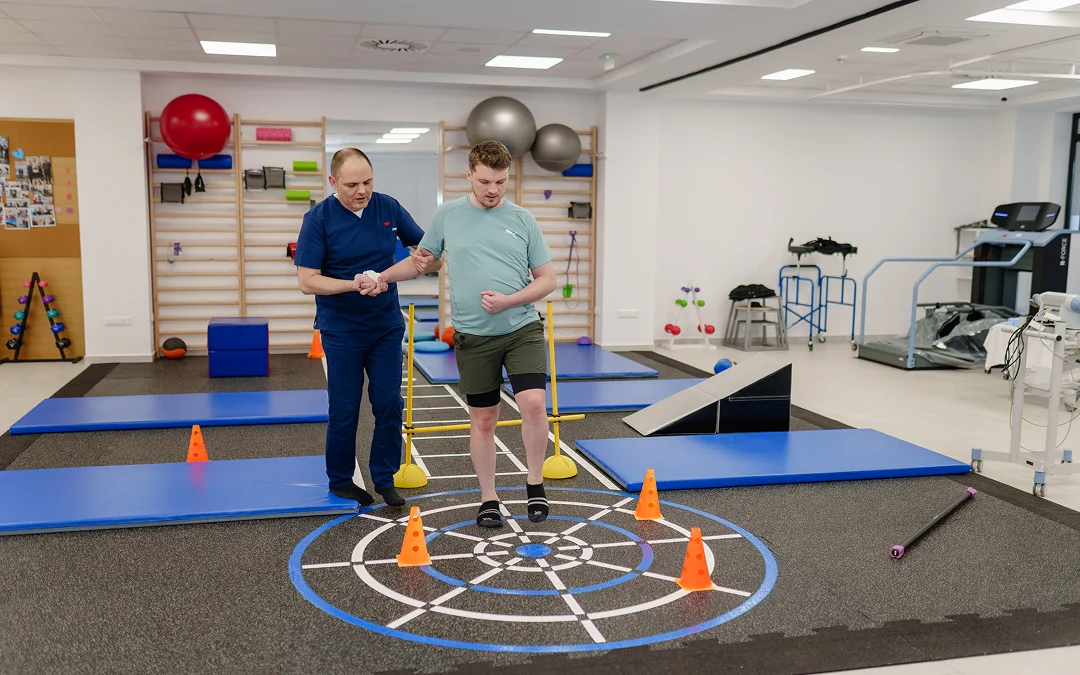
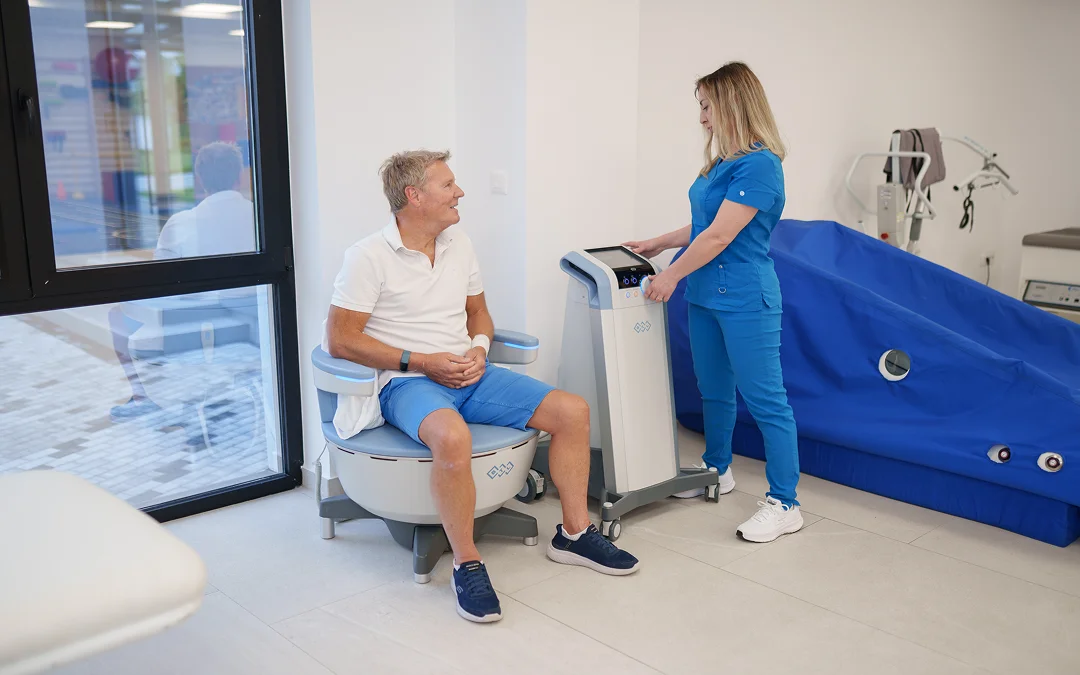
At Swiss Medica, regenerative treatment programs for MS usually include physiotherapy, occupational therapy, fatigue and pain management, mobility support, and psychological care. Speech or swallowing therapy may be recommended when these functions are affected. These measures do not alter the underlying disease in the same way as disease-modifying medication, but they can support safety, independence, and quality of life.

Why Individual Assessment Is Necessary
Before considering a cell-based program, doctors need to review the person’s MS type, disease activity, MRI findings, current disability, previous therapies, infections, and general health. They must also consider whether continuing neurological treatment or rehabilitation is necessary alongside any regenerative approach.
At Swiss Medica, physicians review medical records to determine whether treatment can be considered and how a protocol would need to be adapted. You can also read about Swiss Medica, its medical approach, clinical facilities, and patient-support process.
Find Out Whether an Individual Program Could Be Considered
As the stories in this article show, no two cases of MS follow exactly the same course. Complete the form and submit your available medical records for a free preliminary review. Our physicians will assess whether a Swiss Medica program could be considered in your case and identify any additional records needed before a treatment decision can be made.
Medical Advisor, Swiss Medica doctor
FAQ
1. Which Celebrities With MS Have Spoken Publicly About Their Diagnosis?
Selma Blair, Christina Applegate, Jamie-Lynn Sigler, Jack Osbourne, Montel Williams, John King, and Emma Caulfield Ford have discussed their diagnoses publicly. The late actress Teri Garr also became an influential advocate after disclosing her diagnosis in 2002.
2. Can People With MS Continue Working?
Many people continue working after an MS diagnosis, although they may need adaptations. Flexible schedules, remote work, planned rest periods, accessible workplaces, modified duties, and mobility support can help. The appropriate changes depend on the person’s symptoms and occupation.
3. Can You Live a Normal Life With MS?
Many people with MS maintain careers, relationships, hobbies, and independence. However, “normal life” means different things to different people. Symptoms, relapses, disability, and treatment response vary, and some people need substantial adjustments or ongoing assistance.
4. Is MS Always Disabling?
MS does not affect everyone in the same way. Some people develop relatively mild limitations, while others experience progressive disability affecting walking, vision, coordination, cognition, or other functions. Early treatment and appropriate symptom management may help reduce the condition’s impact.
5. What Symptoms Do People With MS Commonly Experience?
Possible symptoms include fatigue, numbness, weakness, vision changes, balance problems, muscle stiffness, pain, bladder or bowel difficulties, and changes in memory or concentration. The combination, severity, and duration of symptoms differ considerably between individuals.
6. Can MS Symptoms Be Invisible?
Yes. Fatigue, pain, numbness, visual disturbances, cognitive difficulty, and bladder problems may not be apparent to other people. Someone may look well during a short interaction while managing substantial symptoms, assistance needs, or recovery time outside public view.
7. Are Celebrity MS Treatment Stories Useful for Patients?
They can increase awareness, reduce isolation, and show how people adapt to the condition. However, they rarely provide complete information about MS type, test results, treatment history, or risks. They should not be used to select or assess a treatment.
8. Can Stem Cell Therapy Help People With MS?
Different stem cell approaches have different purposes, evidence, and risks. MSC-based therapies are being studied for potential immunomodulatory and neuroprotective effects, but they cannot guarantee neurological repair or symptom improvement. Suitability requires an individual medical assessment and continued neurological care.
References:
American Brain Foundation. Selma’s Story.
CBS News. Christina Applegate: “I Wish I Had Paid Attention” Amid Worsening Symptoms of Multiple Sclerosis. November 2, 2022.
People. Jamie-Lynn Sigler Reveals How She Hid Her MS From the World for 16 Years.
Time. Jack Osbourne’s MS: After the Diagnosis. June 2012.
CBS News. Montel Williams Has MS. August 23, 1999.
Associated Press. Teri Garr, the Offbeat Comic Actor of Young Frankenstein and Tootsie, Has Died. October 29, 2024.
ABC News. CNN’s John King Hopes Revealing His MS Diagnosis Helps People Protect Against COVID-19. October 20, 2021.
Vanity Fair. Emma Caulfield Ford Is Fighting MS, but “Not Crumbling” in Fear. October 4, 2022.
Mayo Clinic. Multiple Sclerosis: Diagnosis and Treatment.
National Health Service. Multiple Sclerosis.
Multiple Sclerosis International Federation. Stem Cell Therapy. Updated August 1, 2025.
Petrou P, et al. Beneficial Effects of Autologous Mesenchymal Stem Cell Transplantation in Active Progressive Multiple Sclerosis. Brain. 2020;143(12):3574–3588.
Muraro PA, et al. Autologous Haematopoietic Stem Cell Transplantation for Treatment of Multiple Sclerosis and Neuromyelitis Optica Spectrum Disorder: Recommendations From ECTRIMS and the EBMT. Nature Reviews Neurology. 2025.
National Multiple Sclerosis Society. Research on Stem Cells and MS.