swiss medicaXXI century S.A.
Stromal vascular fraction (SVF) is a mixture of different cells obtained from adipose, or fat, tissue. It may contain different cell types, and is being studied in regenerative medicine for its potential to support tissue repair and regulate inflammation.
Understanding the meaning of stromal vascular fraction is important when exploring its role in regenerative medicine. In this article, we will go over more details about it and how it can be used in a variety of medical conditions.
What Is Stromal Vascular Fraction?
Fat tissue does more than store energy. It contains a network of small blood vessels and cells that help maintain, protect, and repair the tissue around them. When fat is processed and mature fat cells are removed, the remaining cell-rich portion is called SVF. It may contain:
- adipose-derived mesenchymal stromal stem cells (MSCs);
- endothelial, perivascular, and smooth muscle cells associated with blood vessels;
- immune cells and other supporting components, including macrophages, T-regulatory cells, and fibroblasts.
These cells have different roles but remain together in SVF.
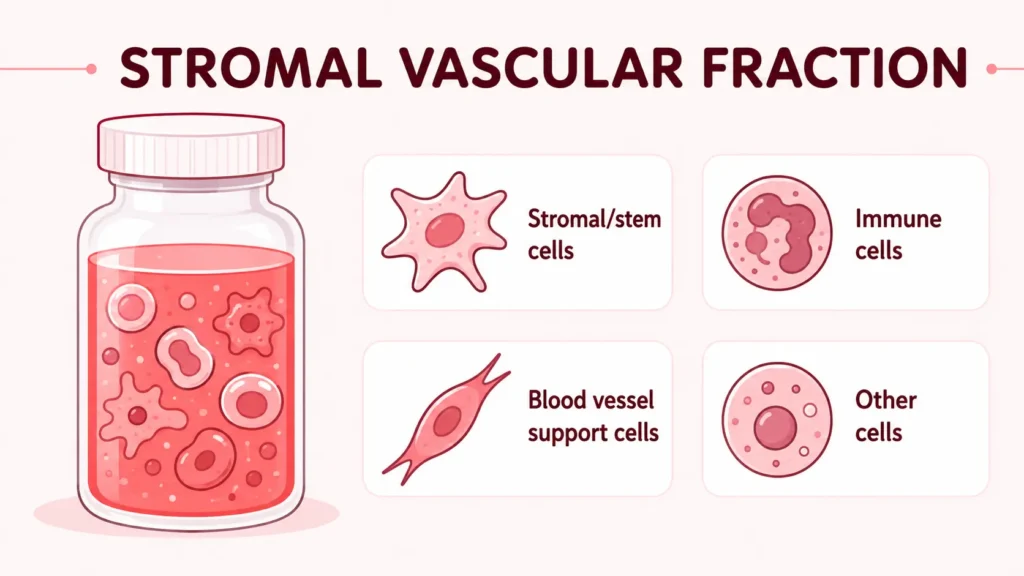
Researchers are studying how the different cell types found in SVF work together and whether their combined effects may benefit patients with complex conditions, including ALS, systemic sclerosis, and arthritis. Here is what each component does.
Adipose-Derived MSCs
MSCs are one of the key cell populations in SVF. They release growth factors, cytokines, and other signaling molecules that are being studied for their potential roles in inflammation control, blood-vessel formation, and tissue repair. MSCs have already shown promising results when used in combination with standard treatment methods, as they help create a more supportive environment for recovery.
Endothelial, Perivascular, and Smooth Muscle Cells
Some cells in SVF come from the small blood vessels within fat tissue. The primary mechanism of these cells is angiogenesis, or the formation of new blood vessels. Here are the main type of cells and their functions:
- endothelial cells form the inner lining of blood vessels;
- endothelial progenitor cells directly promote new vessel growth;
- pericytes surround and support capillaries;
- smooth muscle cells help vessel walls maintain their shape and control blood flow.
Researchers are actively studying these cells, and findings are increasingly demonstrating effects on angiogenesis.
Immune Cells and Other Supporting Components
SVF also contains immune cells, including monocytes, macrophages, and T-regulatory cells. These cells take part in immune responses and help regulate inflammation.
Fibroblasts contribute to tissue structure. Cytokines, chemokines, and growth factors released by cells in SVF can also affect how nearby cells respond to stress or injury.
Each component has its own role and may influence how the others behave. Together, they form a heterogeneous cell mixture that functions as a whole, with each cell type potentiating the effects of the others.
How Might the Cell Mixture Influence Tissue Repair?
The different cells in SVF may support tissue repair in several connected steps:
-
1
The cells respond to the surrounding tissue. Inflammation, reduced blood flow, and tissue damage create signals that cells in SVF may detect.
-
2
They release active molecules. Growth factors, cytokines, and chemokines carry messages to nearby cells. This is called paracrine signaling.
-
3
Nearby cells may receive support. These signals may help cells survive, respond to damage, and maintain the surrounding tissue structure.
-
4
Small blood vessels may receive support. Endothelial progenitor cells, endothelial cells, and pericytes may help form and stabilize small vessels.
-
5
Inflammation may be regulated. Stem cells may influence immune activity through immunomodulation. This does not mean that inflammation is completely switched off.

These mechanisms have been observed not only in laboratory and preclinical research but also in clinical studies and in actual clinical practice. Whether they lead to meaningful improvement depends on the condition, the tissue involved, and the SVF preparation.
What Is SVF Being Studied For?
SVF is being studied in several areas of medicine. Results are encouraging in some fields, although the amount and quality of evidence vary.
Musculoskeletal Conditions
A systematic review of knee osteoarthritis included nine studies with 239 patients. All reported improvements in pain and joint function, while five also found changes on MRI. However, the studies used different SVF preparations and included relatively few patients.
Skin and Hair Conditions
A systematic review of nonscarring hair loss included six studies with 188 patients. All reported increased hair density, and no serious adverse events were reported. The authors noted that results may depend on the preparation method, treatment schedule, and patient selection.
Vascular, Inflammatory, and Neurological Conditions
SVF is also being studied in vascular, inflammatory, and neurological conditions:
- Vascular conditions: In a study of 20 patients with severe limb ischemia, treatment combining SVF with autologous plasma was followed by better blood-flow measurements, less pain, and longer pain-free walking distance over 12 months.
- Inflammatory conditions: A placebo-controlled trial included 40 patients with systemic sclerosis. Hand function improved in both groups, with no additional benefit observed from SVF compared with placebo.
- Neurological conditions: In a Phase 1 study of 26 patients with ALS, SVF was associated with changes in two biomarkers linked to nerve-cell damage and inflammation. However, these biological changes did not translate into a clear improvement in patients’ functional scores.
Together, these findings show the broad potential of the cells in SVF. Research is still continuing, and larger controlled trials are needed, but the published clinical experience so far often reports encouraging results.
Why Is Adipose Tissue Used as the Source?
Adipose tissue can provide enough cells to prepare SVF without first growing them in a laboratory. This makes fat tissue a practical source for SVF and regenerative medicine research. Whether it is appropriate depends on the individual case, the expected outcome, the patient’s overall health, and the evidence available for their condition.
How Is SVF Obtained From Adiapose Tissue and Prepared?
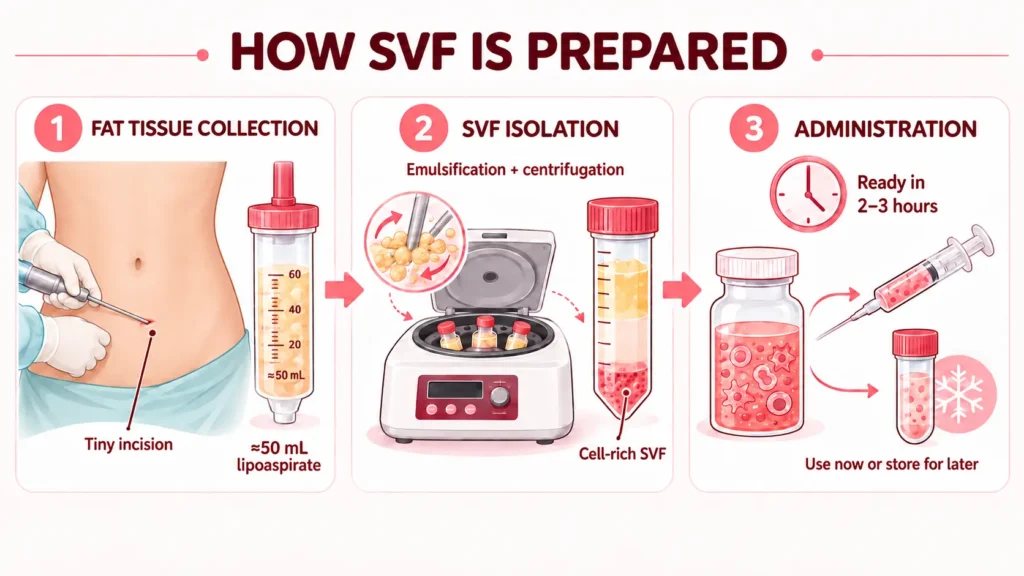
At Swiss Medica, a regenerative medicine hospital in Belgrade, Serbia, the process takes place in three stages: fat collection, isolation, and administration. SVF is prepared in our own GMP-standard laboratory, where each stage is carried out under controlled conditions.
Step 1. Fat Tissue Collection
Under anesthesia, the doctor collects a small amount of fat from the abdomen through a tiny incision near the navel or side. About 50 milliliters of lipoaspirate is usually collected, depending on the amount of subcutaneous fat available.
Step 2. SVF Isolation
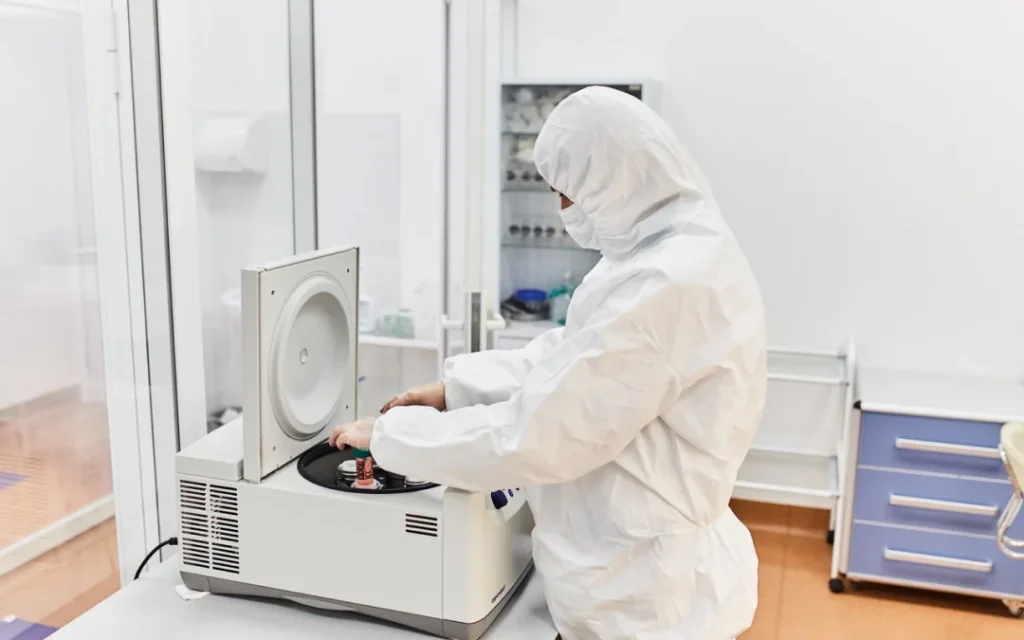
The lipoaspirate is processed using emulsification and centrifugation. These steps break down the tissue structure and separate the cell-rich SVF from free fat and other unwanted components.
Step 3. Administration
After isolation and purification, SVF cells can be administered within approximately 2–3 hours of lipoaspiration. At the patient’s request, part of the preparation may also be stored for use during a later visit, avoiding the need to repeat the fat collection procedure. In either case, the cells do not need to be expanded in culture.
Get a free online consultation
Book a free consultation with our doctors to discuss whether regenerative medicine may be helpful in your case. We do not accept every patient for treatment—our goal is to help you understand your options and make a well-informed decision.

Medical Advisor, Swiss Medica doctor
Is Same-Day Stromal Vascular Fraction the Same as Cultured MSC Therapy?
Patients often ask about the meaning of stromal vascular fraction and how it differs from isolated mesenchymal stem cells. The main point is that SVF and MSCs cannot be directly compared as two equivalent cell types. SVF is a mixture of different cells obtained from fat tissue, while MSCs are just one of the cell types that may be present in SVF or used separately as a cultured cell preparation.
Still, to explain the difference in a simple way, the table below compares their main characteristics.
| Same-day SVF | Cultured MSC therapy | |
| Cell source | Obtained from the patient’s own adipose tissue. | May use the patient’s own cells or screened donor cells derived from fat tissue, bone marrow, umbilical cord, or placenta. |
| Preparation | Fat tissue is processed to isolate SVF, which can usually be used on the same day. | Selected MSCs are isolated and multiplied in a laboratory over time. |
| Cell composition | Contains a diverse mixture of stromal, vascular, immune, and other supporting cells. | Contains a more selected cell population enriched for MSCs. |
| Laboratory requirements | Does not require cell expansion, but still requires controlled isolation, purification, and quality checks. | Requires sterile culture conditions, controlled cell expansion, specialized facilities, and quality testing at several stages. |
| Potential advantage | Provides a heterogeneous cell population without the need for ex vivo expansion. | Allows production of a larger number of cells and a more defined MSC-enriched preparation. |
The two approaches are not interchangeable, but they may be considered complementary in some treatment programs.
Is SVF Therapy Safe?
Clinical studies suggest that autologous SVF is generally well tolerated. A review of 62 clinical studies found that most reported adverse events were mild and related to the procedure.
Safety depends on several factors:
- the patient’s health,
- the method of fat collection,
- how the cells are prepared,
- the administration route,
- the standards followed by the clinic
Possible Side Effects
Most expected reactions are temporary:
- after fat collection, patients may notice soreness, bruising, swelling, or numbness around the collection area;
- after administration, there may be short-term discomfort, stiffness, swelling, or a local reaction.
The type and intensity of these effects vary between patients and procedures.
Safety at Swiss Medica: Medical Screening and Sterile Handling
At Swiss Medica, we take steps to minimize the risks described above. Before treatment, doctors carefully review the patient’s diagnosis, medical history, current treatment, medications, and possible contraindications. Additional examinations may be requested when needed.
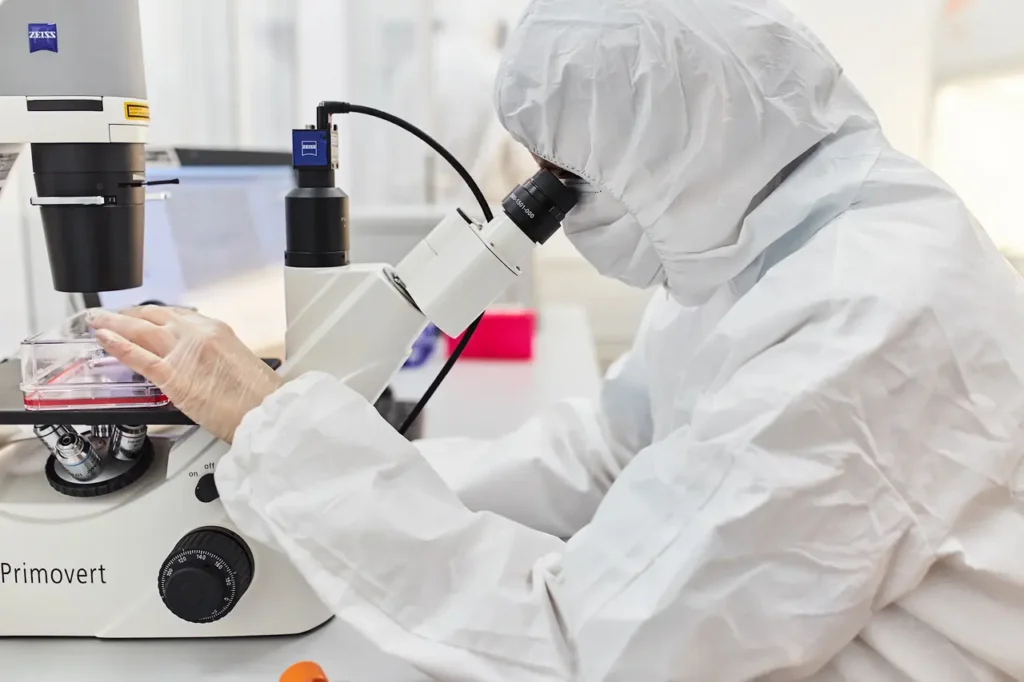
SVF is prepared in our own GMP-certified laboratory, where cell processing and quality control follow controlled protocols. Following established clinical protocols, we select the preparation method, cell dose, and administration route individually for each patient.
If treatment should be postponed, our medical team will explain the reasons and recommend any necessary steps first.
What Should Patients Ask Before Considering a Procedure?
A responsible clinic should clearly explain every stage of treatment. We recommend asking:
- What does the complete stem cell treatment procedure include—from cell collection and preparation to administration and follow-up?
- What are the possible risks and alternatives?
- How and when will my progress be assessed?
- What does the quoted stem cell therapy cost include?
A quoted price may cover only one procedure or injection, so it is important to ask what the complete treatment program includes.
At Swiss Medica, the price covers the full program, excluding travel to and from Belgrade. It includes airport transfers, accommodation at our hospital, medical procedures, prescribed supportive therapies such as physiotherapy and medical devices, meals, and interpreter assistance when needed.
Patients can also return for a free follow-up check-up after six months to assess their results, paying only for their travel.

Discuss Your Options With a Regenerative Medicine Specialist
You do not need to understand every medical term on your own. At Swiss Medica, we offer a free online consultation before recommending any treatment. Our doctors review your medical history, current condition, previous treatments, and goals to identify which options may be appropriate. The consultation is free from pressure or obligation—you decide whether you want to take the next step. Its purpose is to give you clear information and help you make an informed decision.
Contact us
Book a free online consultation to discuss your case.
Medical Advisor, Swiss Medica doctor
1. What is the definition of stromal vascular fraction?
It is a mixed, cell-rich portion obtained from a person’s adipose tissue after mature fat cells and oily material are reduced or separated. It contains stromal, vascular, immune, and supporting components. It is not a single purified stem cell population.
2. What does the fraction contain?
It contains a mixture of cells from fat tissue, including stromal, blood-vessel-supporting, connective-tissue, and immune cells. Its exact composition depends on how it is prepared.
3. Is the fraction the same as stem cell therapy?
The term may be used within the broad field of cell-based therapy, but it does not describe a purified stem cell product. The preparation contains several cell populations, only some of which are adipose-derived stromal cells.
4. Is the stromal vascular fraction the same as stem cell therapy?
Not exactly. The definition of stromal vascular fraction refers to a mixture of different cells obtained from fat tissue. Stem cells are part of this mixture, but SVF also contains immune and blood-vessel-supporting cells.
5. How is it collected from the body?
A doctor collects a limited amount of adipose tissue through a liposuction-type procedure. The fat is then purified to isolate the cell-rich SVF.
6. Is a same-day preparation different from cultured MSC therapy?
Both methods are used in regenerative medicine, but they are prepared differently. Same-day SVF is a mixture of cells used without cultivation, while MSC therapy uses selected cells that are grown in a laboratory over time.
7. What are the possible side effects?
Temporary tenderness, bruising, swelling, or numbness may occur where the fat is collected or the preparation is administered. These effects are usually mild and depend on how the procedure is performed.
8. Is the procedure safe?
Clinical studies provide encouraging safety data. However, safety depends on the exact procedure, the patient’s condition, and how carefully the clinic follows preparation, administration, and monitoring protocols.
9. What conditions is it being studied for?
Research includes osteoarthritis, tendon and soft-tissue problems, wounds, scars, hair loss, vascular and ischemic conditions, and selected inflammatory or neurological disorders. The evidence is not equally strong across these areas, and research activity does not establish routine clinical use.
References:
Goncharov EN, Koval OA, Igorevich EI, Encarnacion Ramirez MJ, Nurmukhametov R, Valentinovich KK, Montemurro N. Analyzing the Clinical Potential of Stromal Vascular Fraction: A Comprehensive Literature Review. Medicina (Kaunas). 2024 Jan 27;60(2):221. doi.org/10.3390/medicina60020221
Boada-Pladellorens A, Avellanet M, Pages-Bolibar E, Veiga A. Stromal vascular fraction therapy for knee osteoarthritis: a systematic review. Ther Adv Musculoskelet Dis. 2022 Aug 16;14:1759720X221117879. doi.org/10.1177/1759720X221117879
Kang BY, Li AW, Lee MH, Wong CC, Naseer N, Ibrahim SA, Miller CH, Keimig EL, Poon E, Alam M. The safety and efficacy of autologous adipose-derived stromal vascular fraction for nonscarring alopecia: A systematic review. Arch Dermatol Res. 2022 May;314(4):349-356. doi.org/10.1007/s00403-021-02238-7
Hafiz E. Efficacy of the combination of umbilical fat and venous blood on limb salvage. Front Bioeng Biotechnol. 2026 Feb 25;14:1775975. doi.org/10.3389/fbioe.2026.1775975
Daumas A, Magalon J, Jouve E, Casanova D, Philandrianos C, Abellan Lopez M, Mallet S, Veran J, Auquit-Auckbur I, Farge D, Levesque H, Benhamou Y, Arnaud L, Giraudo L, Dumoulin C, Giverne C, Boyer O, Giuliani A, Bourgarel V, Harlé JR, Schleinitz N, Brunet J, Pers YM, Ferreira R, Cras A, Boccara D, Larghero J, Château J, Hot A, Dignat-George F, Magalon G, Sabatier F, Granel B. Adipose tissue-derived stromal vascular fraction for treating hands of patients with systemic sclerosis: a multicentre randomized trial Autologous AD-SVF versus placebo in systemic sclerosis. Rheumatology (Oxford). 2022 May 5;61(5):1936-1947. doi.org/10.1093/rheumatology/keab584
Li R, Wang L, Bu W, Zhang X, Li X, Li J, Shen J, Li J and Cai Z (2026) Autologous SVF therapy modulates neuroinflammation in ALS: phase I trial demonstrating safety and CSF biomarker dynamics. Front. Aging Neurosci. 18:1784115. doi.org/10.3389/fnagi.2026.1784115
Ferreira MY, Carvalho Junior JDC, Ferreira LM. Evaluating the quality of studies reporting on clinical applications of stromal vascular fraction: A systematic review and proposed reporting guidelines (CLINIC-STRA-SVF). Regen Ther. 2023 Aug 26;24:332-342. doi.org/10.1016/j.reth.2023.08.003


MD, Pediatrician, Regenerative Medicine Specialist