swiss medicaXXI century S.A.
Tinnitus is a clinical symptom characterized by the perception of sound—such as ringing, buzzing, hissing, or “whooshing”—without an external source. It is often linked to inner-ear damage, altered neural signaling in auditory pathways, and sometimes vascular or microcirculation-related factors. Importantly, tinnitus is not a single disease; it is a symptom that can arise from different mechanisms. Conventional care focuses on reducing distress and improving function rather than “turning off” the sound.
Along with it, stem cell therapy for tinnitus is being explored as a supportive, regenerative approach that may help address inflammation, microcirculation, and neural support.
What Is Tinnitus and Why It’s Not a Single Disease
Tinnitus can feel similar across patients, yet the underlying drivers can be different. That variability helps explain why one-size-fits-all approaches often disappoint—and why careful evaluation matters.
Subjective vs objective tinnitus
- Subjective tinnitus is heard only by the patient and is by far the most common form. It is frequently associated with hearing changes and altered auditory signaling.
- Objective tinnitus is rare and can sometimes be detected by a clinician, often linked to mechanical or vascular sources (for example, certain blood-flow patterns).
Tinnitus as a symptom, not a diagnosis
Tinnitus acts as a “red flag” for the nervous system. It may signal anything from simple wax buildup to complex sensorineural hearing loss or neurological disorders. Because it is a symptom, treating the sound itself without addressing the underlying tissue environment often leads to limited results.
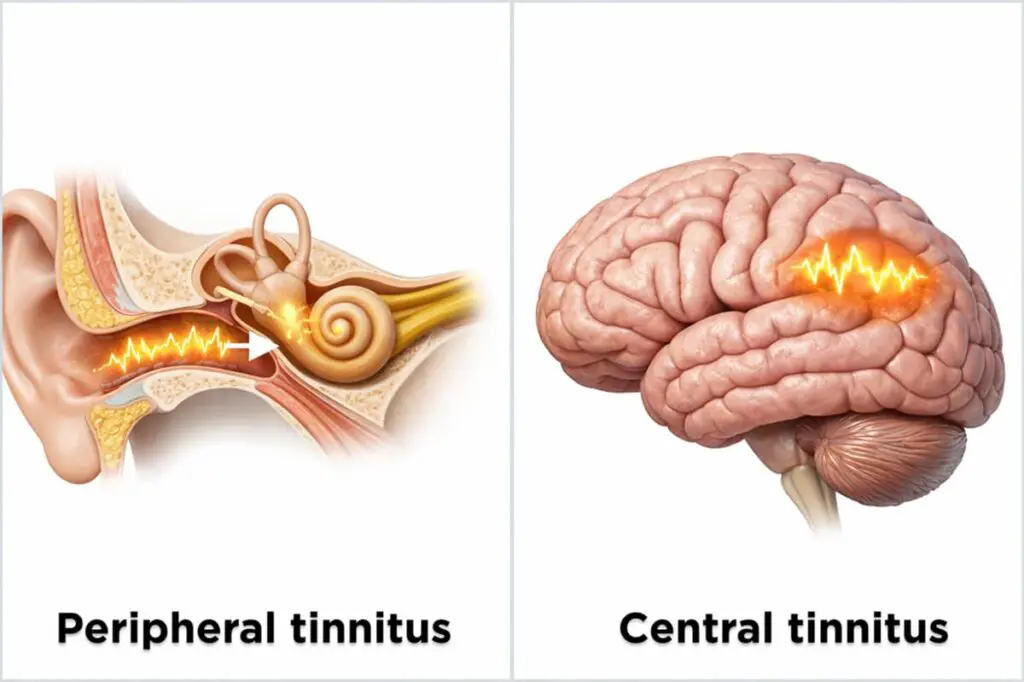
Peripheral vs central auditory involvement
Tinnitus can originate in the periphery (the cochlea or auditory nerve) or the central nervous system (the auditory cortex in the brain).
Peripheral tinnitus often results from damaged hair cells in the inner ear, while central tinnitus occurs when the brain “overcompensates” for lost auditory input by creating its own phantom sounds.
Common Causes and Contributing Factors
Tinnitus is often multifactorial. Identifying the primary driver is essential before considering any treatment options—including approaches such as stem cells for ‘ear ringing.’
Noise-induced hearing damage
Exposure to loud music, explosions, or industrial noise is the most common cause of peripheral damage. This exposure can fracture or destroy the delicate cochlear hair cells, leading to a permanent shift in how signals are sent to the brain.
Inner ear and cochlear nerve dysfunction
The cochlea is a highly sensitive organ. When the microscopic hairs (cilia) are damaged, they may “leak” random electrical impulses to the brain, which are then interpreted as constant noise.
Some tinnitus presentations are associated with vascular factors or changes in microcirculation. For this reason, careful evaluation of blood pressure, metabolic health, and ENT-related red flags is important. This is particularly crucial in cases of pulsatile or one-sided tinnitus, as these symptoms can sometimes be linked to underlying vascular conditions, such as aneurysms or other circulatory irregularities.
Regenerative approaches are also being studied in other medical areas, including cardiovascular conditions such as heart failure.
Neurological and central auditory processing changes
If the brain stops receiving clear signals from the ear, the auditory cortex may become hyperactive. This “maladaptive plasticity” is a major reason why tinnitus persists even after the initial ear injury has stabilized.
Symptoms and Impact on Daily Life
Tinnitus is not only about sound intensity. The severity of tinnitus is often measured by its impact on the patient’s quality of life. For some, it is a minor annoyance; for others, it is debilitating.
Constant vs intermittent ringing or buzzing
Some patients experience a steady, unyielding tone, while others notice the sound only in quiet environments. Common descriptions include whistling, roaring, clicking, or a sound “like water flowing” out of the ear.
Effects on sleep, concentration, and emotional well-being
Constant noise can lead to chronic insomnia, as the silence of the night makes the tinnitus seem louder. This often results in a cycle of stress and anxiety, which, in turn, can make the perception of the noise even more intense.
Current Tinnitus Treatments and Their Limitations
Traditional medicine offers several pathways for management. Most popular approaches aim to reduce distress, improve coping, and address hearing deficits.
Medical, audiological, and supportive approaches
Current protocols include:
- hearing aids to mask the sound
- medications to manage anxiety
- the treatment of underlying conditions like high blood pressure
While helpful, these can’t address the cellular damage within the ear.
Sound therapy, counseling, and coping strategies
Tinnitus Retraining Therapy (TRT) and Cognitive Behavioral Therapy (CBT) help patients habituate to the sound. The goal is to “ignore” the noise, but this does not stop the biological signaling that causes the sound in the first place.
Why tinnitus is difficult to treat definitively
Tinnitus is difficult to treat because it may involve lasting structural or functional changes in the auditory system, such as damage to inner-ear hair cells or altered neural processing. Because standard medical care for tinnitus primarily focuses on symptom management, some patients look into alternative treatments for tinnitus, including regenerative medicine approaches that are currently being explored in clinical and research settings.
Alternative Therapies for Tinnitus: Why Regenerative Medicine Is Being Explored
Many patients try supplements, acupuncture, devices, or experimental protocols. Some approaches may help coping, but results are inconsistent, and quality varies across providers. When considering alternative therapies for tinnitus, it helps to separate symptom-support tools from interventions that aim to influence biology.
Inner ear cell damage and altered neural signaling
A major rationale behind regenerative research is that injury to the inner ear can change the signals sent to the brain, which may contribute to the development and persistence of tinnitus. In this context, future therapies aimed at protecting auditory structures may help address the resulting abnormal signaling.
Chronic inflammation and microvascular factors
Another area of interest in tinnitus research involves chronic inflammation and microcirculatory disturbances, which may contribute to tissue stress and increased neural excitability. For this reason, regenerative medicine—along with lifestyle and medical optimization—is being explored as part of biologically oriented alternative therapies for tinnitus.
Stem Cells for Tinnitus: How They May Support Tinnitus Management
In the search for an alternative treatment for tinnitus, mesenchymal stromal/stem cells (MSCs) have emerged as a significant area of study. However, to understand their potential, it is crucial to grasp the capabilities of these cells. Current research focuses on their “paracrine effect,” which is the ability of MSCs to release molecules that support damaged tissues.
Neuroprotection and support of auditory pathways
Stem cells release growth factors and exosomes that provide neuroprotective support to the auditory nerve. This could prevent additional maladaptive changes in the brain auditory cortex by stabilizing the neural pathways.
Modulation of inflammation and tissue environment
MSCs are studied for immune-modulating effects that may shift inflammatory signaling. In conditions where inflammation contributes to tissue stress, a more balanced microenvironment may be part of supportive care.
Can stem cells cure tinnitus?
Clinical evidence is currently insufficient to support a “guaranteed cure.” Regenerative medicine should be viewed as a supportive tool. Stem cell therapy for tinnitus aims for symptom reduction and improved quality of life, but it cannot restore “dead” neurons or completely reverse decades of profound hearing loss.
Stem Cell Research and Tinnitus
The field of stem cell research is expanding rapidly and broadly, providing hope for a new treatment for tinnitus in the coming years.
- Broad research сontext: Across medicine, MSCs-based therapies have shown measurable effects—they can shift inflammatory/immune signals and improve standard clinical outcomes such as enhanced symptom management and functional scores.
- Tinnitus specific observations: While large-scale Phase III trials are ongoing, early clinical observations in smaller patient groups have noted improvements. Patients have reported a reduction in the “loudness” of the sound and a decreased emotional reaction to the ringing after receiving MSCs.
How Stem Cell Therapy for Tinnitus Is Typically Performed
At Swiss Medica, the administration of stem cell therapy for tinnitus is not a standardized “one-size-fits-all” procedure. It is a highly personalized medical journey that combines advanced biotechnology with a multi-step clinical protocol designed to target both systemic and localized factors.
Pre-treatment diagnostics (ENT, audiology, neurology)
Common evaluation elements may include:
- ENT exam to rule out treatable otologic causes and red flags
- audiology testing (including speech-in-noise needs and high-frequency patterns)
- neurological review when symptoms suggest central involvement
- review of medication exposures and metabolic/cardiovascular context
Stem cells for tinnitus: types commonly used in practice
Swiss Medica primarily uses MSCs derived from donor tissues (e.g. umbilical cord tissue or placenta). However, in certain cases, we can use cells derived from the patient’s own body, taken from fat tissue or bone marrow.
As an additional product, we use stem cell derivatives—exosomes—small vesicles with a high concentration of bioactive molecules.
From MSCs to exosomes: learn more about biological products we use at Swiss Medica in our separate article.
Read articleAdministration routes of stem cells for tinnitus and clinical rationale
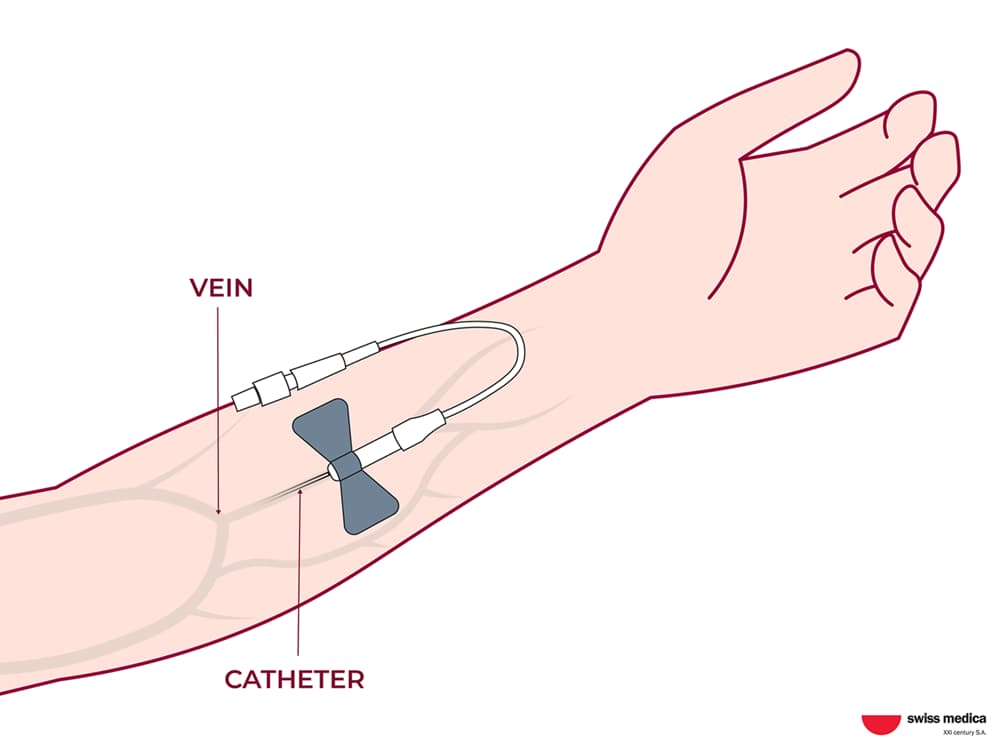
Routes vary by program and clinical rationale. Rather than applying cells locally, Swiss Medica uses systemic delivery by intravenous infusion to affect all possible pathogenetic pathways.
Expected Outcomes of Stem Cell Therapy for Tinnitus
The primary goal of stem cells for ‘ear ringing’ at Swiss Medica is functional improvement and a significant reduction in the “handicap” caused by the sound. While responses vary, the focus is on enhancing the patient’s daily quality of life.
Possible improvements and quality of life
Many patients observe that the tinnitus moves from a “piercing foreground” sound to a “soft background” noise. This shift often leads to:
- better sleep quality and easier sleep onset
- improved concentration during daily tasks
- a reduction in the emotional distress and “annoyance” associated with constant ringing
Rick From the UK—Experience with Stem Cells
Rick, a patient from the UK, came to Swiss Medica after aggressive chemotherapy left him with persistent tinnitus that seriously affected his everyday life—especially in busy environments where conversations became difficult. After researching available options and finding limited solutions, he decided to undergo treatment at the clinic, hoping to reduce the constant noise and regain comfort in daily communication.
He noted that the care felt structured, targeted, and personalized, and that the team guided him through the process with attention to safety and detail. Over time, he began to notice changes in how intense the tinnitus felt and how easily he could engage in social situations again.
“Over the three months after my first treatments, I could hear the volume reduce—I’d estimate around a 30–35% improvement. It made conversations in a group environment much better.”
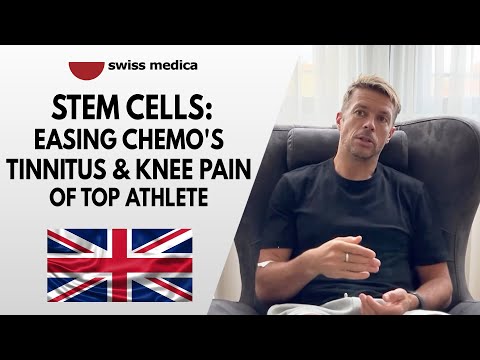
Our official YouTube channel featured 500+ patient reviews, including experiences from patients with tinnitus.
Safety of Stem Cells for Tinnitus and Possible Side Effects After the Therapy
Safety is the cornerstone of the Swiss Medica protocol.
General safety profile of MSC therapy
MSCs have been widely studied across different clinical contexts, and published research has reported a favorable safety profile when used under appropriate clinical conditions.
Lab checks
In reputable stem cell treatment clinics, quality control typically involves testing for cell sterility, identity (surface markers), genetic stability, and functional characteristics, such as differentiation potential, in a certified laboratory.

Monitoring protocols
Swiss Medica program typically includes:
- pre-admission review of medical records and risk factors
- infection screening when appropriate
- monitoring during and after administration
- follow-up guidance and symptom tracking
Would you like to find out more about each therapy stage? Take a detailed look at the step-by-step patient journey at our clinic.
See the stages of therapySide effects of stem cell therapy
The side effects are only temporary and may occur immediately after the procedure. They may include:
- short-term fatigue
- transient feverish sensations
- local discomfort when local procedures are used
- temporary headache or mild inflammatory-like symptoms
Who May Consider Stem Cell Therapy for Tinnitus
Eligibility framing is most accurate when it focuses on clinical context and realistic goals. Patients who may consider stem cell treatment for tinnitus often include those with:
- chronic, persistent tinnitus that remains burdensome
- limited response to standard care (sound therapy, hearing support, CBT-based coping tools)
- stable overall health and ability to participate in supportive rehabilitation
- realistic expectations focused on function and quality of life
Who may not be a suitable candidate for stem cell therapy for tinnitus
A patient may not be suitable when any of the following is present:
- uncontrolled infection or severe medical instability
- active malignancy or strong suspicion requiring evaluation
- unstable cardiovascular status not cleared for procedures
- tinnitus with urgent red-flag features that require immediate specialist work-up first (for example, some pulsatile patterns)
Get a free online consultation
Final eligibility should be decided after a clinician review and diagnostics. You can book a free online consultation with our specialist to find out if your condition is suitable for treatment.

Medical Advisor, Swiss Medica doctor
Stem Cell Treatment for Tinnitus: The Swiss Medica Approach
At Swiss Medica, our approach is structured around personalization, safety, and comprehensive support.
Multidisciplinary evaluation
Our programs typically begin with medical record review and coordinated diagnostics to identify likely drivers and rule out red flags.
Personalized regenerative protocols
The regenerative component is tailored to the patient profile, with careful alignment between goals and realistic biological rationale.
Supportive therapies
Supportive care may include rehabilitation-oriented strategies that help translate biological support into daily function. A key component of our standard program is Intravenous Laser Blood Irradiation (ILBI).
As a specialized form of physiotherapy, ILBI works to enhance systemic recovery, helping to manage the physical burden often associated with MND—particularly in areas regarding sleep quality, stress response, and metabolic balance.
International patient support
For international patients, our team coordinates travel and on-site logistics, including airport pickup and translation support. We also provide clear instructions before arrival and practical guidance during the stay to keep the process structured and predictable.
Comprehensive pricing
The pricing that typically ranges from €7,000 to €31,000* and covers not only the stem cell shot cost but also the full treatment protocol and the stay of the patient and one accompanying person at the clinic.
*Prices are indicative and based on 2026 estimates; they may vary depending on condition severity and required cell quantity.
How to Start an Evaluation for Stem Cell Therapy for Tinnitus
A reasonable first step is a consultation with the following document-based review:
- tinnitus history (onset, triggers, laterality, pulsatile vs non-pulsatile)
- audiology results (if available)
- ENT findings and imaging when indicated
- medication list and major medical diagnoses
If the patient is considering stem cell treatment for tinnitus, a structured pre-evaluation helps clarify whether the program is a reasonable fit and which outcomes are realistic.
Contact us
To explore whether a regenerative support program may be appropriate, contact us for a consultation.
Medical Advisor, Swiss Medica doctor
Frequently Asked Questions
1. Can stem cells cure tinnitus?
Currently, there is no medical “cure” for tinnitus. Stem cell therapy for tinnitus is a regenerative support approach designed to improve the tissue environment and potentially reduce the intensity of the sound.
2. Are there promising new treatments for ringing in the ears?
Yes. Beyond habituation, stem cell treatment for tinnitus and the use of exosomes are among the most promising areas of research focusing on biological repair rather than just symptom masking.
3. How long do potential effects last after a stem cell transplant for tinnitus?
The longevity of effects varies. In general, patients experience sustained relief that lasts for a year or longer.
4. Can a caregiver come to the clinic with the patient?
Yes. The cost of the patient program includes lodging and meals for one accompanying person.
References:
Lalu MM, McIntyre L, Pugliese C, Fergusson D, Winston BW, et al. (2012) Safety of Cell Therapy with Mesenchymal Stromal Cells (SafeCell): A Systematic Review and Meta-Analysis of Clinical Trials. PLOS ONE 7(10): e47559. https://doi.org/10.1371/journal.pone.0047559
Qi J, Huang W, Lu Y, Yang X, Zhou Y, Chen T, Wang X, Yu Y, Sun JQ, Chai R. Stem Cell-Based Hair Cell Regeneration and Therapy in the Inner Ear. Neurosci Bull. 2024 Jan;40(1):113-126. doi: 10.1007/s12264-023-01130-w. Epub 2023 Oct 3. PMID: 37787875; PMCID: PMC10774470.
Maharajan N, Cho GW, Jang CH. Therapeutic Application of Mesenchymal Stem Cells for Cochlear Regeneration. In Vivo. 2021 Jan-Feb;35(1):13-22. doi: 10.21873/invivo.12227. PMID: 33402445; PMCID: PMC7880755.
Limb CJ. When inner ear stem cell therapy becomes a reality. Trends Amplif. 2012 Mar;16(1):3. doi: 10.1177/1084713812447737. PMID: 22593203; PMCID: PMC4040845.
Amin MN, Hashish R, Agha Tabari K, Swami SS, Kasagga A, Assefa AK, Yu AK. Immunomodulatory Role of Mesenchymal Stem Cell Therapy in Multiple Sclerosis: A Systematic Review. Cureus. 2025 Jun 29;17(6):e86988. doi: 10.7759/cureus.86988. PMID: 40734866; PMCID: PMC12307007.
Song N, Scholtemeijer M, Shah K. Mesenchymal Stem Cell Immunomodulation: Mechanisms and Therapeutic Potential. Trends Pharmacol Sci. 2020 Sep;41(9):653-664. doi: 10.1016/j.tips.2020.06.009. Epub 2020 Jul 22. PMID: 32709406; PMCID: PMC7751844.
Fang Q, Wei Y, Zhang Y, Cao W, Yan L, Kong M, Zhu Y, Xu Y, Guo L, Zhang L, Wang W, Yu Y, Sun J, Yang J. Stem cells as potential therapeutics for hearing loss. Front Neurosci. 2023 Sep 7;17:1259889. doi: 10.3389/fnins.2023.1259889. PMID: 37746148; PMCID: PMC10512725.


MD, Pediatrician, Regenerative Medicine Specialist