swiss medicaXXI century S.A.
Stem cell secretome therapy is a cell-free approach based on substances released by mesenchymal stem cells (MSCs). These substances can be collected and processed separately from the stem cells themselves.
Research on secretome-based products is still ongoing. Studies are looking at their role in inflammation, immune regulation, and tissue repair. This article explains what the secretome is, what current research shows, how secretome and exosome-based products differ, and what shapes their composition and activity.
What Is Stem Cell Secretome?
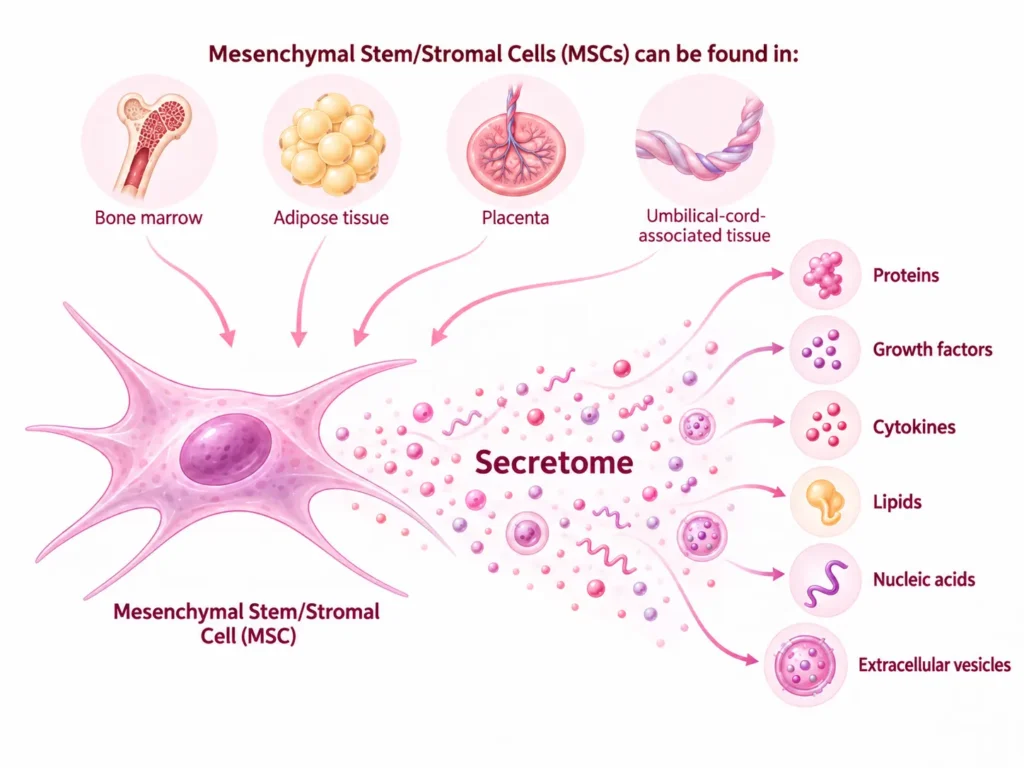
MSCs are multipotent stromal cells found in tissues such as bone marrow, adipose tissue, placenta, and umbilical-cord-associated tissues. They are widely studied in regenerative medicine because of their ability to release biologically active signalling molecules.
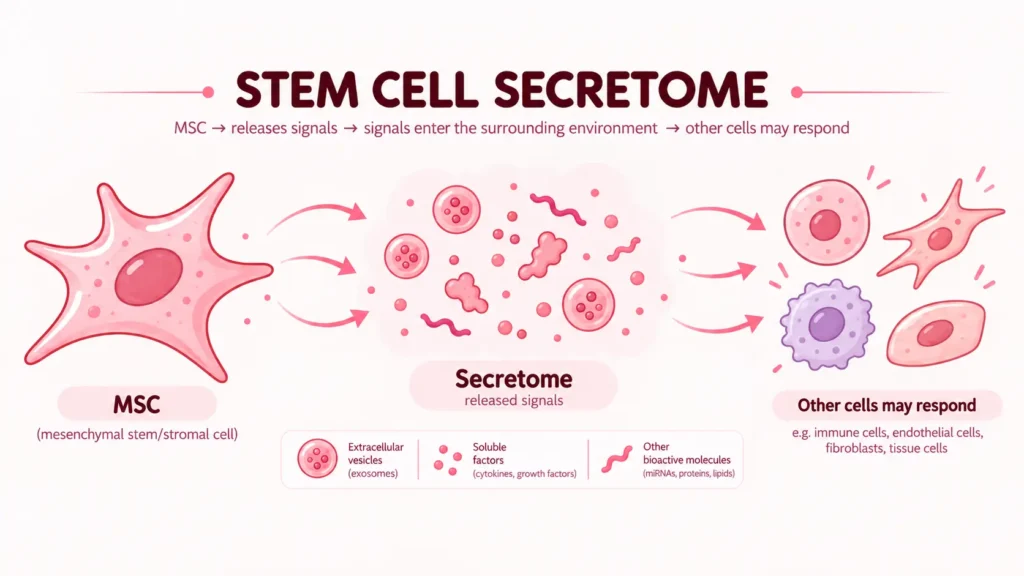
MSCs communicate with surrounding cells by releasing proteins, growth factors, cytokines, lipids, nucleic acids, and extracellular vesicles. These substances, collectively known as the secretome, can be collected and studied as a cell-free therapeutic approach.
How Is Secretome Different From Stem Cell Therapy?
In stem cell therapy, patients receive living MSCs. In addition to releasing a secretome—including soluble factors and extracellular vesicles such as exosomes—MSCs may interact directly with surrounding immune and tissue cells. When the cells remain viable after administration, they usually continue to release signalling molecules over a period of time.
In secretome therapy, cell-derived substances are administered directly without the cells themselves. These products can deliver biological signals promptly, but they do not provide a living source that continues to produce new signals after administration. That’s why, in some cases, secretome or its individual components are used together with MSCs to potentially enhance their effects.
Why Are Cell-Free Approaches Being Studied?
Researchers are studying cell-free approaches because many of the effects associated with MSCs may be mediated by the signaling molecules they release, rather than by the long-term presence of the cells themselves. Using these molecules could make treatment products easier to prepare, standardize, store, and deliver than living-cell therapies.
Cell-free products may also avoid some challenges linked to living cells, such as uncertain survival and distribution after administration. This can make them safer in some settings. Their safety and effectiveness can still vary depending on the product composition, preparation method, dose, and route of administration.
What Does the Secretome Contain?
As mentioned above, the secretome is not a single substance. Its components can be grouped into several main categories.
Soluble Proteins, Growth Factors, and Cytokines
Some components of the secretome are soluble, meaning they are released directly into the surrounding fluid rather than enclosed in vesicles. These include:
- growth factors, which influence cell survival, proliferation, migration, and blood-vessel-related pathways;
- cytokines and chemokines, which help coordinate inflammatory and immune responses;
- enzymes and extracellular-matrix-related proteins, which affect how cells interact with their local environment.
Extracellular Vesicles, Including Exosomes
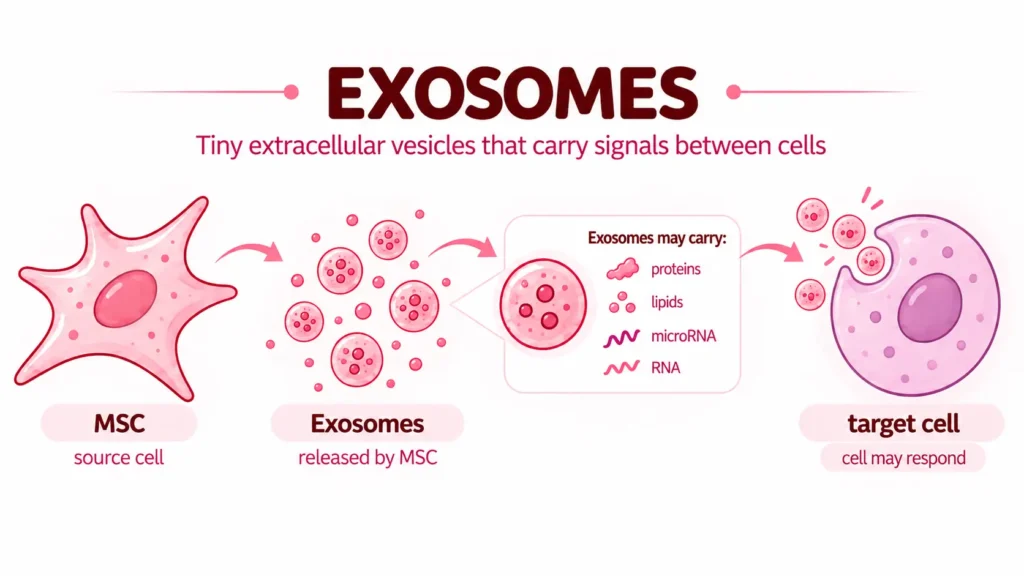
Extracellular vesicles (EVs) are another major component of the secretome. They are small particles surrounded by a lipid membrane and can carry proteins, lipids, messenger RNA, microRNA, and other biological molecules. Their lipid membrane protects this cargo as the vesicles move through the surrounding environment.
Exosomes are one type of extracellular vesicle. They are often discussed separately because they are among the most widely studied EVs in regenerative medicine.
Other Signaling Components Released by Cells
The secretome can also contain:
- lipids and lipid mediators;
- metabolites;
- free nucleic acids;
- matrix-associated molecules;
- other extracellular particles.
Researchers are also investigating how these components may contribute to the potential biological effects of stem-cell-derived secretome therapy.
Is Secretome the Same as Exosomes?
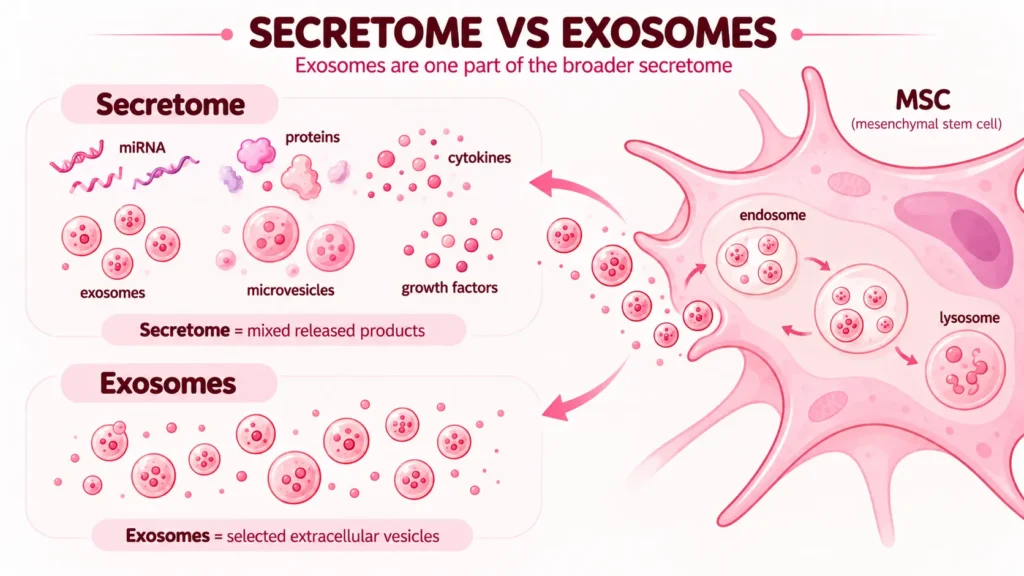
The secretome is not the same as exosomes. The secretome is the broader mixture of substances released by MSCs, while exosomes are just one type of extracellular vesicle within it.
What makes exosomes distinct is how they are formed and identified. Researchers classify them using features such as their origin, size, composition, and molecular markers.
How Might Secretome and Exosomes Influence Biological Processes?
Scientists are studying how secretome, mesenchymal stem cell, and exosome treatments may influence several overlapping biological mechanisms.
Cell Signaling and Tissue-Repair Pathways
Many secretome components act through paracrine signaling. This is a form of cell communication in which one cell releases biological molecules that act on nearby cells.
Through this mechanism, secretome components may be involved in:
- cell survival and migration;
- formation of new blood vessels;
- communication between immune and tissue cells;
- regulation of inflammatory responses.
Together, these signals may create a more supportive environment for tissue recovery by helping cells communicate, respond to stress, and regulate inflammation.
Modulation of Inflammatory Processes
Secretome components are also involved in inflammatory and immune pathways. Researchers have observed changes in cytokine signaling, macrophage activity, and the behavior of other immune cells.
These findings suggest that the secretome may modulate immune and inflammatory activity—by changing the strength and duration of the response rather than switching it off completely.
Intercellular Communication Through Extracellular Vesicles
Extracellular vesicles such as exosomes can interact with recipient cells through several mechanisms:
- Receptor binding. Molecules on the vesicle surface can interact with receptors on the target cell.
- Endocytosis. The cell can take up the vesicle and bring it inside.
- Membrane fusion. In some cases, the vesicle membrane can merge with the cell membrane.
- Cargo release. Once inside, the vesicle can release its contents into the cell.
- Cellular response. This cargo may then take part in signaling pathways, gene regulation, and other cellular processes.
These mechanisms help understand why stem-cell-derived exosome therapy is being actively studied in regenerative medicine.
What Conditions Are Secretome, Exosome, and Stem Cell Therapies Being Studied For?
Results are already emerging for secretome, exosome, and stem cell therapies, and the clinical evidence will likely continue to grow. However, the data are still limited to predict outcomes or promise a specific result, and more studies are required.
| Area | What researchers are studying | What current studies show |
| Osteoarthritis and joints | Effects on cartilage, inflammation, pain, and the joint environment | A 2024 review summarized promising laboratory findings indicating that mesenchymal stem cell secretome and EVs were associated with several potentially beneficial effects in osteoarthritic cells, including increased cell proliferation and migration, decreased inflammation, reduced cartilage-degrading activity, and support for anabolic processes. |
| Wound healing | Inflammation, blood-vessel formation, collagen organization, and tissue repair | A 2023 review of clinical studies reported improvements in some wound-healing measures, including ulcer size and depth, but results were not consistent across all outcomes. |
| Skin and hair | Hair density, hair thickness, skin repair, and aesthetic applications | A 2026 meta-analysis included 39 human studies: 26 on skin outcomes and 13 on hair. Exosome-based treatments were associated with a 20.2% average reduction in facial wrinkles. Other skin measures, including pigmentation, elasticity, texture, erythema, and overall appearance, improved by about 14.7–23.4%. Hair density increased by 23.6%, while hair thickness improved by 18.0%. |
| Neurological conditions | Stroke, traumatic brain injury, Parkinson’s disease, and neuroinflammation | Early human research is still limited. In a small 2025 study of five patients with traumatic brain injury, MSC-derived exosome treatment was followed by improvements in motor, cognitive, and overall functional scores over one year, with no serious adverse events reported. |
| Cardiovascular disease | Inflammation, cell survival, blood-vessel-related pathways, and fibrosis after ischemic injury | Early results are still too limited for firm conclusions, but they suggest that MSC-derived extracellular vesicles may influence processes involved in heart repair, including regulation of immune responses, modulation of fibrosis, angiogenesis, and cardiomyocyte survival. |
| Respiratory conditions | ARDS and other forms of lung injury | A 2025 meta-analysis found that, among patients with acute respiratory distress syndrome (ARDS), mortality within the first month was lower in those receiving MSC-based therapies than in those receiving routine treatment. |
Alongside published research, clinical experience with secretome- and exosome-based therapies is also growing. At Swiss Medica, a regenerative medicine clinic in Belgrade, Serbia, these approaches may be considered for patients with multiple sclerosis, Parkinson’s disease, autism, and other complex chronic conditions.
They are not offered to every patient. Before any treatment is considered, doctors review the patient’s medical history, previous treatments, current symptoms, and available test results.
Get a free online consultation
Book a free online consultation with our regenerative medicine doctors to find out whether secretome therapy may be suitable for your condition and treatment goals.

Medical Advisor, Swiss Medica doctor
Why Secretome Quality Is Not Just About “More Exosomes”: Inside the Preparation Process
The particle count shown on a product label can sound impressive:
1 billion particles.
10 billion particles.
100 billion particles.
But particle count alone says little about the quality of secretome or exosome therapy. What matters is where the cells come from, how they are cultured, how the material is isolated and purified, and how the final product is tested, stored, and used.
At Swiss Medica, we carry out these stages in our own GMP-standard laboratory.
Step 1. Harvesting the Source Cells
The process begins with the cells that will produce the secretome. At Swiss Medica, these may include MSCs as well as other cell types, such as macrophages, depending on the treatment protocol. There are a few different types of cell sources:
- Donor MSCs may be obtained from placental or umbilical cord tissue.
- Autologous cells may come from bone marrow, adipose tissue, or gingiva.
Different cell types produce different sets of signaling molecules, so the source influences the final secretome composition.
Step 2. Cell Culture and Isolation
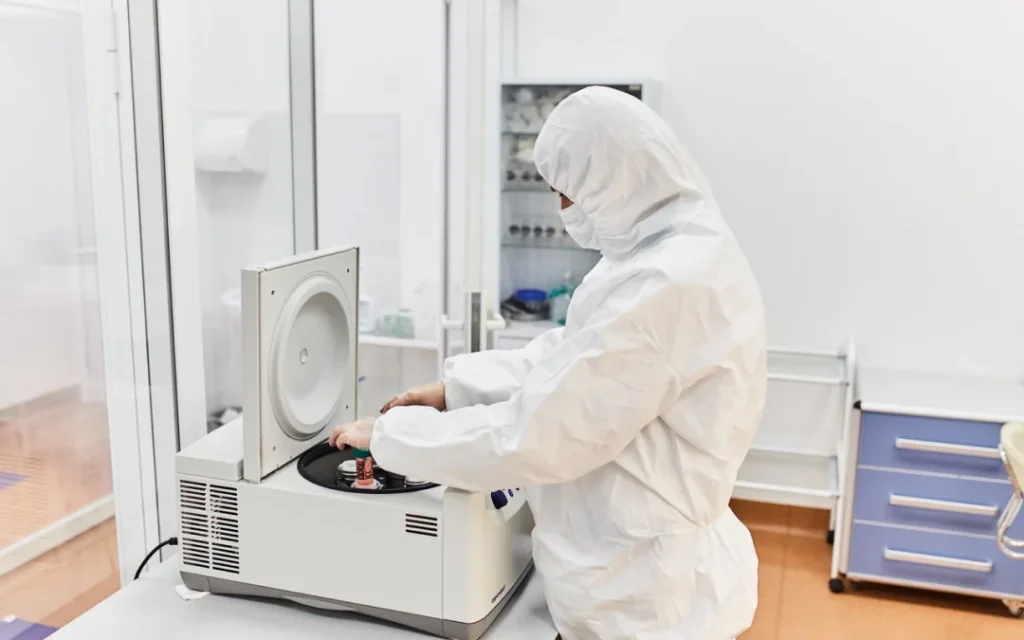
After collection, the needed cells are separated from the surrounding tissue and prepared for culture. They are then grown in specialized media until the required quantity is reached.
As the cells grow, they release cytokines, growth factors, microRNAs, extracellular vesicles, including microvesicles and exosomes, and other signaling components. This mixture forms the secretome.
The released material is then collected and separated from the cells and other components of the culture medium.
Step 3. Safety and Quality-Control Testing
Before use, both exosome and secretome preparations are tested in our laboratory for size, concentration, exosome-associated markers, and sterility.
They are also checked for bacterial, fungal, and viral contamination. This helps confirm that the preparation meets the required quality and safety criteria before it is used in secretome, mesenchymal stem cell, or exosome treatments.
Step 4. Preservation
After testing, exosome and secretome preparations are cryopreserved at very low temperatures to maintain their stability until use.
Before administration, the required dose is thawed and prepared in sterile vials or syringes according to the planned treatment protocol.
Why Standardization Remains a Challenge
There are established laboratory standards and recommendations for how cell-derived products should be produced, characterized, stored, and tested. However, secretome products can still differ between laboratories because the source cells, culture conditions, isolation methods, and final composition are not always the same.
Treatment protocols may also be adapted to the patient and condition. This makes it important to understand how a clinic follows recognized quality standards while controlling its own production process.
Possible Risks and Side Effects of Secretome or Exosome Procedures—and How Swiss Medica Addresses Them
Human studies suggest that secretome, mesenchymal stem cell, and exosome treatments are generally well tolerated. A 2024 systematic review of 21 human studies found a low rate of serious adverse events, while also noting differences between products and study protocols.
At Swiss Medica, we usually see only short-term reactions, such as mild fever, fatigue, headache, or temporary discomfort at the administration site. Serious treatment-related reactions have not been typical in our clinical experience.
Before treatment, our doctors also review the patient’s diagnosis, medical history, medications, and possible contraindications. This helps reduce avoidable risks and choose the most appropriate route and dose for each case.
Key Takeaways About Stem Cell Secretome and Exosomes
These are the main points to keep in mind when considering a secretome stem cell therapy:
- Secretome is a broad mixture of substances released by cells.
- Exosomes are only one component within the wider group of extracellular vesicles that may be present in secretome preparations.
- MSC therapy and stem cell-derived secretome use different biological products: living stem cells in one case and cell-derived substances in the other. They can also be used in combination in selected cases.
- The composition of the secretome can vary depending on the cell source, culture conditions, isolation method, storage, and dose.
- A higher particle count does not automatically mean a better or more active product.
- Many of the potential advantages of stem-cell-derived exosome therapy are still being investigated clinically.
- Early clinical research is demonstrating promising results for a variety of conditions, including musculoskeletal, skin, neurological, and respiratory disorders.
Discuss Your Options With a Regenerative Medicine Specialist
At Swiss Medica, we use personalized regenerative medicine protocols based on recognized medical and laboratory standards. Since 2011, we have treated more than 10,000 patients with different conditions. This experience helps us adapt each program to the individual patient while keeping the treatment process structured and medically supervised.

We also provide a clear estimate for the full treatment program before the patient travels. The quoted stem cell therapy cost is not limited to cell or exosome injections. Depending on the program, it usually includes:
- additional medical procedures and supportive therapies;
- accommodation at our hospital;
- meals;
- medical monitoring during the stay;
- interpreter support if needed;
- airport transfers.
The goal is to provide a full hospital experience, with treatment, daily support, and monitoring organized in one place rather than leaving the patient to arrange each part separately.
Contact us
To find out whether secretome therapy may be suitable for you, book a free online consultation with our doctors. They will review your diagnosis, medical history, previous treatments, and goals and explain which options may be appropriate in your case.
Medical Advisor, Swiss Medica doctor
FAQ
1. What is a stem cell secretome?
The stem cell secretome refers to the factors secreted by stem cells into the extracellular space. It may include soluble proteins, cytokines, growth factors, lipids, nucleic acids, and extracellular vesicles. Its composition depends on the source cells and how they are cultured and processed.
2. What does the stem cell secretome contain?
It can contain soluble proteins, growth factors, cytokines, chemokines, lipids, metabolites, nucleic acids, and membrane-bound extracellular vesicles, including exosomes. This diversity is one reason secretome-based therapies are showing growing promise in regenerative medicine research.
3. Are exosomes the same as secretome?
No. Exosomes are a type of extracellular vesicle and are only one component of the broader secretome. A secretome preparation can also contain soluble proteins and many other released components, so an exosome-enriched preparation and a broader secretome preparation should not be assumed to have the same composition.
4. How is secretome therapy different from stem cell therapy?
Stem cell therapy uses living cells. Secretome-based therapy uses substances those cells have released. Removing viable cells changes the type of product, but quality, potency, purity, storage, administration route, and safety still have to be evaluated for the specific preparation.
5. Does stem cell exosome therapy work?
Early human studies have reported encouraging results in several conditions, but the effect depends on what is being treated and which product is used. Some studies show improvement, while others do not find a clear benefit, so results need to be considered for each condition separately.
6. What conditions are exosomes and secretome being studied for?
Research on exosomes and secretome is moving quickly, and early clinical studies are already reporting encouraging results in several areas, including musculoskeletal, skin, neurological, and respiratory conditions. More human data are continuing to appear as these therapies are studied across a wider range of diseases.
7. What are the possible side effects of exosome therapy?
Reported short-term effects may include mild fever, fatigue, headache, and temporary pain, redness, or swelling at the administration site. The type of reaction can vary depending on the product and route of administration.
8. Can secretome therapy replace standard medical treatment?
It should not be treated as a replacement for established care. Its possible role depends on the diagnosis and the evidence available for that condition. Medication, rehabilitation, surgery, monitoring, or other standard treatments may still be essential, so any additional regenerative procedure should be discussed with a qualified physician.
References:
Rahimi B, Panahi M, Saraygord-Afshari N, Taheri N, Bilici M, Jafari D, Alizadeh E. The secretome of mesenchymal stem cells and oxidative stress: challenges and opportunities in cell-free regenerative medicine. Mol Biol Rep. 2021 Jul;48(7):5607-5619. doi.org/10.1007/s11033-021-06360-7
Trigo CM, Rodrigues JS, Camões SP, Solá S, Miranda JP. Mesenchymal stem cell secretome for regenerative medicine: Where do we stand? J Adv Res. 2025 Apr;70:103-124. doi.org/10.1016/j.jare.2024.05.004
Huang Y, Wu Q, Tam PKH. Immunomodulatory Mechanisms of Mesenchymal Stem Cells and Their Potential Clinical Applications. Int J Mol Sci. 2022 Sep 2;23(17):10023. doi.org/10.3390/ijms231710023
Peshkova M, Korneev A, Suleimanov S, Vlasova II, Svistunov A, Kosheleva N, Timashev P. MSCs’ conditioned media cytokine and growth factor profiles and their impact on macrophage polarization. Stem Cell Res Ther. 2023 May 25;14(1):142. doi.org/10.1186/s13287-023-03381-w
Welsh JA, Goberdhan DCI, O’Driscoll L, Buzas EI, Blenkiron C, Bussolati B, Cai H, Di Vizio D, Driedonks TAP, Erdbrügger U, Falcon-Perez JM, Fu QL, Hill AF, Lenassi M, Lim SK, Mahoney MG, Mohanty S, Möller A, Nieuwland R, Ochiya T, Sahoo S, Torrecilhas AC, Zheng L, Zijlstra A, Abuelreich S, Bagabas R, Bergese P, Bridges EM, Brucale M, Burger D, Carney RP, Cocucci E, Crescitelli R, Hanser E, Harris AL, Haughey NJ, Hendrix A, Ivanov AR, Jovanovic-Talisman T, Kruh-Garcia NA, Ku’ulei-Lyn Faustino V, Kyburz D, Lässer C, Lennon KM, Lötvall J, Maddox AL, Martens-Uzunova ES, Mizenko RR, Newman LA, Ridolfi A, Rohde E, Rojalin T, Rowland A, Saftics A, Sandau US, Saugstad JA, Shekari F, Swift S, Ter-Ovanesyan D, Tosar JP, Useckaite Z, Valle F, Varga Z, van der Pol E, van Herwijnen MJC, Wauben MHM, Wehman AM, Williams S, Zendrini A, Zimmerman AJ; MISEV Consortium; Théry C, Witwer KW. Minimal information for studies of extracellular vesicles (MISEV2023): From basic to advanced approaches. J Extracell Vesicles. 2024 Feb;13(2):e12404. doi.org/10.1002/jev2.12404
D’Arrigo D, Salerno M, De Marziani L, Boffa A, Filardo G. A call for standardization for secretome and extracellular vesicles in osteoarthritis: results show disease-modifying potential, but protocols are too heterogeneous-a systematic review. Hum Cell. 2024 Sep;37(5):1243-1275. doi.org/10.1007/s13577-024-01084-9
Suhandi C, Mohammed AFA, Wilar G, El-Rayyes A, Wathoni N. Effectiveness of Mesenchymal Stem Cell Secretome on Wound Healing: A Systematic Review and Meta-analysis. Tissue Eng Regen Med. 2023 Dec;20(7):1053-1062. doi.org/10.1007/s13770-023-00570-9
Stack ER, Spongberg C, Braud SC, Stanton WN, Elway M. Clinical Advances in Exosome-Based Therapies for Aesthetic Medicine: A Systematic Review and Meta-analysis of Human Clinical Trials. Aesthet Surg J. 2026 Mar 9;46(12 Suppl 2):S13-S25. doi.org/10.1093/asj/sjaf178
Kabatas S, Civelek E, Savrunlu EC, Kaplan N, Akkoc T, Küçükçakır N, Bozkurt M, Karaöz E. Efficacy and safety of exosomes from Wharton’s Jelly-derived mesenchymal stem cells in traumatic brain injury. World J Crit Care Med. 2025 Dec 9;14(4):103782. doi.org/10.5492/wjccm.v14.i4.103782
Louro AF, Meliciano A, Alves PM, Costa MHG, Serra M. A roadmap towards manufacturing extracellular vesicles for cardiac repair. Trends Biotechnol. 2024 Oct;42(10):1305-1322. doi.org/10.1016/j.tibtech.2024.03.010
Wu Y, Xu R, Li Y, Liu K, Yang T, Shi M, Wang FS, Xu Z. Efficacy and safety of mesenchymal stem/stromal cells and their derived extracellular vesicles for acute respiratory distress syndrome: a systematic review and meta-analysis. Stem Cell Res Ther. 2025 Sep 29;16(1):522. doi.org/10.1186/s13287-025-04644-4
Van Delen M, Derdelinckx J, Wouters K, Nelissen I, Cools N. A systematic review and meta-analysis of clinical trials assessing safety and efficacy of human extracellular vesicle-based therapy. J Extracell Vesicles. 2024 Jul;13(7):e12458. doi.org/10.1002/jev2.12458


MD, Pediatrician, Regenerative Medicine Specialist