 swiss medicaXXI century S.A.
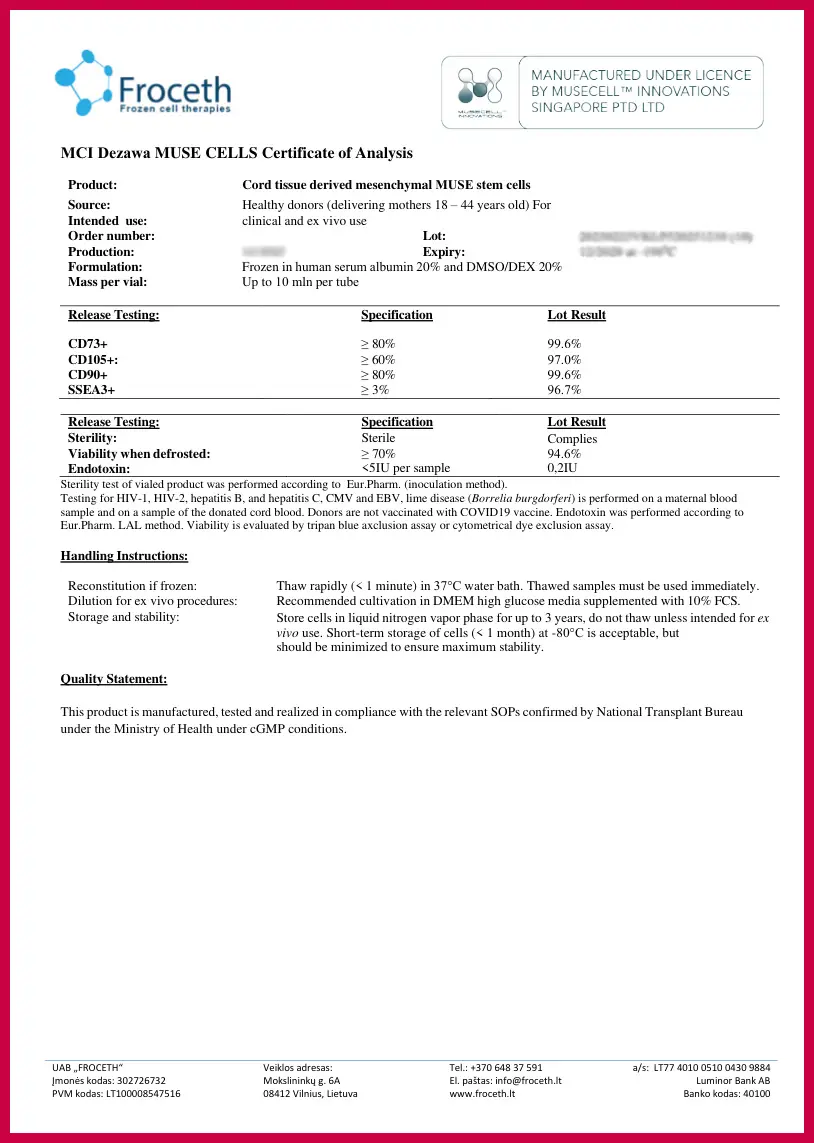
Swiss Medica officially collaborates with Dezawa MuseCells® and can source Dezawa cells upon request for use in treatment protocols.
Our doctors may consider them as part of a broader regenerative plan for complex health conditions, depending on the patient’s diagnosis, medical history, and treatment goals.
Official certification from Dezawa MuseCells® confirms this collaboration.
Interested in learning more?
Fill out the form to receive more information and a personalized assessment from our medical team.

Medical Advisor, Swiss Medica doctor
Dezawa MuseCells® have become one of the most discussed new directions in regenerative medicine—and for a reason. Research has shown that these cells can survive in challenging tissue environments, including low oxygen, inflammation, and cellular stress. This makes them especially interesting for complex conditions where the body’s natural repair processes need additional support.
In this article, we explain why Dezawa MuseCells® are attracting attention, how they work in the body, and how they are connected to mesenchymal stem cells (MSCs).
Getting to Know Muse Cells
At first, the terminology can be confusing: in some places, you may see “Muse cells”, while in others, you may see “Dezawa MuseCells®.”
Note on the name
“Muse cells” refers to a rare population of endogenous reparative cells naturally present in the human body and identified as a small subpopulation within mesenchymal stem cells (MSCs).
The term “Dezawa MuseCells®” refers to the Muse cell technology associated with Professor Mari Dezawa, whose research team first identified and described these cells in 2010. In this article, we may use “Muse cells” when discussing the biological cell type, while “Dezawa MuseCells®” refers specifically to the registered product name associated with the original Dezawa technology.
But what is Muse cell therapy, and what makes these cells different from other stem cell-based options?
To understand it better, it helps to start with MSCs. They are a larger family of stem cells and a highly valuable part of regenerative medicine. They are widely studied because they can help regulate immune responses, release bioactive molecules, reduce inflammation, and support tissue repair and regeneration.
Muse cells—short for Multilineage-differentiating Stress-Enduring cells—are a rare subset discovered within MSC populations. They share many useful MSC properties but may expand what MSC-based therapies can do.
These cells are studied for more targeted tissue support, broader differentiation potential, and stronger activity in complex conditions where inflammation, low oxygen, or cellular stress may limit natural repair processes.
Unlike embryonic stem cells or induced pluripotent stem cells (iPSCs), Muse cells occur naturally in the adult human body, remain stable, and did not demonstrate tumorigenicity in tested models. Researchers have identified them in:
- Bone marrow
- Fat tissue
- Connective tissues, like skin dermis
- Circulating blood
- Birth tissues like the umbilical cord
However, Muse cells are rare: in MSC populations, they usually represent only about 0.5–1% (sometimes up to 3%) of MSCs, so producing enough for therapy is still challenging and may affect Muse cell therapy cost and availability.
Over the past decade, Dezawa MuseCells® have built a growing body of research and emerged as a next-generation stem cell option. Today, they are increasingly used both in combination with MSCs and as a targeted replacement for MSC therapy within a personalized regenerative protocol.
At Swiss Medica, we produce SENSA Cells in our own GMP-certified laboratory. They are prepared fresh and administered without cryopreservation.
SENSA Cells are selected for their ability to withstand cellular stress. They also show biological characteristics associated with tissue migration and immune regulation—properties of interest in regenerative medicine.
Learn more about SENSA cellsHow Muse Cells Actually Work in Your Body
Like MSCs, they can release bioactive molecules and help regulate inflammation. But they are also known for additional properties: enhanced homing activity, functional activity under stress, broader differentiation potential, and possible longer persistence in tissues.
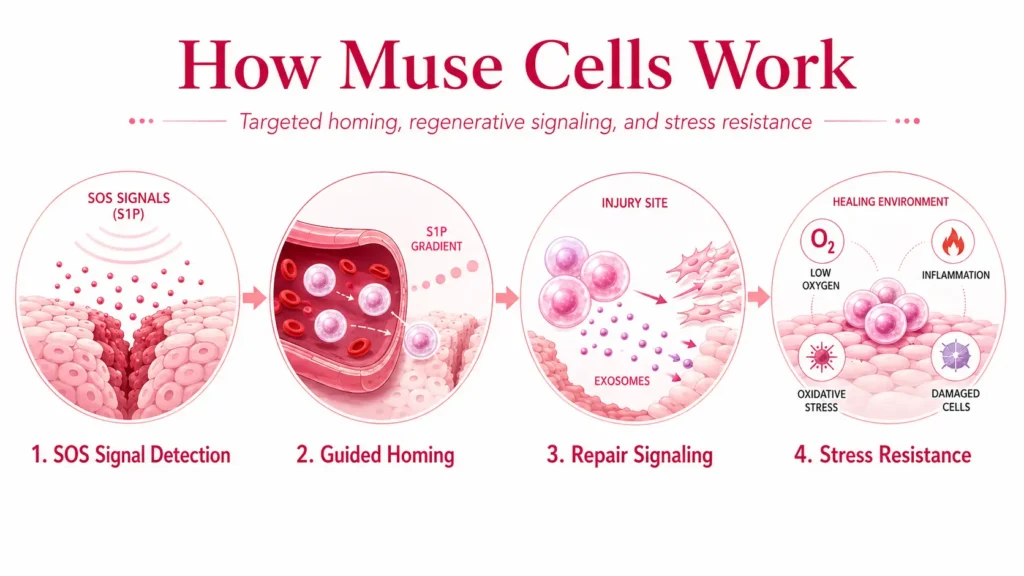
They can respond to chemical “SOS signals” released by damaged tissues. One key signal, sphingosine-1-phosphate (S1P), forms a gradient that helps guide them from the bloodstream to areas of injury, where they may support local repair. This targeted migration enables them to reach damaged tissues more directly and support repair at the site of injury.
To understand this better, start with the basics: learn how MSCs work.
Read more2. Elevated Secretory Function
Like MSCs, Muse cells release exosomes—bioactive messengers that carry regenerative signals between cells. They help deliver repair-related signals more precisely to surrounding cells, supporting targeted communication within damaged tissues.
Their activity can also help create a more supportive microenvironment around damaged tissues, including
- tissue repair
- angiogenesis, or the formation of new blood vessels
- immune modulation
- neurotrophic support, which may help protect and support nerve cells
3. Stress Resistance That Sets Them Apart
Once at the injury site, Muse cells demonstrate a high ability to survive in environments that are typically hostile to transplanted cells. These areas may have low oxygen, active inflammation, and cellular damage—all factors that can reduce the activity of standard cell-based therapies. This resilience may help the cells remain active where repair is needed most, leading to stronger therapeutic outcomes.
4. Broader Regenerative Potential: The Differentiation Process
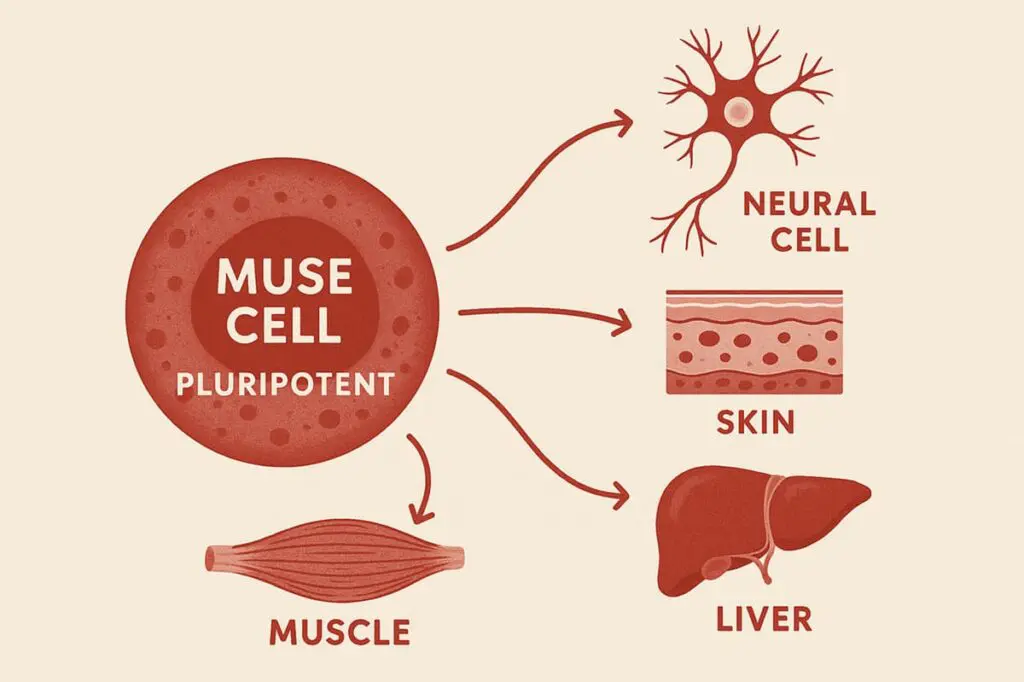
Muse cells are studied for their pluripotent-like potential, meaning they may have broader regenerative capabilities than standard MSCs. Depending on the type of tissue damage, they may potentially differentiate into muscle, neural, skin, and other specialized cells directly at the injury site.
This process is guided by signals released from damaged tissues, which activate specific genetic pathways within the cells. As a result, they may help replace injured cells and support tissue repair, including the formation of new blood vessels that are important for recovery.
It doesn’t mean they rebuild entire organs or tissues on their own—similar to MSCs, Muse stem cell treatments mainly boost the body’s natural healing ability.
The term “pluripotency” is often associated with embryonic stem cells, which may raise safety concerns. Muse cells are different because they are naturally found within adult MSC populations and have shown broader regenerative potential without forming teratomas in studies.
To help you understand the proven safety of MSCs, we reviewed the available studies and explained the mechanisms behind their safety profile. Read more in our detailed article.
Read more5. Calming Inflammation: The Anti-Inflammatory Side and Longer Tissue Activity
Repairing structural damage is only half the battle—many chronic diseases are fueled by inflammation and overactive immune responses. Like MSCs, Muse cells may help regulate immune activity and reduce inflammatory signaling.
One of the key biological properties of Muse cells’ innovative technology is their low immunogenicity. This means they may be less likely to trigger a strong immune reaction or be quickly cleared by the immune system. As a result, they may remain active in tissues for longer, giving them more time to release bioactive molecules, support local repair processes, and contribute to a more stable regenerative response.
Comparison: Muse Cells vs. Stem Cells (MSCs)
Muse cells are a specialized subpopulation within mesenchymal stem cells (MSCs) and are studied for their broader regenerative potential. Since they are part of the MSC family, it is not entirely accurate to compare “Muse cells vs. stem cells” as separate categories. Rather, Muse cell therapy can be viewed as a more specialized form of MSC-based therapy that may offer additional regenerative capabilities.
| Key point | MSCs | Dezawa MuseCells® |
| Core role | Foundational regenerative cells | More specialized Muse cell population |
| Stress resilience | Good | Enhanced activity in low oxygen, inflammation, and cellular stress |
| Homing activity | Supports tissue repair, but less targeted | Enhanced migration toward damaged tissues |
| Secretory activity | Releases bioactive repair and immune-regulating signals | Like MSCs, release exosomes that support cell-to-cell communication and may help deliver regenerative signals more precisely within damaged tissues. |
| Best use | General regenerative support and inflammation control | Complex protocols needing more targeted, stress-resistant support |
Safety Profile and Treatment Considerations
Muse cell regenerative therapies are an advanced treatment option with a growing research and safety profile. Current studies describe these cells as non-tumorigenic, meaning they do not form teratomas, and highlight their low immunogenicity, which may help reduce rapid immune clearance.
However, as with any cell-based therapy, mild and temporary side effects may occur. These can include headache, tiredness, or redness and discomfort at the injection site. Such reactions are usually manageable and monitored by the medical team as part of the treatment protocol.
Emerging Clinical Applications
With each year, more data on Muse cells is becoming available. Clinical trials suggest that these cells may support tissue repair and functional recovery in selected complex conditions, while complementing standard therapies as part of a broader treatment approach.
Neurological Repair: Stroke Recovery and Brain Injury Repair
One of the first targets for Muse cell therapy has been stroke, which often leaves patients with permanent brain damage and disability. In 2023, a randomized trial in Japan tested an allogeneic Muse cell product in patients who had suffered a stroke (subacute phase, 2–4 weeks post-stroke).
The results: patients who received the cells showed greater improvement on the Fugl-Meyer Motor Scale, which measures motor recovery after stroke. Improvements were seen in arm function and overall movement ability by 4 weeks after infusion and remained stable through 12 months.
While these efforts are still in their early stages, they indicate that these cells could have a wide range of applications in neurology, from stroke and neonatal brain injury to potentially traumatic brain injury and neurodegenerative conditions.
Learn more about MSC therapies for post-stroke recovery in our dedicated article.
Read moreCardiac Recovery
Repairing heart tissue after a myocardial infarction has long been a goal of regenerative medicine. In the first human Muse cell clinical trial (a 2020 Japanese study), heart attack patients with poor ejection fraction (weak heart pump function) received donor Muse cells intravenously within a week after the attack.
The results: In a small study of three patients, Muse stem cell treatment was associated with an increase in heart ejection fraction after three months—from approximately 41% to 52%. Even a 5% improvement in ejection fraction can be clinically meaningful, so this double-digit increase suggests notable functional recovery of the heart.
However, the sample size was very limited, and larger studies are needed to confirm whether this effect is linked to cardiac muscle regeneration and to better understand its clinical significance.
There were no arrhythmias or adverse reactions, and follow-ups showed that treated patients had improved heart wall motion and scar size.
Interested in how MSCs may support recovery after a heart attack? Explore the science and clinical potential in our dedicated article.
Read moreLung Tissue Repair
For lung diseases, the damage caused by inflammation and fibrosis in conditions like ARDS (Acute Respiratory Distress Syndrome) has been a focus. During the COVID-19 pandemic, a small clinical study in Japan investigated the use of Muse cells in patients with severe ARDS. While comprehensive peer-reviewed results remain limited, preliminary reports suggested potential benefits in reducing lung inflammation.
The cells’ ability—shared with regular MSCs—to modulate immune responses (e.g., calm cytokine storms) and potentially differentiate into airway-lining or blood vessel cells may open up new treatment options for conditions such as ARDS, pulmonary fibrosis, and even severe asthma in the future.
Skin Recovery
Muse cells have also been studied in skin and musculoskeletal repair. In a clinical trial in Japan, researchers investigated cell infusions in five young adults with epidermolysis bullosa (EB), a genetic condition that causes chronic skin wounds and ulcerations.
The results: Over the next few weeks, their open skin ulcers shrank significantly (two patients had >50% wound reduction by one month), and by one year the overall wound area was markedly reduced. Patients also reported less pain.
Spinal Cord Recovery
In spinal cord injury (SCI), where lost neurons and connections result in paralysis, Muse cell therapy showed promising results. A 2024 multicenter trial in Japan treated 10 patients with recent cervical spinal cord injuries using donor Muse cells. The primary goal was safety.
The results: no serious treatment-related side effects occurred. But beyond safety, doctors observed meaningful improvements in motor scores, daily activity, and quality-of-life measures compared with patients’ condition before treatment.
At Swiss Medica, we have been helping patients with SCI for over a decade. Learn more about the possible benefits of MSC therapy in our dedicated article.
Read moreLongevity Therapy
Aging, at its core, involves the accumulation of cellular damage, loss of regenerative capacity, and chronic inflammation. Muse cells can aid in the fight against some signs of aging due to their ability to produce youth-promoting factors.
Researchers are considering enhancing a patient’s own stem cell pool with these cells to help with organ maintenance and repair. A lower dose of targeted Muse cells, when combined with regular MSCs, may improve tissue repair and regeneration.
Learn more about anti-aging therapies with MSCs, which naturally include Muse cells, in our article on wrinkle treatments.
Read moreChronic Disease Management: ALS, Parkinson’s, and More
In chronic conditions, a single treatment may not be sufficient, as ongoing inflammation and tissue damage can require repeated therapy. Early Muse cells’ clinical trials have shown promising results in several chronic diseases, but research is still ongoing.
| Condition | What Studies Show | Key Takeaway |
| ALS | In ALS, a 2023 Phase 2 trial tested repeated doses over six months. Safety was confirmed, and the results suggested a possible delay in disease progression in treated patients. | The cells may help protect or support motor neurons, potentially helping preserve functional ability. Larger controlled studies are still needed. |
| Parkinson’s disease | Parkinson’s research is still at an earlier stage. Preclinical studies suggest that the cells may migrate toward damaged brain areas, support dopaminergic neuron-like features, and contribute to neuroprotection. | Potential for Parkinson’s disease, but clinical evidence in patients is still required. |
Get a free online consultation
If you want to understand how Muse cell therapy may be used for your condition, start with a free online consultation with our doctors. Our medical team will review your case, answer your questions, and explain whether Muse cell therapy may be relevant for your personalized regenerative protocol.
Medical Advisor, Swiss Medica doctor
Treatment Process: How Dezawa MuseCells® Are Used in Swiss Medica
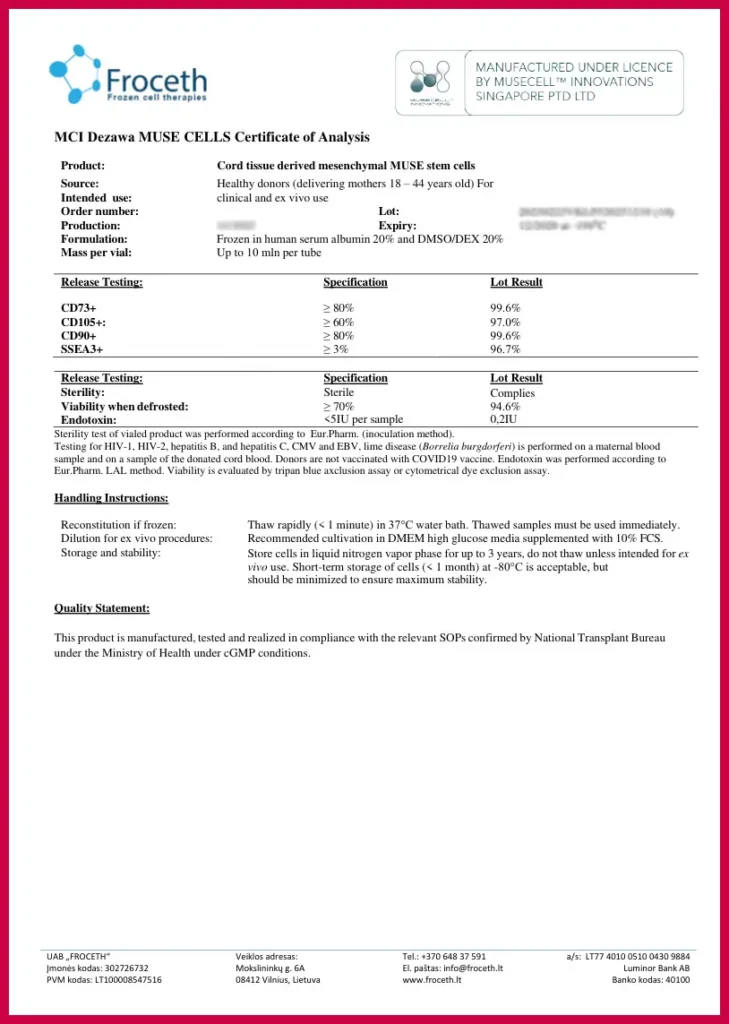
Swiss Medica now works with Dezawa MuseCells® and has certified access to them for use in personalized regenerative protocols. This is confirmed by official certification.
At Swiss Medica, Dezawa MuseCells® may be considered as part of a personalized regenerative protocol for patients with complex or chronic conditions.
Initial Consultation and Medical Review
The first step is a free consultation with our medical team. During this stage, our doctors review your diagnosis, medical history, current symptoms, previous treatments, and treatment goals. This helps determine whether this therapy may be appropriate and how they could fit into a broader regenerative protocol.
If the program may be suitable, we explain the recommended treatment approach, expected duration, possible benefits, limitations, risks, next steps, and pricing factors. We follow treatment protocols established in our clinical practice and adapt them to each patient’s condition, general health, and individual medical needs.
Cell Product Supply
Dezawa MuseCells® are supplied to Swiss Medica as a ready-to-use official external cell product. They are produced in specialized facilities under controlled conditions to ensure sterility, safety, quality, and the correct cell type before clinical use. The final product is delivered as a sterile suspension of live Muse cells in a predetermined amount.
In addition to externally supplied cell products, Swiss Medica also offers SENSA stem cells. These cells are designed to remain active under biological stress, supporting enhanced regenerative response and treatment performance.
Swiss Medica has been working with cell-based therapies since 2011 and has extensive experience in producing its own cells. SENSA cells are prepared directly at Swiss Medica and administered fresh, without transport-related freezing. This helps preserve cellular viability, secretory activity, and functional responsiveness before they are integrated into a patient’s personalized protocol.
Learn more about SENSA cellsTreatment Sessions
The cells are administered intravenously, similar to a standard IV drip. No surgery is required. During the procedure, the patient sits or lies comfortably while the cell suspension is delivered through a vein, usually in the arm.
Depending on the protocol, Muse cell therapy may be given as a single infusion or as part of several treatment sessions. It may also be combined with other regenerative or supportive therapies aimed at reducing inflammation, improving circulation, supporting tissue repair, or enhancing overall recovery.
Monitoring at the Clinic and Discharge
After receiving the cells, patients are monitored throughout their stay at Swiss Medica. Our medical team follows their condition, tracks possible reactions, and adjusts supportive care when needed.
Before you leave the clinic, our doctors review your condition, provide recommendations, and explain the next steps. You receive guidance on what to monitor after returning home and when to share updates with the medical team.
Follow-Up After Returning Home
After patients return home, our doctors remain in contact for up to six months to monitor progress, answer questions, and assess changes in symptoms, function, and overall well-being.
If needed, patients may also be invited for a free follow-up check-up visit at the clinic. In this case, the medical visit itself is provided free of charge, while patients cover only their travel tickets.
At Swiss Medica, we follow strict protocols tailored to each condition to ensure MSC therapy is both safe and effective. Learn more about the steps patients go through before, during, and after treatment.
Read moreHow to Get Started: Your First Steps Toward Muse Therapy
If you are considering Muse cell therapy, the first step is to make a safe, medically informed decision. You can start by speaking with our regenerative medicine doctor—free of charge and without any pressure to begin treatment. You will receive a clear explanation of possible options, limitations, safety considerations, next steps, and cost factors.
Contact us
Book your free consultation today to discuss your case with our medical team.
Medical Advisor, Swiss Medica doctor
Frequently Asked Questions
1. What is Muse cell therapy?
It is a regenerative medicine approach based on Muse cells—a rare, stress-enduring subpopulation found within MSCs. These cells are studied for their ability to migrate toward damaged tissues, remain active in challenging environments, release bioactive signals, and support tissue repair through broader differentiation potential.
2. Is Muse therapy available now?
Yes. Swiss Medica now officially offers Dezawa MuseCells® and may include them in personalized regenerative protocols when medically appropriate. Suitability depends on the patient’s diagnosis, medical history, current condition, and treatment goals.
3. How much does Muse cell therapy cost?
The Muse cell therapy cost depends on the patient’s condition, required dosage, number of injections, and whether additional therapies are included in the treatment plan. After reviewing your case, our medical team can explain the recommended plan and provide a detailed cost breakdown.
4. What does the treatment process look like?
Patients receive Muse cells through a simple IV infusion, much like a drip or blood transfusion. No surgery, no anesthesia, and no immunosuppressant drugs are needed.
5. Are Muse cell therapies safe?
Current Muse cell clinical trials describe these cells as non-tumorigenic, meaning they do not form teratomas. Dezawa MuseCells® also have hypoimmunity potential, so they may be less likely to trigger a strong immune reaction. In our practice, no serious side effects or late complications have been observed so far, but every patient is assessed individually and monitored throughout the protocol.
6. Who is a candidate?
Candidates are selected individually after a medical review. Our doctors consider the diagnosis, disease stage, medical history, current health status, contraindications, and treatment goals to decide whether this therapy may be appropriate as part of a personalized regenerative protocol.
References:
Dezawa M. Muse Cells Provide the Pluripotency of Mesenchymal Stem Cells: Direct Contribution of Muse Cells to Tissue Regeneration. Cell Transplant. 2016;25(5):849-61. doi.org/10.3727/096368916X690881
Wu, M., Zhang, R., Zou, Q. et al. Comparison of the Biological Characteristics of Mesenchymal Stem Cells Derived from the Human Placenta and Umbilical Cord. Sci Rep 8, 5014 (2018). https://doi.org/10.1038/s41598-018-23396-1
Minatoguchi S, Fujita Y, Niizuma K, Tominaga T, Yamashita T, Abe K, Dezawa M. Donor Muse Cell Treatment Without HLA-Matching Tests and Immunosuppressant Treatment. Stem Cells Transl Med. 2024 Jun 14;13(6):532-545. doi.org/10.1093/stcltm/szae018
Alanazi RF, Alhwity BS, Almahlawi RM, Alatawi BD, Albalawi SA, Albalawi RA, Albalawi AA, Abdel-Maksoud MS, Elsherbiny N. Multilineage Differentiating Stress Enduring (Muse) Cells: A New Era of Stem Cell-Based Therapy. Cells. 2023 Jun 21;12(13):1676. doi.org/10.3390/cells12131676
Dezawa M. Comparison of MSCs and Muse cells: the possible use for healthspan optimization. Biogerontology. 2025 Jul 2;26(4):139. doi.org/10.1007/s10522-025-10275-2
Niizuma K, Osawa SI, Endo H, Izumi SI, Ataka K, Hirakawa A, Iwano M, Tominaga T. Randomized placebo-controlled trial of CL2020, an allogenic muse cell-based product, in subacute ischemic stroke. J Cereb Blood Flow Metab. 2023 Dec;43(12):2029-2039. doi.org/10.1177/0271678X231202594
Fujita Y, Nohara T, Takashima S, Natsuga K, Adachi M, Yoshida K, Shinkuma S, Takeichi T, Nakamura H, Wada O, Akiyama M, Ishiko A, Shimizu H. Intravenous allogeneic multilineage-differentiating stress-enduring cells in adults with dystrophic epidermolysis bullosa: a phase 1/2 open-label study. J Eur Acad Dermatol Venereol. 2021 Aug;35(8):e528-e531. doi.org/10.1111/jdv.17201
Yamashita T, Nakano Y, Sasaki R, Tadokoro K, Omote Y, Yunoki T, Kawahara Y, Matsumoto N, Taira Y, Matsuoka C, Morihara R, Abe K. Safety and Clinical Effects of a Muse Cell-Based Product in Patients With Amyotrophic Lateral Sclerosis: Results of a Phase 2 Clinical Trial. Cell Transplant. 2023 Jan-Dec;32:9636897231214370. doi.org/10.1177/09636897231214370
Koda M, Imagama S, Nakashima H, Ito S, Segi N, Ouchida J, Suda K, Harmon Matsumoto S, Komatsu M, Endo T, Suzuki S, Inami S, Ueda H, Miyagi M, Inoue G, Takaso M, Nagata K, Yamada H, Kamei N, Nakamae T, Suzuki H, Nishida N, Funaba M, Kumagai G, Furuya T, Yamato Y, Funayama T, Takahashi H, Yamazaki M. Safety and feasibility of intravenous administration of a single dose of allogenic-Muse cells to treat human cervical traumatic spinal cord injury: a clinical trial. Stem Cell Res Ther. 2024 Aug 13;15(1):259. doi: 10.1186/s13287-024-03842-w. Erratum in: Stem Cell Res Ther. 2024 Nov 6;15(1):402. doi.org/10.1186/s13287-024-04044-0
Sato Y, Shimizu S, Ueda K, Suzuki T, Suzuki S, Miura R, Ando M, Tsuda K, Iwata O, Muramatsu Y, Kidokoro H, Hirakawa A, Hayakawa M; SHEILD team. Safety and tolerability of a Muse cell-based product in neonatal hypoxic-ischemic encephalopathy with therapeutic hypothermia (SHIELD trial). Stem Cells Transl Med. 2024 Nov 12;13(11):1053-1066. doi.org/10.1093/stcltm/szae071
Dezawa M. Macrophage- and pluripotent-like reparative Muse cells are unique endogenous stem cells distinct from other somatic stem cells. Front Bioeng Biotechnol. 2025 Mar 27;13:1553382. doi.org/10.3389/fbioe.2025.1553382