swiss medicaXXI century S.A.
After a sports injury, the main goal for many athletes and active individuals is to return to training and competition as safely and as soon as possible. But if pain and weakness continue despite rehabilitation, recovery can take longer than expected, affecting both well-being and confidence. In such cases, other supportive methods may help.
Stem cell therapy may be a valuable addition to standard treatment. The goal is to help the athlete regain function, rebuild load tolerance, and move more confidently toward returning to training and competition.
This article explains how stem cell therapy for sports injuries is used in clinical practice, which injuries have been studied most extensively, and who may be a suitable candidate for treatment.
Recovery Starts with the Right Diagnosis
Sports injuries can vary widely in type and severity. Even an injury that seems minor may affect several tissues at once, such as muscles, ligaments, tendons, cartilage, or joints.
Tendon, Ligament, Cartilage, and Muscle Injuries Have Different Recovery Patterns
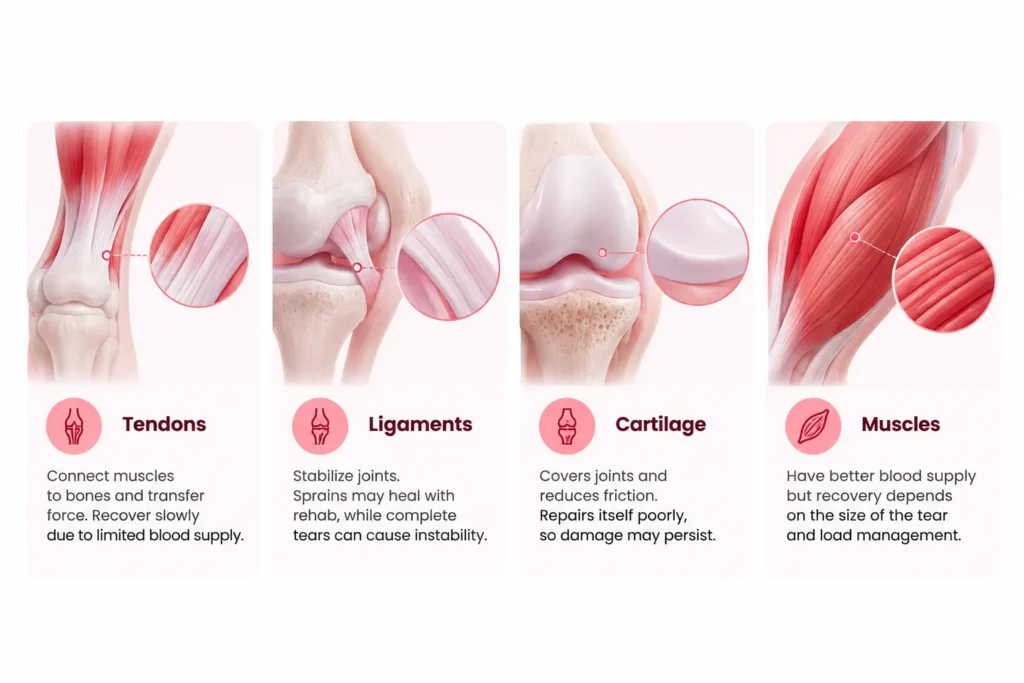
Identifying which tissue is injured is one of the first steps in choosing the most appropriate treatment, because each tissue heals differently.
- Tendons connect muscles to bones and carry force during running, jumping, lifting, and throwing. They usually heal slowly because they have limited blood supply. Recovery often means gradually increasing load so the tendon can become stronger again.
- Ligaments stabilize joints and help control movement. Recovery depends on how serious the tear is and whether the joint has become unstable. Rehabilitation usually focuses on restoring strength, balance, control, and confidence in the joint.
- Cartilage helps joints move smoothly and absorb load. It has very limited or no intrinsic regenerative capacity. This is why treatment often focuses on reducing irritation, improving joint function, and managing load to protect the damaged area. Regenerative approaches such as stem cell therapy for sports injuries have been investigated as potential supportive treatment options for selected cartilage injuries
- Muscles create movement and help support the body. Compared with tendons and ligaments, muscles have a richer blood supply, which generally helps them heal faster.
Overuse Injuries Are Not the Same as Acute Tears
Regardless of which tissue is affected, sports injuries usually develop in one of two ways:
-
1
An acute injury happens suddenly—for example, after a fall, twist, collision, or forceful movement. It may cause immediate pain, swelling, loss of function, or a tear. In the acute phase, treatment usually follows standard trauma care: rest, immobilization, pain and inflammation control, and, in some cases, surgery.
-
2
An overuse injury develops gradually when the same movement or load is repeated again and again. The tissue does not have enough time to recover, so irritation, inflammation, pain, stiffness, weakness, or degenerative changes may appear over time.
Regenerative options, including stem cell therapy for sports injuries, may be considered after the acute phase, especially if recovery is slow or symptoms persist. Such an approach may help accelerate recovery, support tissue healing, reduce the risk of chronic damage, and help the athlete return to sport safely.
Why MRI, Ultrasound, and Athletic Demands Matter
Because recovery differs depending on the tissue involved, the type of injury, and its severity, imaging and physical examination are often needed before treatment decisions are made. A complete assessment may include:
- MRI;
- ultrasound;
- X-rays;
- physical and functional examination;
- assessment of strength, stability, mobility, and response to load.
These findings help the medical team choose the right treatment plan and decide whether additional options, such as stem cell therapy for sports injuries, may be suitable.
What Is the Best Treatment for a Sports Injury?
There is no single treatment that works for every sports injury. Depending on the diagnosis, treatment may include:
- activity modification;
- medication to relieve pain and inflammation;
- bracing or temporary immobilization;
- platelet-rich plasma (PRP);
- stem cell therapy;
- surgery, when conservative treatment is unlikely to provide adequate recovery.
Treatment Depends on the Injury and Individual Condition
Each treatment has a different purpose. Some focus on relieving symptoms, others help stabilize the injured area or support biological healing. In most cases, recovery involves a combination of treatments rather than a single intervention. The most appropriate combination depends on the individual injury and the patient’s progress.
When Surgery May Be Necessary
At certain stages of an injury or degenerative condition, surgery may be more appropriate than continuing with conservative treatment. To make this decision, doctors assess the damaged tissue, review imaging and clinical test results, and consider how the patient has responded to rehabilitation, injections, medication, and other therapies.
Platelet-rich plasma (PRP) and stem cell therapy are among the newer regenerative approaches that have already become part of sports medicine practice. Each may support recovery on its own, while together they can complement and strengthen the overall effect.
- PRP is prepared from the patient’s own blood. After processing, the platelet-rich portion is injected into the injured area. Platelets release growth factors and signaling molecules that may support tissue repair and influence the early stages of healing.
- Stem cell therapy may use mesenchymal stem cells (MSCs), which are among the most studied cell types in regenerative medicine. They can be obtained from sources such as bone marrow, adipose tissue, umbilical cords, or placentas. These cells may help regulate inflammation and support recovery through their signaling and immunomodulatory properties.
Where Stem Cell Therapy May Fit Into Sports Medicine
Doctors may consider stem cell therapy at different stages of treatment once the injury has been clearly diagnosed. The goal of stem cell treatments for athletes is to create more favorable biological conditions for recovery, support the injured tissue, and help the patient regain function more effectively.
Rehabilitation Remains the Foundation of Recovery
Any therapies, including PRP and stem cell treatments for athletes, should not be viewed as alternatives to rehabilitation. Injections and medication may support recovery in different ways, but the body still needs regular movement to relearn strength, stability, and coordination.
Physical rehabilitation helps restore safe movement and gradually prepare the body for physical load. Depending on the injury, it may focus on the following:
- improving joint mobility;
- increasing muscle strength;
- restoring balance and coordination;
- building tendon and ligament capacity;
- correcting movement mechanics;
- reintroducing running, jumping, throwing, or kicking.
How Stem Cell Therapy May Support Athletes’ Recovery and Return to Sport
Most sports medicine research in this area focuses on mesenchymal stromal cells, commonly called MSCs.
What Current Research Suggests
The use of stem cells in sports medicine, particularly for orthopedic and sports-related conditions, has been studied for many years. Compared with some other areas of regenerative medicine, joints and connective tissues are among the fields where cell-based approaches may be especially relevant.
Stem cell therapy studies and clinical research report several encouraging findings, particularly for mesenchymal stem cells:
- Joint and cartilage conditions: A 2024 systematic review highlighted promising clinical signals across several orthopedic indications, including joint and tendon conditions.
- Knee osteoarthritis and cartilage lesions: A 2024 review of 25 randomized trials involving 1,048 patients reported possible improvements in pain and function.
- Chronic knee pain: Another 2024 review also highlighted potential benefits but noted that differences in study quality and treatment protocols make the results difficult to compare.
- A large body of research has evaluated stem cell therapy for musculoskeletal conditions, including knee and hip osteoarthritis, tendon injuries, rotator cuff tears, Achilles and elbow tendinopathy, ACL injuries, and other orthopedic conditions. Many studies report encouraging outcomes, especially in pain reduction, improved function, and recovery support.
In addition, MSCs have a well-documented safety profile. When they are used, they are typically combined with rehabilitation and other appropriate therapies.
How MSCs May Support Tissue Healing and Help Regulate Inflammation
An injury can interfere with normal tissue repair. Ongoing inflammation may increase pain, damage surrounding structures, and make it harder for the tissue to recover properly. The use of stem cells in professional athletes’ recovery is not based on simply replacing damaged tendon, ligament, or cartilage. Instead, stem cells release signals that help create more favorable conditions for recovery in the injured area:
- regulate excessive inflammation;
- support the survival and function of local cells;
- promote the formation of small blood vessels where appropriate;
- support more balanced scar tissue formation, helping reduce excessive fibrosis or abnormal scarring.
What Stem Cell Therapy Cannot Promise
There is no such thing as the single “best” stem cell therapy for athletes. Even though, in many cases, cell therapy may significantly support recovery and help athletes return to sport faster, the treatment doesn’t work the same way for every athlete or guarantee the same result in every case.
However, a carefully designed protocol may influence how well the treatment supports recovery. The choice of cell type, treatment timing, route of administration, accompanying therapies, and rehabilitation plan all influence the overall recovery process.
Sports Injuries Where Regenerative Therapy Is Most Often Discussed
The table below shows how stem cell therapy may be used for different types of tissue injury and what the treatment is intended to support in each case.
| Area | Potential Uses of MSC Therapy for Athletes |
| Tendon Problems | Stem cell therapy for tendon repair may be used for injuries affecting the Achilles tendon, patellar tendon, rotator cuff, or elbow tendons. The cells are usually delivered directly into or around the damaged area. The aim is to reduce inflammation, support the repair of tendon tissue, and improve its strength and function. |
| Ligament Sprains and Partial Tears | MSCs may be administered near the injured ligament to support recovery to potentially restore joint stability, balance, and control. |
| Cartilage Injuries | Stem cell therapy for knee, hip, cartilage, and meniscus injuries may be delivered into the joint or nearby soft tissues. For cartilage damage and degenerative joint changes, the aim is to reduce inflammation and pain and support mobility and joint function. For meniscus injuries, treatment may also support the damaged tissue and help preserve its role in cushioning the joint and distributing load. |
| Muscle Tears and Post-Training Tissue Damage | For muscle injuries, stem cells are typically delivered locally to the damaged area, depending on the treatment plan. As with other sports injuries, the aim is to reduce inflammation and create more favorable conditions for muscle recovery. |
What Improvements May Look Like in Daily Life and Sport
At Swiss Medica, we work with patients with different types of sports injuries. After treatment, patients typically report:
- less pain and swelling;
- better joint mobility;
- greater tolerance to strength exercises;
- longer training sessions;
- a gradual return to running and sport-specific drills.
Our Patient’s Story: Recovery Before and After Treatment
Federico Vella, a professional K1 kickboxer and multiple-time champion, came to Swiss Medica with chronic pain in his hips and shoulders. Years of intense training had left him in increasing pain, affecting both movement and recovery, as well as his ability to train at the level required to progress in his sport.
His treatment program included umbilical cord-derived mesenchymal stem cells, exosomes, and platelet-rich lysate. After his first visit, Federico shared the changes he noticed:
“After the first treatment, I was able to return to training without pain, which was a major improvement for me. I also gained 4 kg of muscle mass, measured with a professional device. What I did not expect was how much better I would sleep: now I fall asleep almost immediately, feel more energetic, and recover better. My chronic nasal congestion also improved, so I rarely need the spray I used before.”

Federico’s experience is one of many patient stories from Swiss Medica. More patients share their treatment journeys and results on our YouTube channel.
Who May Be a Candidate for Stem Cell Therapy for Sports Injuries?
Stem cell therapy is not a universal solution. At Swiss Medica, our doctors carefully review each case to determine whether the treatment is likely to be useful.
Active Individuals With a Clear Diagnosis and Stalled Recovery
Potential candidates may include active adults and athletes who:
- have a confirmed diagnosis;
- continue to experience pain or limited function;
- have completed appropriate standard treatment;
- have made limited progress with rehabilitation;
- are medically stable.
When Regenerative Treatment May Not Be Appropriate
At Swiss Medica, we do not recommend stem cell therapy for athletes who have the following conditions or health concerns:
- active infection or fever;
- active cancer;
- uncontrolled blood-clotting problems;
- severe unstable cardiovascular disease;
- pregnancy or breastfeeding;
- an urgent injury requiring surgery;
- no confirmed diagnosis.
The final decision can only be made by a doctor after reviewing the patient’s medical history, test results, and current condition.
Get a free online consultation
Looking for a clear medical opinion on whether stem cell therapy may be suitable for your injury? We offer a free online consultation with a regenerative medicine doctor.
The specialist will review your diagnosis, medical history, test results, and sports goals, then explain whether the treatment may be useful in your case. There is no pressure and no obligation to proceed.

Medical Advisor, Swiss Medica doctor
What Happens During Treatment at Swiss Medica?
Swiss Medica has years of experience using stem cells in sports medicine and follows established clinical protocols for sports-related injuries and recovery. Our treatment programs cover medical assessment, personalized planning, the clinic stay, rehabilitation, and follow-up after the patient returns home.
Step 1. Medical Records and Imaging Swiss Medica Reviews
The medical assessment begins before the patient travels to the clinic. First, the patient has an online consultation to discuss the injury, current symptoms, previous treatment, and recovery goals. The medical team then reviews the available records and imaging, which may include:
- recent and earlier MRI scans and reports;
- ultrasound results;
- X-rays;
- the confirmed diagnosis;
- rehabilitation records;
- surgery history.
Step 2. Personalized Treatment Planning Based on Injury Type and Goals
After reviewing the medical records and speaking with the patient online, the team prepares a preliminary treatment plan. It considers:
- the injured tissue;
- the size and location of the damage;
- how long symptoms have been present;
- previous treatment;
- current physical function;
- overall health;
- activity level;
- rehabilitation needs;
- the sport or level of training the patient hopes to return to.
After the patient arrives at the clinic, doctors perform an in-person examination and assess symptoms, mobility, strength, and joint stability. They then confirm the preliminary program or adjust it based on the findings.
Step 3. Stem Cell Therapy and Supportive Care
Stem cell therapy forms the main part of the treatment program. Alongside the main treatment, patients may undergo rehabilitation and supportive procedures. These may include:
- physiotherapy;
- electrotherapy, including interferential current and TENS;
- Spark Wave Therapy;
- MBST Magnetic Resonance Therapy;
- Intracellular Metabolism Recovery (IMR) therapy with vitamin C, B-complex vitamins, glutathione, and other selected components;
- medical monitoring during the clinic stay.
These parts of the program run in parallel: cell therapy supports biological recovery, while rehabilitation helps the patient gradually regain mobility, control, strength, and readiness for increasing physical activity.
Step 4. Follow-Up and Return-to-Activity Planning
Recovery continues after the patient leaves the clinic. Patients receive instructions for the early recovery period and further rehabilitation. Our doctors remain available for follow-up for up to six months, reviewing progress as the patient returns to daily activity, exercise, and sport. They can also return to Swiss Medica for a free follow-up check-up, with only travel costs paid by the patient.
Returning to Sport After Treatment
For athletes, time is one of the most important factors in recovery. At the Swiss Medica clinic, we consider this when planning treatment and rehabilitation.
Some patients begin to notice reduced pain and better movement within 4–6 weeks, while fuller recovery may take 3–6 months. The first meaningful change may be the ability to exercise with less discomfort. From there, the athlete can gradually rebuild strength, load tolerance, and confidence.
However, the timeline depends on the type and severity of the injury and the patient’s response to treatment.
The First Weeks Focus on Protecting the Healing Environment
Physical activity may need to be reduced for a while after treatment. The exact limits depend on the injury and treatment method. During this time, patients may need to avoid:
- heavy lifting;
- running and other high-impact activity;
- jumping;
- intense training;
- excessive load on the treated area.
Light movement and rehabilitation exercises may begin according to the doctor’s instructions.
Return to Training Should Be Based on Functional Milestones
As inflammation and pain decrease, the patient may begin to regain strength, flexibility, and range of motion. Progress is assessed not only by how much time has passed, but also by how the body responds to movement and exercise.
Doctors and physiotherapists may monitor:
- pain and swelling;
- range of motion;
- muscle strength;
- balance and joint control;
- tolerance to running and impact;
- sport-specific movements;
- confidence in the injured area.
The next stage begins when the current level of activity can be performed safely without a lasting increase in symptoms.
A Structured Plan Should Reduce Re-Injury Risk, Not Just Pain
The program should guide the athlete from the first safe movements to full training and competition. This process should not be rushed: each stage needs to be completed and tested before the load increases.
Rehabilitation may include:
- restoring strength and range of motion;
- rebuilding coordination and joint control;
- reintroducing sport-specific movements;
- gradually increasing training intensity;
- confirming that the body can tolerate repeated loads.
In some cases, doctors may recommend more than one course of stem cell treatment for a sports injury. As tissue healing and remodeling continue over weeks and months, an additional course may be considered to further support these ongoing biological processes.
Safety, Side Effects, and Rules Athletes Should Know
Professional athletes are often especially concerned about safety, as treatment must fit around competition schedules and comply with strict sporting regulations.
Possible Side Effects After Stem Cell Therapy
Over the past 20 years, stem cell therapy has demonstrated a generally favorable safety profile when performed under appropriate medical and laboratory standards. Most reported reactions are temporary and may include injection-site pain, swelling, fatigue, headache, or muscle aches.
Most patients are able to resume their usual routine soon afterward. Throughout the program, the Swiss Medica team closely monitors each patient’s response and provides timely medical support whenever needed.
What Competitive Athletes Should Know About Anti-Doping Rules
One of the main questions for athletes who compete professionally is whether stem cell treatments for sports injuries are approved under anti-doping rules. The answer depends on the specific treatment rather than on stem cell therapy itself.
Whether a procedure is permitted may depend on:
- whether the cells are taken from the athlete or obtained from a donor;
- how the cells are processed or modified;
- whether growth factors, hormones, or other prohibited substances are added during preparation;
- whether the treatment is intended to restore normal function or enhance athletic performance;
- the rules of the relevant sports federation and the applicable anti-doping organization.
At Swiss Medica, treatments follow established medical and laboratory protocols that take these considerations into account. Cell products are prepared in our own laboratory under controlled conditions, allowing the team to oversee processing and ensure that no undeclared substances are introduced during preparation. The goal is to support recovery and restore functions affected by injury or disease, not to enhance performance beyond the athlete’s normal capabilities.
However, competitive athletes should always consult the current WADA Prohibited List and, where applicable, their national anti-doping organization or sports federation before undergoing any regenerative treatment.
Cost of Stem Cell Therapy for Sports Injuries
The stem cell therapy cost varies depending on the type and severity of the injury, the number of affected joints or tendons, the cell preparation, the administration method, and the amount of rehabilitation and follow-up required.
For example, stem cell treatments for sports injuries in the US are often priced per injection or procedure, while diagnostics, physiotherapy, accommodation, and follow-up may be charged separately. Here are three major countries that are more popular for their orthopedics and sports programs:
| Region / country | Approximate cost | Treatment structure |
| USA | $5,000–$25,000+ per procedure | Often priced per injection or procedure. Diagnostics, rehabilitation, follow-up, travel, and accommodation may cost extra. |
| Mexico | $6,000–$20,000+ per procedure | A popular medical-tourism destination for orthopedic and sports injury programs. Some clinics offer packages, but inclusions and standards vary considerably. |
| Swiss Medica (Serbia) | €7,700–€45,000* per program | A complete personalized program that may include cell therapy, diagnostics, rehabilitation, medical supervision, accommodation, meals, transfers, translation, and follow-up. |
* Prices are indicative and based on 2026 estimates; they may vary depending on condition severity and required cell quantity.
What a Swiss Medica Sports Injury Program May Include
At Swiss Medica, the final cost of stem cell therapy for sports injuries is calculated after the medical team assesses the patient’s condition and recovery goals. This price covers the full treatment program, including all planned procedures, medical supervision, accommodation, meals, translation, coordination, and airport transfers.
There are no hidden clinic fees. Patients only need to pay separately for their travel tickets and any optional activities or personal expenses in Belgrade.
Why Athletes Choose Swiss Medica
Since 2011, we have supported more than 10,000 patients, including athletes recovering from injuries and people living with complex joint conditions. Here is what they value most about treatment at our clinic.
Individual Assessment Before Treatment
Our patients begin with a remote review of their injury, imaging, previous treatment, and sports goals. After arrival, doctors confirm the findings in person and finalize the treatment plan. This two-step assessment helps us make treatment safer and be as confident as possible that it may offer a meaningful benefit.
In-House Cell Processing and Quality Standards
We produce cell products in our own GMP-certified laboratory, allowing the medical and laboratory teams to oversee each stage from preparation and testing to storage and administration. Since the products remain on site, they do not need to be transported between separate facilities, which reduces handling and simplifies the treatment process.
Our MSC preparations typically show 95–98% viability after processing. This means that most cells remain alive and capable of producing the biological signals associated with MSC therapy. Before use, every preparation is also checked for sterility, safety, and overall quality.
Rehabilitation and Return-to-Sport Support after Receiving Stem Cell Therapy for Sports Injuries
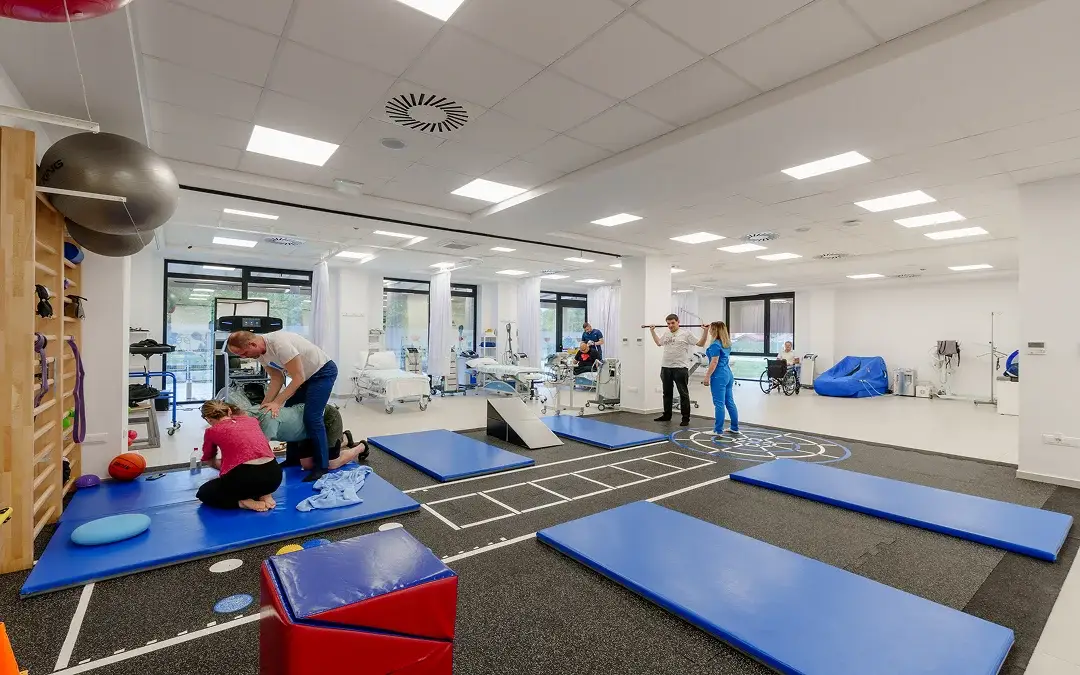
Patients often value that rehabilitation at Swiss Medica goes far beyond a single injection. Our physiotherapists follow structured recovery protocols and combine hands-on work, exercise, and medical devices. Depending on the case, the program may include:
- combined ultrasound and electrotherapy;
- radial shock wave therapy;
- Spark Wave Therapy;
- Super Inductive System therapy;
- high-intensity laser therapy;
- targeted radiofrequency, or Tecar therapy;
- Theragun percussive therapy;
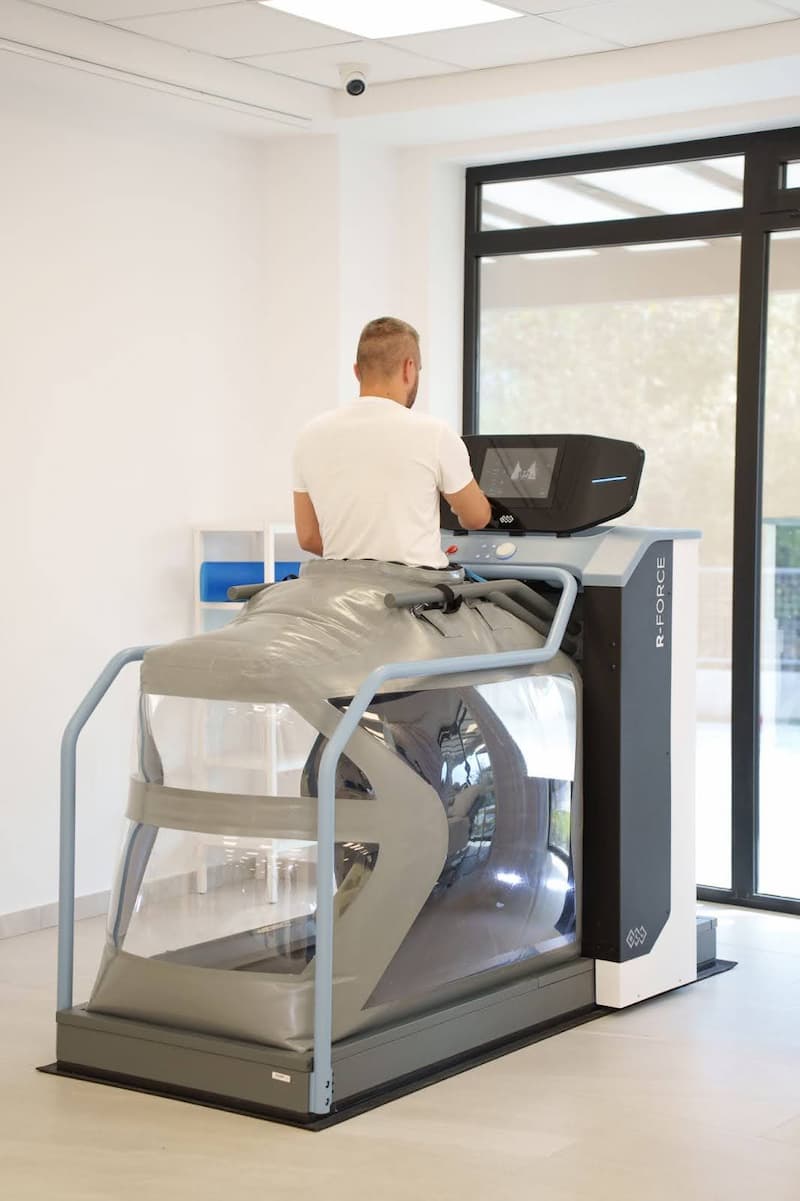
- R-Force body-weight-support treadmill training;
- spinal decompression therapy.
These methods may help reduce pain and stiffness, improve mobility and muscle activation, control swelling, and gradually rebuild strength and tolerance to load. The goal is to help the patient move more confidently through rehabilitation and prepare for daily activity, training, and sport-specific movement.
International Patient Support in Serbia
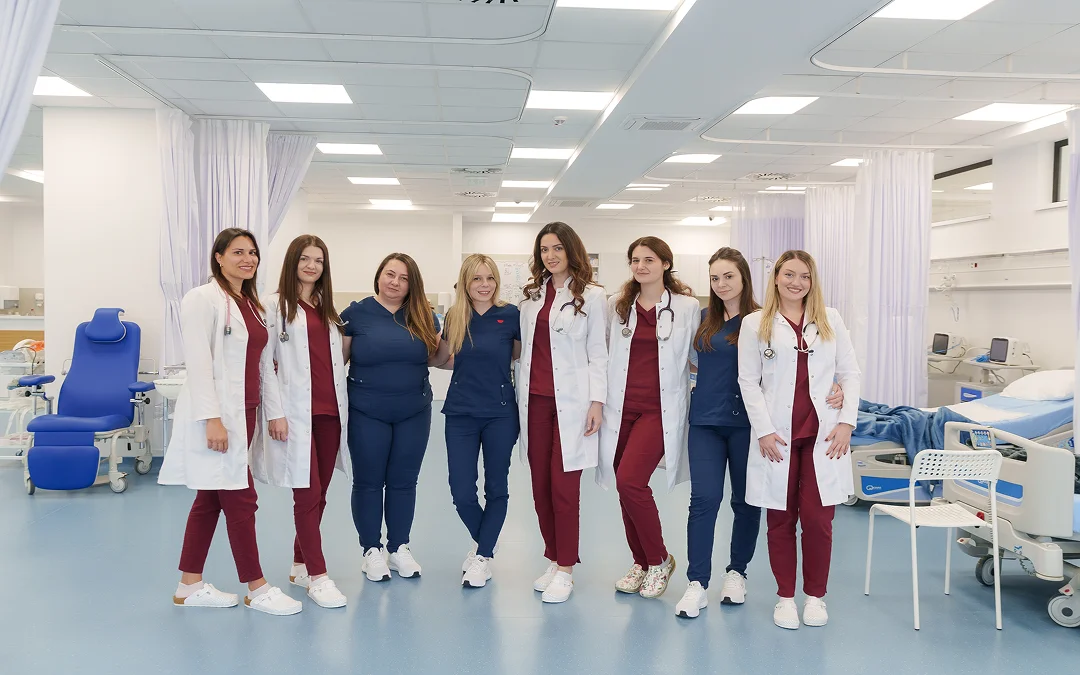
We understand that traveling can be especially challenging for people with severe joint pain, limited mobility, or an injury that makes everyday movement difficult. Our team supports patients throughout the visit so they can focus on treatment and rehabilitation. This includes the following:
- accommodation at the hospital;
- meals;
- airport transfers;
- help with local transport;
- translation;
- medical coordination;
- assistance with appointments and daily questions;
- staff support throughout the clinic stay.
Speak With a Medical Advisor About Your Sports Injury Recovery Goal
Whether you are a professional athlete or simply want to return to an active life, deciding whether to undergo stem cell treatment for a sport injury can be challenging. There is a lot of marketing around regenerative treatment, and it is not always clear which claims to trust or which specialist to contact.
At Swiss Medica, we offer free online consultations with a regenerative medicine doctor. Our medical team reviews your diagnosis, imaging, previous treatment, current symptoms, and recovery goals, then explains clearly whether this approach may be suitable for your case.
The consultation does not require you to commit to treatment.
Send a request
Book your free consultation now.
Medical Advisor, Swiss Medica doctor
FAQ
1. Do stem cells heal injuries faster?
When used alongside rehabilitation, stem cell therapy can support good progress by reducing pain and helping the injured tissue recover. Healing time still depends on the tissue involved and the severity of the injury.
2. Can stem cell therapy help avoid surgery for sports injuries?
In some cases, stem cell therapy combined with rehabilitation may help delay surgery. However, complete tears, displaced tissue, severe instability, joint locking, or advanced damage may still require surgical treatment.
3. What sports injuries may be reviewed for stem cell therapy?
Doctors most often review chronic tendon problems, partial ligament injuries, cartilage damage, early joint wear, and persistent knee or shoulder symptoms. Treatment may also be discussed when standard care and rehabilitation have brought limited improvement. Evidence for fresh muscle injuries remains limited.
4. Can stem cells help tendon or ligament injuries?
Stem cell therapy may support healing in selected chronic tendon conditions and partial ligament tears. The tissue must remain stable enough for rehabilitation. A complete rupture or major joint instability may require surgical repair before the patient can safely return to physical activity.
5. Can stem cell therapy help knee or cartilage injuries?
A large body of research and extensive clinical experience show that stem cell therapy can reduce pain and improve knee function in patients with cartilage damage or early osteoarthritis. In some cases, athletes may return to their previous level of performance. However, the treatment cannot fully restore a severely damaged joint, so doctors assess imaging, joint stability, alignment, and the extent of damage before recommending it.
6. Is stem cell therapy allowed for competitive athletes?
It depends on the product, processing method, added substances, and anti-doping rules that apply to the athlete. Competitive athletes should verify the planned procedure with their governing body or anti-doping organization and coordinate treatment with a team physician or sports medicine specialist.
7. PRP vs stem cell therapy for sports injuries: which is better?
PRP and stem cell therapy work in different ways and may be considered depending on the type and severity of the injury, previous treatment, available evidence, and the rehabilitation plan. Often, the two approaches may be used together to complement each other and support the overall treatment response.
8. How much does stem cell therapy cost?
The cost depends on the diagnosis, cell product, dose, administration route, number of treated areas, diagnostics, clinic stay, supportive care, and follow-up. Swiss Medica provides a personal estimate after doctors review the patient’s imaging, medical records, and recovery goals.
9. When can I return to training after stem cell treatment?
There is no single timeline for returning to sport and recovery. The first improvements may appear within 4–6 weeks, while more noticeable results usually develop over 3–6 months. Training resumes gradually as pain, mobility, strength, and tolerance to load improve.
References:
Malige A, Gates C, Cook JL. Mesenchymal stem cells in orthopaedics: A systematic review of applications to practice. J Orthop. 2024 Jun 22;58:1-9. doi.org/10.1016/j.jor.2024.06.026
Tabet CG, Pacheco RL, Martimbianco ALC, Riera R, Hernandez AJ, Bueno DF, Fernandes TL. Advanced therapy with mesenchymal stromal cells for knee osteoarthritis: Systematic review and meta-analysis of randomized controlled trials. J Orthop Translat. 2024 Aug 26;48:176-189. doi.org/10.1016/j.jot.2024.07.012
Sadeghirad B, Rehman Y, Khosravirad A, Sofi-Mahmudi A, Zandieh S, Jomy J, Patel M, Couban RJ, Momenilandi F, Burnham R, Poolman RW, Busse JW. Mesenchymal stem cells for chronic knee pain secondary to osteoarthritis: A systematic review and meta-analysis of randomized trials. Osteoarthritis Cartilage. 2024 Oct;32(10):1207-1219. doi.org/10.1016/j.joca.2024.04.021
Goldberg AJ, Masci L, O’Donnell P, Green R, Brooking D, Bassett P, Lowdell MW, Smith RKW. Autologous bone marrow derived mesenchymal stem cells are safe for the treatment of Achilles tendinopathy. Sci Rep. 2024 May 19;14(1):11421. doi.org/10.1038/s41598-024-61399-3
Goldenberg BT, Lacheta L, Dekker TJ, Spratt JD, Nolte PC, Millett PJ. Biologics to Improve Healing in Large and Massive Rotator Cuff Tears: A Critical Review. Orthop Res Rev. 2020 Oct 13;12:151-160. doi.org/10.2147/ORR.S260657
Breda SJ, Oei EHG, Zwerver J, Visser E, Waarsing E, Krestin GP, de Vos RJ. Effectiveness of progressive tendon-loading exercise therapy in patients with patellar tendinopathy: a randomised clinical trial. Br J Sports Med. 2021 May;55(9):501-509. doi.org/10.1136/bjsports-2020-103403
Wang Y, Yi H, Song Y. The safety of MSC therapy over the past 15 years: a meta-analysis. Stem Cell Research & Therapy. 2021;12:545. https://doi.org/10.1186/s13287-021-02609-x


MD, Pediatrician, Regenerative Medicine Specialist