swiss medicaXXI century S.A.
Chronic rhinitis can make everyday life exhausting. Constant nasal congestion, sneezing, and itching often persist even after years of medications. Standard treatments like antihistamines, vasoconstrictors, or corticosteroids often only provide short-term relief because they can’t completely restore the nasal lining or fix the underlying immune issues.
Recent progress in regenerative therapies offers a new form of alternative medicine for allergic rhinitis. Researchers are now exploring the use of stem cells to reduce inflammation and restore the nasal mucosa.
Swiss Medica provides advanced stem cell treatment methods for rhinitis designed to reduce chronic inflammation, restore the nasal lining, and help patients breathe freely again. For those considering medical tourism for stem cell therapy, Swiss Medica’s hospital in Belgrade combines medical expertise, comfort, and modern biological treatments.
Understanding Rhinitis
Rhinitis is a pathological condition of the nose that every person on the planet has experienced.

This condition usually goes away within a week, but if it develops into a chronic form, it can become unbearable.
Causes and Triggers of Chronic Rhinitis
Chronic rhinitis is a long-lasting inflammation of the nasal mucosa that may be triggered by allergies, pollutants, hormonal changes, or structural issues. Over time, the immune system becomes hypersensitive, leading to persistent swelling, mucus production, and tissue remodeling.
Common triggers include:
- pollen and dust mites;
- air pollution and chemical irritants;
- temperature or humidity changes;
- chronic sinus infections;
- prolonged use of vasoconstrictive nasal drops.
Common Symptoms and Diagnosis
Typical symptoms include nasal congestion, runny nose, sneezing, itching, and reduced sense of smell. Diagnosis is made by ENT examination, allergy testing, and sometimes sinus imaging to rule out polyps or infection.
Why Traditional Treatments Often Fail
For many patients, medications offer only short-term control:
- Antihistamines relieve sneezing and itching but do not address chronic mucosal damage.
- Nasal corticosteroids can reduce swelling but often cause dryness or dependency.
- Long-term use of decongestant sprays can even worsen nasal blockage.
That’s why more people explore other chronic rhinitis treatment options.
What Is Stem Cell Therapy for Rhinitis
Among alternative treatments for allergic rhinitis in its chronic form, regenerative therapy, and in particular stem cells, stand out for their ability to target inflammation and repair damaged tissues.
Regenerative therapy for nasal inflammation follows a carefully structured, evidence-based approach using stem cells along with supportive regenerative methods.
Types of Stem Cells and Supportive Components
At Swiss Medica, the rhinitis program is based on mesenchymal stromal cells (MSCs) and a few supportive biological products that enhance their effects.
Placental and umbilical cord MSCs (donor cells) are the main type we use. They are collected from healthy full-term donations after childbirth—an ethical, non-invasive process. Each sample is screened for infections and processed in our in-house laboratory under sterile EU-GMP–aligned conditions. Donor MSCs are young, active, and well-tolerated, providing strong anti-inflammatory and immune-modulating benefits.
In some cases, autologous MSCs from the patient’s own fat or bone marrow may be used, though these cells are usually less potent in older or chronically ill individuals.
To support and extend results, we also apply:
- PRP nasal applications—platelet-rich plasma helps restore the nasal epithelium.
- Exosome nasal spray—a cell-free biological product used at home to maintain results.
- Optional plasmapheresis—cleans the blood plasma of inflammatory molecules, creating a healthier internal environment.
- Immunogram and T-reg assessment—an additional step to evaluate suitability for immunoregulatory therapy at a later stage.
These combined treatment methods for rhinitis aim to calm inflammation, support local tissue healing, and improve nasal function naturally.
Types of Rhinitis Suitable for Stem Cell Therapy
Stem cell therapy can help patients with several chronic forms of rhinitis where standard medicine no longer works effectively:
- Allergic rhinitis—the most studied form in regenerative research. Clinical studies on stem cells for allergic rhinitis treatment show a reduction in symptoms and improved immune balance.
- Chronic rhinosinusitis with polyps (polypous rhinitis)—stem cell therapy can support mucosal healing and reduce polyp recurrence.
- Vasomotor rhinitis—a non-allergic form often linked to nerve and vascular dysregulation—is also responsive to the anti-inflammatory effects of stem cells.
Infectious rhinitis (cold or bacterial sinusitis) is not treated with cell therapy.
Get a free online consultation
Wondering if stem cell therapy could help in your case?
Share your medical history, ask questions, and receive a personalized recommendation from our regenerative medicine specialists for free.

Medical Advisor, Swiss Medica doctor
How Stem Cell Therapy Helps in Rhinitis
Chronic non-infectious rhinitis, which includes allergic, polypous, and vasomotor types, often lasts a long time because the nasal lining becomes too sensitive and loses its normal protective function.
The immune system may remain hypersensitive, the epithelial barrier weakens, and tissues respond excessively to environmental triggers. Stem cell therapy can help address this condition by working through two core mechanisms: supporting healthier immune regulation and promoting repair of the damaged epithelial barrier.
Immune Modulation and Allergen Tolerance
Immune modulation is especially important for allergic rhinitis, where symptoms arise from hypersensitivity to pollen, dust, pet dander, or other allergens.
In allergic rhinitis, stem cell therapy may help:
- calm exaggerated immune responses,
- support healthier Th1/Th2 balance,
- enhance regulatory T-cell (T-reg) activity,
- reduce day-to-day sensitivity to triggers.
These effects may help patients with chronic allergic rhinitis experience more predictable symptom control.
Increased mucosal sensitivity can also occur in non-allergic chronic forms, where stabilizing immune activity may indirectly improve overall nasal function. Using stem cells for immune system balance helps promote a more regulated baseline response to everyday irritants.
Contact us
Interested in an alternative treatment for allergic rhinitis?
Leave your details, and our medical team will reach out to you to discuss whether this approach may fit your case.
Medical Advisor, Swiss Medica doctor
Regenerative and Anti-inflammatory Effects
All chronic non-infectious rhinitis types involve compromised mucosal function—whether due to inflammation, tissue remodeling, or abnormal vascular and neural regulation.
As a regenerative therapy for nasal inflammation, MSCs may help:
- ease persistent swelling and irritation where inflammation is present,
- support epithelial repair and restore mucosal integrity,
- improve microcirculation and tissue oxygenation,
- reduce overreactivity of the mucosa in vasomotor rhinitis.
Because these mechanisms are relevant for all rhinitis forms, patients follow the same core MSC-based program, with adjustments tailored to their specific clinical presentation.
Temporary Remission vs. Long-term Immune Balance
For many patients with chronic rhinitis, standard therapy provides short remissions.
By addressing both immune dysregulation and impaired mucosal integrity, MSC-based therapy may offer more lasting stability.
Clinical Evidence and Observed Results
Clinical studies on stem cell therapy for allergic rhinitis use a combination of laboratory markers, imaging, and functional assessments to measure treatment outcomes. Across published research, several consistent trends are reported:
- measurable reductions in biomarkers of allergic inflammation, such as IgE and eosinophil activity;
- improvement in mucosal appearance on imaging and endoscopic examinations;
- enhanced nasal airflow and more efficient mucociliary clearance in functional tests;
- better patient-reported outcomes related to breathing comfort, sleep quality, and overall symptom burden.
Swiss Medica applies these evidence-based principles in its broader regenerative practice and maintains a consistently favorable stem cell therapy success rate across chronic inflammatory and immune-related conditions, with individual responses varying based on each patient’s clinical profile.
Is Stem Cell Therapy Safe?
Safety is always a top priority at Swiss Medica stem cell hospital.
All MSCs used in stem cell treatment for rhinitis are ethically sourced from donated placentas after healthy births. Every sample is tested for bacterial, viral, and genetic safety before being used.
MSCs are non-embryonic, non-tumorigenic, and rarely trigger immune rejection. The clinic follows sterile protocols and maintains full in-house laboratory control over every stage—from collection to infusion.
Temporary side effects may include mild fatigue or fever during infusion, but there are no lasting adverse effects reported in Swiss Medica’s practice.
Patients’ Testimonials at Swiss Medica
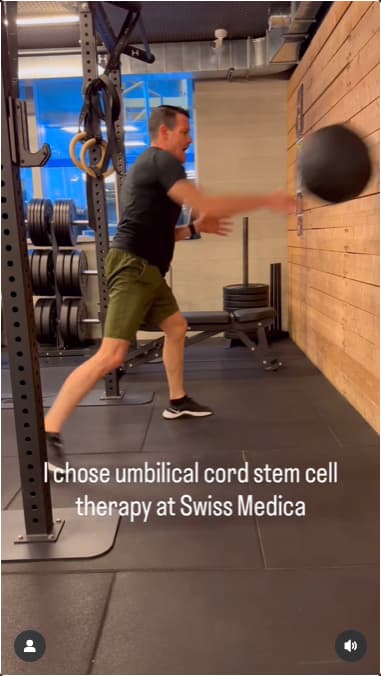
Federico from Italy: Breathing Freely and Training Without Pain
A former professional martial arts athlete from Italy came to Swiss Medica looking for a non-surgical solution to long-standing hip and shoulder arthritis. Alongside joint pain, he also struggled with chronic nasal congestion that affected his breathing and recovery.
He received a regenerative program with mesenchymal stem cell therapy and supportive treatments aimed at reducing inflammation and improving overall function.
After therapy, he noticed major improvements: pain-free training, restored mobility, better sleep, stronger recovery—and relief from chronic rhinitis.
“Since the treatment, everything changed. I train without pain, have more energy, and even my breathing improved—the chronic rhinitis is gone.”
Watch his full story on the Swiss Medica Instagram.
The Swiss Medica Rhinitis Treatment Program
Swiss Medica’s program focuses on chronic forms of rhinitis, including allergic forms, which often persist for years and require a comprehensive approach. Children can be accepted only after a medical board evaluation. There are no special contraindications beyond the general ones for cell therapy—such as active infection or cancer.
Program Duration: 3–5 days
| Procedure | Purpose |
| IV infusion of donor placental MSCs | Main anti-inflammatory and immune-modulating action |
| PRP nasal applications | Restoration of nasal epithelium |
| Exosome nasal spray (for home use) | Maintenance of post-treatment recovery |
| Optional plasmapheresis | Reduction of inflammatory molecules |
| Optional immunogram | Assessment for T-reg therapy at follow-up visit |
This combination represents one of the most advanced treatment options for chronic rhinitis in regenerative medicine.
It also incorporates elements of alternative medicine for allergic rhinitis, using biologically active products instead of pharmaceuticals.
What to Expect After Treatment
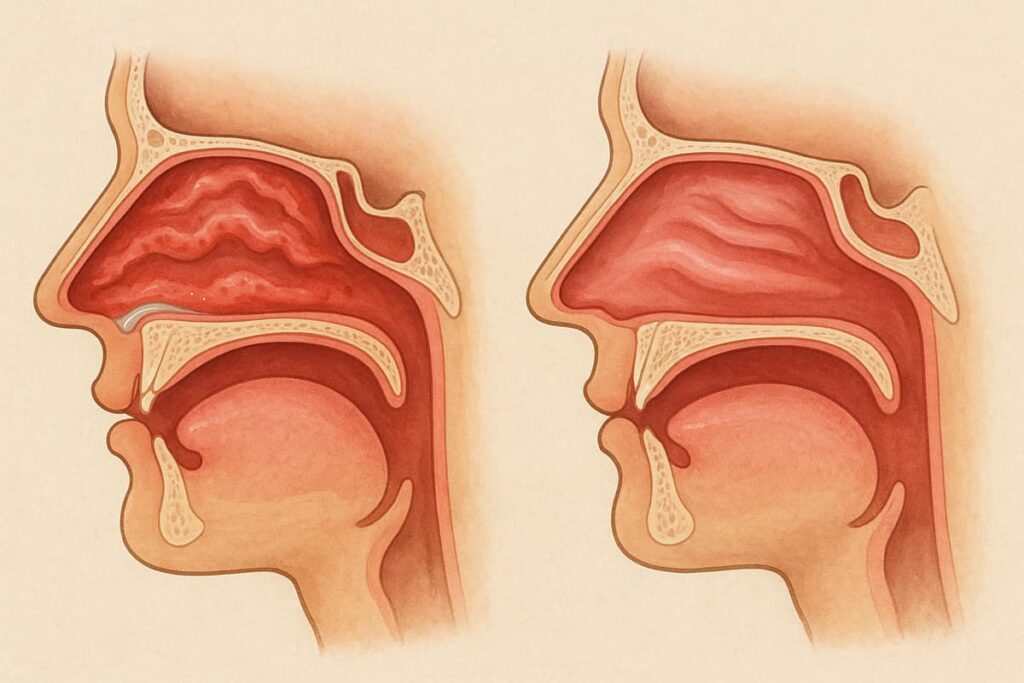
Stem cells start working immediately after they are infused, and most patients notice improvements within the first few weeks after therapy.
The results patients describe include:
- less sneezing, nasal itching, and discharge;
- reduced congestion and easier breathing;
- decreased swelling and inflammation;
- improved sense of smell;
- better sleep due to unobstructed airflow;
- fewer seasonal or dust-related flare-ups;
- potential cure for chronic allergic rhinitis symptoms through sustained remission.
The goal of this treatment method for rhinitis is not only symptom control but also long-term nasal health, durable comfort, and better quality of life.
Factors Influencing Results
Individual results depend on immune status, disease duration, and adherence to post-treatment recommendations.
Complementary therapies for allergic rhinitis, such as PRP and exosome follow-up, can enhance the effect. Good sleep, nutrition, and environmental control also contribute to the optimal management of allergic rhinitis.
Why Choose Swiss Medica?
For many people looking for an alternative treatment for allergic rhinitis, Swiss Medica provides an evidence-based and clinically tested approach. Here, every part of the process—from diagnostics to follow-up—is built around quality, transparency, and patient comfort.
Experience and Medical Expertise
Since 2011, Swiss Medica has treated more than 10,000 patients with chronic and inflammatory conditions, including autoimmune and respiratory disorders. Our doctors specialize in mesenchymal stem cell therapy, applying stem cells for immune system balance and customizing each treatment protocol to the patient’s specific type of condition and overall health.
Certified In-House Laboratory
All biological products—including MSCs, PRP, and exosomes—are produced and tested in our own EU GMP-grade laboratory. This ensures full control over quality, sterility, and safety at every stage of therapy.
Comprehensive and Comfortable Care
Our modern hospital in Belgrade offers hotel-level comfort, 24/7 medical supervision, and a calm environment for recovery. International patients receive full assistance with travel, accommodation, and translation support to make the stay stress-free.
Accessible European Location
Located in Serbia, Swiss Medica combines European medical standards with more accessible pricing than clinics in Western Europe or the United States, making it one of the most reliable destinations for stem cell therapy abroad.
Cost of Stem Cell Therapy for Rhinitis
Patients often ask about stem cell injection cost—at Swiss Medica, pricing typically ranges from €7,000 to €31,000* and always includes all procedures, accommodation, and follow-up care. The total price depends on several factors: severity of condition, cell type, number of supportive procedures, and duration of stay.
In most cases, the cost may range similarly to other regenerative programs—but significantly lower than in Western Europe or the United States due to differences in healthcare infrastructure.
*Prices are indicative, based on January 2025, and may vary with condition severity and cell quantity required.
Getting Started with Consultation
If you are considering alternative treatment for allergic rhinitis, the first step is simple.
Send your medical history, discuss your symptoms, and schedule a free online consultation with Swiss Medica doctors. They will evaluate whether stem cell therapy can benefit your specific case of rhinitis and create a personalized program.
After assessment, you will receive treatment plan options, available dates, and travel guidance to the clinic. Every program is fully supervised by experienced regenerative medicine specialists.
Contact us
Take the first step toward easier breathing—book a consultation with our doctors today.
Medical Advisor, Swiss Medica doctor
Frequently Asked Questions
1. Is stem cell therapy a cure for rhinitis?
While stem cells are not a permanent cure, they may help reduce symptoms and achieve long-term remission for patients with chronic forms.
2. What types of rhinitis respond best?
Allergic and chronic non-infectious forms respond best to stem cells for allergic rhinitis as a treatment.
3. Is allergic rhinitis stem cell therapy suitable for people who have symptoms all year round?
Yes. Allergic rhinitis stem cell therapy can help with the immune system’s overreaction and improve mucosal health, but whether it’s right for you is decided during a medical consultation.
4. Can I combine this therapy with allergy medications?
It depends on the specific medications you are taking and your current clinical situation. During the consultation, the doctor will review your treatment history and advise whether you should continue, adjust, or pause any drugs while undergoing alternative treatment for allergic rhinitis.
List of References:
Sun L, Sha J, Meng C, Zhu D. Mesenchymal Stem Cell-Based Therapy for Allergic Rhinitis. Stem Cells Int. 2020 Jun 10;2020:2367524. doi: 10.1155/2020/2367524. PMID: 32587619; PMCID: PMC7303754.
J. Eremenko, A. Nidzelko, N. Antonevich, A. Hancharou, V. Mantsivoda, E. Shulepova, V. Chekan, L. DuBuske,EFFICACY AND SAFETY OF INTRANASAL INJECTION OF ALLOGENEIC MESENCHYMAL STEM CELLS IN ALLERGIC RHINOSINUSITIS, https://doi.org/10.1016/j.anai.2024.08.299.
Kim, J.H., et al. “Mesenchymal stem cells in the treatment of allergic rhinitis: current evidence and future perspectives.” Allergy (2024).
https://onlinelibrary.wiley.com/doi/10.1111/all.15729Wang, Y., Yi, H., & Song, Y. “The safety of MSC therapy over the past 15 years: a meta-analysis.” Stem Cell Research & Therapy, 12, 545 (2021).
https://stemcellres.biomedcentral.com/articles/10.1186/s13287-021-02609-xYe, YM., Zhao, YX., Xiang, LR. et al. The Immunomodulatory mechanism and research progress of mesenchymal stem cells in the treatment of allergic rhinitis. Stem Cell Res Ther 16, 188 (2025). https://doi.org/10.1186/s13287-025-04333-2
Weiss, A.R.R., & Dahlke, M.H. (2019). Immunomodulation by Mesenchymal Stem Cells (MSCs): Mechanisms of Action of Living, Apoptotic, and Dead MSCs. Frontiers in Immunology, 10, 1191. https://doi.org/10.3389/fimmu.2019.01191


MD, Pediatrician, Regenerative Medicine Specialist