swiss medicaXXI century S.A.
Chronic kidney disease (CKD) may progress for a variety of reasons, ranging from diabetes and high blood pressure to specific autoimmunity conditions or prolonged medication use. Whatever the cause, the main goal is to keep the condition under control for as long as possible: protect the remaining kidney function, slow further damage, and support daily well-being.
Standard medical care remains the foundation of this process. Stem cell therapy for kidney failure may be considered as an additional supportive approach—it is being studied for its potential to influence inflammation, fibrosis, microcirculation, and tissue repair pathways. In this article, we explain how stem cells work, how they may influence the course of kidney disease according to current scientific research, and who may be considered a candidate for this supportive approach.
Understanding Kidney Failure and Why Disease Stage Matters
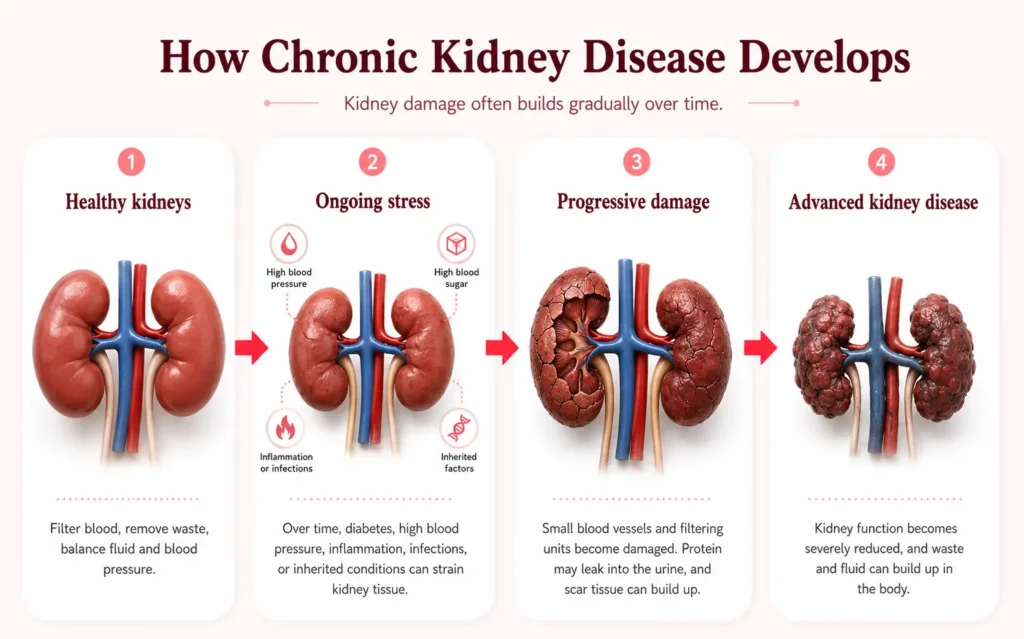
The kidneys work quietly all day, filtering the blood, removing waste, balancing fluid, and helping control blood pressure. When they are healthy, most people do not notice this work at all. The problem is that kidney damage can also build up quietly.
Chronic Kidney Disease Is Usually Progressive
In many patients, chronic kidney disease develops over years. High blood pressure can put constant strain on the small blood vessels inside the kidneys. Diabetes and other autoimmune conditions can damage these vessels and filtering structures.
At first, the remaining healthy parts of the kidneys may take on extra work. As a result, kidney damage may not lead to obvious symptoms in the early stages. A person may notice more frequent urination or mild swelling, for example, around the eyes, ankles, or feet, which can already create discomfort in everyday life.
More obvious symptoms often appear later, when the kidneys can no longer compensate as well as before. Patients may then notice persistent tiredness, nausea, reduced appetite, higher blood pressure, or more uncontrolled urination.
This gradual course is one reason CKD needs long-term control. Doctors look not only at how a patient feels today but also at trends in blood and urine tests over time. They show whether the kidneys are stable, slowly losing function, or need more active medical attention.
Why eGFR, Creatinine, and Proteinuria Matter
Doctors may monitor three main groups of markers:
| Group | Markers | What it helps doctors understand |
| Kidney function | eGFR, creatinine, urea | How well the kidneys filter blood and clear waste |
| Kidney barrier damage | Proteinuria or albuminuria | Whether protein is leaking into the urine |
| Risk and safety factors | Blood pressure | How much strain the kidneys and blood vessels are under |
These markers work together. They show not only how the kidneys filter blood, but also whether damage is ongoing and how fast the disease may be progressing.
Before considering any treatment, including stem cell therapy for kidney failure, patients should consult with a qualified doctor and provide nephrology reports, current treatment, symptoms, and an overall assessment of their health.
What Is the Most Effective Treatment for Kidney Failure?
Kidney disease is complex, so there is no universal treatment: the expected outcome is determined by a variety of factors, most notably the cause and stage of the disease.
Treatment Depends on the Cause of Kidney Disease
Common causes that can affect how kidney disease progresses include:
- diabetes;
- high blood pressure;
- heart and blood vessel disease;
- autoimmune or glomerular disease;
- repeated kidney infections or kidney injury;
- inherited or family-related kidney conditions;
- long-term use of medicines that may harm the kidneys.
Depending on the case, treatment may include:
- blood pressure control,
- diabetes management,
- kidney-protective medications,
- diet and lifestyle changes,
- regular monitoring.
In advanced kidney failure, patients may need dialysis, kidney transplantation, or conservative kidney management. For selected patients, stem cell treatment for kidney failure may be considered only as an additional supportive option alongside standard kidney care.
Stage of the Disease Matters Too: Kidney Failure Is Different From Early Kidney Damage
Beyond the cause of kidney damage, another important thing to understand is the stage of the disease. Early kidney damage and kidney failure are not the same thing.
In earlier CKD stages, the kidneys may still perform many of their functions, even if tests already show damage. At this stage, the main goal is to slow progression, reduce protein loss in the urine, control blood pressure, and protect the remaining kidney tissue.
Kidney, or renal, failure usually means that kidney function has dropped to a very low level. At this point, the body may no longer remove enough waste, excess fluid, or electrolytes on its own. Some patients then need dialysis and transplantation of kidneys or carefully planned conservative care.
This is why stem cell therapy for CKD should always be considered on an individual basis. A patient with moderate CKD, someone approaching the dialysis stage, and a person already on dialysis may have different risks, treatment goals, and medical priorities.
Why Preserving Kidney Function Is the Main Goal
In chronic kidney disease, even slowing the decline can make a difference. It may help delay complications, reduce symptoms, and give patients more time before dialysis or other kidney replacement therapy may be needed.
Preserving kidney function usually means:
- keeping blood pressure within the target range;
- managing diabetes carefully;
- avoiding medications that may harm the kidneys;
- treating anemia, mineral imbalance, and fluid retention when needed;
- monitoring heart and blood vessel risks;
- adjusting diet under medical guidance.
This is also where stem cell therapy for chronic kidney disease is being studied: as a possible way to support a healthier tissue environment, reduce inflammatory signaling, and help protect remaining function in selected cases.
How Stem Cell Therapy May Support Patients With Kidney Disease
Research on stem cell therapy for kidney failure is still actively developing, but early findings are already encouraging. Much of the scientific interest focuses on mesenchymal stromal cells, or MSCs.
What Current Research Suggests
Stem cell therapy studies and clinical research on MSCs show the following:
- A 2023 review summarized several studies where MSC-based approaches showed positive shifts in kidney disease research. The reported effects were mainly linked to paracrine mechanisms and included immune regulation, reduced inflammation, oxidative stress, apoptosis, and fibrosis, as well as support for angiogenesis.
- A 2022 review focuses mainly on the possible use of MSCs in diabetic nephropathy, a form of kidney damage linked to diabetes. The authors note that one completed clinical trial with 30 patients reported no acute adverse events and showed more stable or improved eGFR by week 12 in patients who received MSCs.
- A 2020 mini-review explains that stem cell-based approaches in kidney disease may work more by releasing factors that influence inflammation, cell survival, autophagy, and tissue repair.
This does not imply that stem cell treatments for kidney failure can cure damaged kidney cells or rebuild a kidney. MSCs work in a different way: by influencing the environment around them. To understand this better, let’s look at the main mechanisms being studied.
How MSCs May Work: Anti-Inflammatory, Immunomodulatory, and Tissue Support Effects
In kidney disease, damage often develops alongside ongoing inflammation, immune imbalance, oxidative stress, and poor microcirculation. These processes can injure kidney tissue, reduce oxygen and nutrient supply, and make it harder for the organ to repair itself.
Over time, repeated kidney injury may lead to fibrosis—pathological remodeling of kidney tissue after chronic damage. As this process progresses, functional kidney structures can be replaced by non-functional fibrotic tissue. These changes are difficult to reverse and may further reduce the kidneys’ ability to filter blood and maintain normal function.
MSCs are being studied because they may act on several of these processes at once. They release biologically active molecules, including cytokines, growth factors, and other signaling proteins that send signals to nearby cells and help create a calmer tissue environment.
These signals may help:
- reduce excessive inflammatory activity;
- support a more balanced immune response;
- influence immune cells involved in kidney inflammation;
- reduce oxidative stress and cell damage;
- support angiogenesis, or the formation of new small blood vessels;
- improve microcirculation and oxygen supply around damaged tissue;
- reduce fibrosis-related signaling and processes that contribute to scarring;
- support the remaining kidney tissue alongside standard medical care.
Because of these characteristics, stem cell therapy for CKD is typically discussed as a supportive option within a larger treatment plan.
Safety & Side Effects
Safety is one of the most important questions for kidney patients because they often have other health risks.
Possible Side Effects of Stem Cell Therapy
MSCs have shown a favorable safety profile in many clinical studies and in our practice at Swiss Medica, but mild short-term reactions are still possible after treatment:
- mild fever;
- tiredness;
- nausea;
- flushing;
- headache;
- local discomfort after injection;
- temporary weakness.
These reactions are usually temporary, pass quickly, and do not prevent patients from returning to their normal daily routine. At Swiss Medica, doctors monitor each patient’s condition and provide support throughout the treatment process.
Standard Kidney Care Still Matters
Before considering stem cell therapy for renal failure, it is important to make sure that standard nephrology care is in place and the condition is as stable as possible.
What Is Commonly Used to Manage Chronic Kidney Disease?
Standard kidney disease treatment options may include:
- regular nephrology follow-up;
- blood pressure management;
- diabetes control;
- dietary changes, including sodium and protein management;
- control of cholesterol and cardiovascular risk;
- anemia management;
- monitoring of potassium, calcium, phosphorus, and blood acidity balance;
- preparation for dialysis or transplantation if kidney function becomes very low.
These measures are not optional background care. They are the foundation of kidney protection.
Are Dialysis, Transplantation, and Stem Cell Therapy the Same Thing?
Dialysis and transplantation are kidney replacement therapies. Stem cell therapy for chronic kidney disease is not. These are completely different approaches, used in different situations and with different treatment goals.
When Dialysis or Transplantation Becomes Necessary
Dialysis may become necessary when the kidneys can no longer filter blood well enough on their own. During dialysis, the patient is connected to a machine that helps remove waste, excess fluid, and electrolytes from the blood instead of the failing kidneys.
Kidney transplantation may be considered when kidney function is severely and permanently reduced, and the patient is suitable for surgery and long-term post-transplant care. In this case, kidney function is replaced with a working donor kidney.
Where Stem Cell Therapy May Fit Into Kidney Disease Care
Stem cell therapy can be integrated into the main treatment plan as an additional supportive option, with the goal of strengthening the overall therapeutic effect.
That means stem cell therapy for chronic kidney failure may be considered alongside the following:
- ongoing nephrology care;
- blood pressure management;
- diabetes treatment;
- kidney-protective medications;
- diet and lifestyle management;
- monitoring for dialysis or transplantation if needed.
The goal is to understand whether an additional regenerative approach may be appropriate and safe for the patient’s specific case.
Stem Cell Therapy Works Best Alongside Nephrology Care
Stem cell therapy for chronic kidney failure cannot replace nephrology care because the nephrologist leads the patient’s treatment and sees the full picture. They monitor kidney function, test results, medications, blood pressure, and dialysis or transplant planning if needed. Only with this ongoing monitoring can the treatment plan be adjusted correctly over time.
What Improvements May Look Like in Daily Life
If changes occur, doctors usually look at both sides: how the patient feels in daily life and how kidney markers change over time. In kidney disease, feeling better is important, but it is not enough on its own—laboratory trends are needed to understand whether kidney function is stable, improving, or continuing to decline.
Potential Improvements Patients May Notice
What to expect from stem cell therapy? The answer depends on the patient’s condition, kidney function, and treatment goals. Some patients may notice changes in daily well-being, while doctors also monitor kidney markers over time. Possible improvements may include:
- support for kidney function stability;
- more stable energy levels;
- reduced fatigue;
- better tolerance of daily activities;
- improved quality of life;
- support alongside standard treatment;
- stabilization of selected laboratory markers in some cases.
For some patients, the most meaningful change may not be a dramatic improvement, but a slower decline or more stable condition.
Patient Story: Living With Kidney Disease Before and After Treatment
For many patients in our experience at Swiss Medica, kidney disease affects much more than test results: it can mean fatigue, strict monitoring, medication changes, diet limits, and worry about dialysis. After stem cell therapy for chronic kidney failure, some patients describe feeling more stable, less tired, and better able to manage daily life, while doctors may also monitor whether kidney markers remain more stable over time.
“When I first came to Swiss Medica, I had end-stage renal failure, high blood pressure, and type 2 diabetes. The doctors were honest with me: they could not reverse my kidney failure, but they helped improve my overall health and made me strong enough to receive a kidney transplant, which I still have three and a half years later. What I value most is their honesty and the way they create a treatment plan specifically for each patient.”
— Joseph from the USA

Why Results Can Differ Between Patients
More patient stories are available on our YouTube channel. They can help show what stem cell therapy may look like in real life, but they should not be used as a direct prediction for another patient.
Kidney disease is different in every case. Outcomes may depend on the cause of the condition, remaining kidney function, level of tissue damage, overall health, and the treatment plan selected by the doctor.
Who May Be Considered for Kidney Stem Cell Therapy?
Not every patient is a suitable candidate. At Swiss Medica, a clinic of regenerative medicine in Serbia, we follow clear medical protocols and eligibility criteria. The decision is made only after a detailed review.
| Patient group | What this usually means |
| Patients in stable medical condition | The patient’s general condition should be stable enough for treatment, without acute or uncontrolled complications. |
| Patients without active cancer | Stem cell therapy is usually not considered if there is an active oncological process or recent cancer history that requires ongoing treatment. |
| Patients without acute infection | Treatment should not be performed during an active infection, fever, or inflammatory flare that may increase risks. |
| Patients with recent medical records | Doctors need current test results and nephrology reports to assess kidney function, risks, and realistic treatment goals. |
| Patients with realistic supportive goals | Stem cell therapy may be discussed to support overall treatment, not to replace dialysis, transplantation, or nephrology care. |
When Stem Cell Therapy May Not Be Recommended
Stem cell therapy might not be advised if there are urgent kidney-related complications, uncontrolled infections, active cancer, severe unstable heart disease, the patient is pregnant, breastfeeding, or has another condition that makes treatment unsafe.
What Happens During Treatment at Swiss Medica?
Treatment at Swiss Medica is organized in 4 main steps, so patients understand what happens before, during, and after the procedure.
1. Medical Review and Assessment Before Treatment
The first assessment starts online, before the patient travels to the clinic. During the application process, our medical team may review:
- nephrology reports;
- confirmed diagnosis;
- eGFR trends;
- creatinine history;
- urea levels;
- urine protein or albumin-creatinine ratio;
- kidney biopsy results, if available;
- ultrasound, CT, or MRI reports, if available;
- medication list;
- diabetes and blood pressure history;
- cardiovascular history;
- dialysis history, if relevant.
This review helps doctors decide whether stem cell therapy for renal failure may be appropriate, what risks need attention, and what treatment goals are realistic.
2. Personalized Treatment Planning Based on Kidney Function and Risk Factors
If the case is accepted, doctors prepare a treatment plan based on kidney function, disease stage, risk factors, and treatment goals.
For kidney patients, the plan may need to account for:
- fluid balance;
- blood pressure;
- diabetes;
- cardiovascular risk;
- anemia;
- medication load;
- dialysis schedule, if applicable;
- general physical condition.
The plan is personalized, but it is not created randomly from scratch. It is based on established clinical protocols that are adapted to the patient’s condition.
After arrival, the patient is examined again in person. Doctors review the current condition, repeat or check necessary tests, assess possible risks, and adjust the treatment plan if needed.
3. Stem Cell Therapy and Supportive Care
At Swiss Medica, care for chronic kidney disease follows a structured medical process, not just a set of separate procedures. Depending on the case, the program may also include:
- IMR therapy with selected nutrients to support metabolism, recovery processes, and overall body regulation;
- physiotherapy to help maintain strength, mobility, and daily function;
- special medical devices to support circulation, tissue repair, and general rehabilitation goals;
- constant attention from doctors and clinical staff throughout the stay.
This integrated approach helps support metabolism, recovery processes, circulation, mobility, and overall rehabilitation goals—creating a stronger therapeutic effect than isolated procedures alone.
4. Follow-Up After Returning Home
Kidney-related changes need time to become clear, so support does not end when the patient leaves the clinic. For the next 3–6 months, our doctors keep in touch to review progress, track relevant health changes, and understand how the patient is responding in everyday life.
If needed, the patient may return to Swiss Medica for a free follow-up visit. The only additional cost in this case is travel tickets.
Cost of Stem Cell Therapy for Kidney Failure: Why It Depends on the Individual Case
The final stem cell therapy cost may vary depending on the disease stage, kidney function, diagnostics, cell source and preparation, administration route, treatment duration, supportive care, accommodation, follow-up, and overall complexity of care.
Pricing also depends on the country:
- In the USA, stem cell treatments for CKD are often priced per injection or procedure, with diagnostics, supportive care, accommodation, and follow-up billed separately.
- In Europe, stem cell therapy for kidney failure may be more limited and often connected to clinical research.
- Serbia offers a more balanced option: clinics can follow European-aligned medical and laboratory standards while providing treatment programs outside a purely research-only framework.
Below is a summary table showing how stem cell therapy pricing and treatment structure may differ by region.
| Region / country | Approximate cost | Specifics |
| USA | $17,000–$45,000+ | Often priced per procedure or infusion. Diagnostics, follow-up, supportive care, travel, and accommodation are usually billed separately. |
| Western Europe | €15,000–€50,000+ | Access is more limited and often clinic-dependent. For kidney failure, treatment may be connected to research, individualized programs, or innovative therapy settings. |
| Serbia (Swiss Medica) | €7,700–€45,000* | Usually structured as a complete program. The final cost depends on disease stage, treatment duration, and supportive therapies. |
* Prices are indicative and based on 2026 estimates; they may vary depending on condition severity and required cell quantity.
Why a Personalized Estimate Is More Reliable Than a Flat Price
A flat price cannot reflect the complexity of kidney disease. A number on a website cannot show what may actually be useful in a specific case. The real value is in understanding whether the program is medically appropriate, what it includes, how the treatment is planned, and how the patient will be supported before, during, and after therapy—not simply choosing a procedure from a price list.
What the Treatment Program May Include at Swiss Medica
At Swiss Medica, the final cost of stem cell treatment for kidney failure is calculated individually after the medical team reviews the patient’s condition. Patients receive more than a single procedure. The program includes laboratory-controlled cell preparation, doctor-led monitoring, care during the clinic stay, and support after leaving the clinic. There are no hidden clinic fees; patients only need to arrange and pay for their travel tickets separately.
Why Patients Choose Swiss Medica for Kidney Disease Treatment
At Swiss Medica, we work with complex chronic conditions and have already supported more than 10,000 patients from different countries. They choose us for several important reasons.
Individual Medical Assessment Before Treatment
You won’t be asked to travel without first having your case reviewed by our medical team. An initial remote assessment helps determine whether stem cell therapy may be suitable in principle. Once you arrive, doctors confirm these findings through an in-person evaluation before any treatment begins, ensuring the program is tailored to your current condition.
In-House Cell Processing and Quality Standards
We produce cell products in our own GMP-certified laboratory, which allows us to keep the preparation process closely controlled at every stage. For patients, this makes treatment simpler: cell products do not need to be transported from external facilities, helping save time and reduce unnecessary handling.
Our MSCs are prepared in-house with 95–98% viability, meaning most cells remain alive and suitable for use after processing. This matters because only living, functional cells can perform the biological signaling expected from MSC therapy. Before treatment, the cells are also tested for sterility and safety.
Personalized Follow-Up and Supportive Care
Patients often value not only the treatment itself but also the feeling that every detail is taken care of. At Swiss Medica, the program is planned individually and may include cell therapy, physiotherapy, IMR therapy, medical device therapy, and daily support from doctors, nurses, coordinators, and translators.
Patients are not left alone during the process or after returning home. Our medical team stays in contact for 3–6 months to monitor changes, and if needed, the patient may return for a free follow-up clinic visit, covering only travel tickets.
International Patient Support in Serbia
Coming abroad for treatment can feel difficult, especially when kidney disease already affects energy, mobility, eating habits, daily routine, or dialysis planning. At Swiss Medica, we try to make the stay feel less like a stressful medical trip and more like a place where the patient can rest, receive care, and feel supported.
We provide:
- private accommodation inside the hospital, so patients can rest between procedures without extra travel;
- meals adjusted to individual needs, preferences, and dietary recommendations where possible;
- airport pickup by clinic drivers;
- help with transfers during the visit;
- translation support if needed;
- help with scheduling, accommodation, and everyday questions;
- medical staff available throughout the program;
- a calm environment designed for treatment, recovery, and rest.




Speak With a Medical Advisor About Kidney Disease Treatment Options
Kidney disease can be unpredictable, and it is difficult to understand on your own whether stem cell therapy may be appropriate. To make this step less stressful, we offer free online consultations with a regenerative medicine doctor. There is no pressure to start treatment. Our experts will carefully study your case and give you clear answers to your questions and honest information about what options may or may not be suitable for you.

Frequently Asked Questions
1. Can stem cell therapy cure kidney failure?
Stem cell therapy cannot cure kidney failure. It may be considered as a supportive approach in selected patients, but it cannot guarantee improved kidney function, replace damaged kidneys, or remove the need for nephrology care.
2. Are stem cells helpful for kidney disease?
Stem cell therapy may be helpful in selected cases. Both clinical research and our own medical practice at Swiss Medica show promising results, although outcomes remain individual. MSCs are being studied for their potential role in inflammatory processes, fibrosis, immune regulation, and tissue repair pathways, while each patient’s response may depend on disease stage, kidney function, overall health, and treatment history.
3. Can stem cell therapy help chronic kidney disease?
Stem cell therapy for chronic kidney disease may support kidney function stability in some cases, but it should not replace standard CKD treatment. Blood pressure control, diabetes management, kidney-protective medication, diet, and nephrology follow-up remain essential.
4. Can stem cell therapy replace dialysis?
Stem cell therapy cannot replace dialysis. Dialysis performs life-supporting kidney functions when the kidneys can no longer do enough on their own. If dialysis is medically needed, it should not be delayed.
5. Is stem cell therapy for kidney disease FDA-approved?
Stem cell therapy is not currently FDA-approved as a standard treatment for CKD or kidney failure. The FDA generally requires more complete clinical evidence before approving new therapies for routine medical use, and collecting this level of data takes time. At the same time, early research results are already encouraging, which is why stem cell therapy continues to be studied for kidney-related conditions.
6. Who may be considered for kidney stem cell therapy?
Patients with chronic kidney disease under medical supervision may be considered after medical review. Suitability depends on kidney function, disease stage, cause of kidney damage, comorbidities, current treatment, and safety factors.
7. What medical records are needed before consultation?
For kidney disease, patients should share nephrology reports, eGFR and creatinine results, urine protein or albumin-creatinine ratio, kidney ultrasound or biopsy results if available, current medications, and dialysis history if relevant. These records help doctors understand kidney function and plan the next steps more accurately.
8. What are the side effects of stem cell therapy for kidney disease?
Possible side effects may include mild fever, tiredness, nausea, flushing, headache, temporary weakness, or local discomfort after injection. Kidney patients also need additional screening because they may have cardiovascular, fluid balance, or metabolic risks.
9. How much does stem cell therapy for kidney failure cost?
The stem cell therapy cost depends on the patient’s kidney function, disease stage, diagnostics, cell preparation, administration route, supportive care, accommodation, follow-up, and overall complexity. A personalized estimate is more reliable than a flat price.
References:
KDIGO 2024 Clinical Practice Guideline for the Evaluation and Management of Chronic Kidney Disease. Kidney Disease: Improving Global Outcomes, 2024. https://kdigo.org/guidelines/ckd-evaluation-and-management/
National Institute of Diabetes and Digestive and Kidney Diseases. Chronic Kidney Disease. https://www.niddk.nih.gov/health-information/kidney-disease/chronic-kidney-disease-ckd
National Institute of Diabetes and Digestive and Kidney Diseases. Kidney Failure. https://www.niddk.nih.gov/health-information/kidney-disease/kidney-failure
National Kidney Foundation. Tests to Measure Kidney Function, Damage and Detect Abnormalities. https://www.kidney.org/kidney-topics/tests-to-measure-kidney-function-damage-and-detect-abnormalities
Chen C, Hou J. Mesenchymal stem cell-based therapy for kidney disease: a review of clinical evidence and mechanisms. Cell Transplantation. 2023. https://doi.org/10.1177/09636897231164251
Zheng G, Huang R, Qiu G, Ge M, Wang J, Shu Q, Xu J. Mesenchymal stromal cell-derived extracellular vesicles: regenerative and immunomodulatory effects and potential applications in sepsis and acute kidney injury. Frontiers in Cell and Developmental Biology. 2022. https://doi.org/10.3389/fcell.2022.910592
Wang Y, Yi H, Song Y. The safety of MSC therapy over the past 15 years: a meta-analysis. Stem Cell Research & Therapy. 2021;12:545. https://doi.org/10.1186/s13287-021-02609-x

Medical Advisor, Swiss Medica doctor

MD, Pediatrician, Regenerative Medicine Specialist