+41 22 508 71 72
English
Call Me Back
Call Me Back

Autism Therapies at Home: What Parents Can Do Between Professional Sessions

Autism therapy at home can fit into ordinary family life without turning every interaction into a clinical exercise. A visual cue, time to communicate, or one manageable self-care step lets a child use a developing skill where it matters. The aim is to make professional recommendations practical, respectful, and sustainable for the family.

What Does Autism Therapy at Home Mean?

Autism treatment at home uses everyday situations to support professional-recommended functional goals. It should reflect the child’s communication and sensory profile and promote participation and autonomy—not make the child appear less autistic.

Home Support Extends—Rather Than Replaces—Professional Therapy

Professionals help set appropriate goals, select suitable strategies, and establish safety boundaries. Families can then reinforce these approaches in familiar, everyday situations. For example, speech and language therapy for autism may introduce effective communication methods, while behavioral therapy for autism may guide families on when and how to provide prompts.

In-home therapy for autism spectrum disorder should complement—not replace—specialized professional care.

Start With a Functional Goal That Matters to the Child

A functional goal asks what would make the child’s day easier, safer, or more independent:

  • communicating a need or asking for a break;
  • completing one more step while dressing or brushing teeth;
  • moving between activities with clearer support;
  • participating in a family meal;
  • playing alongside another person.
Parent-led autism therapy
Parent-led autism therapy works best with goals that are meaningful, specific, and observable. “Uses a picture to request a break” describes a clear skill, while “behaves better” is too broad to guide practice or track progress.

Adapt the Activity to the Child, Not the Child to the Activity

When planning autism therapy at home for children with different communication, sensory, or physical needs, activities should be adapted to how each child understands information, expresses preferences, responds to sensory input, and manages the steps involved. 

Closer professional guidance may be needed when supporting a child with severe autism, particularly when communication barriers, self-injury, wandering, or other safety concerns affect everyday activities.

Build Home Support Around Predictable Daily Routines

Routine-based autism therapy at home helps a child understand what is happening, what comes next, and when an activity will finish. An autism daily routine should provide structure and predictability without making family life overly rigid.

Use Visual Schedules and Simple Instructions

A visual schedule for autism may use photographs, drawings, words, or objects. When giving instructions, pair brief language with a gesture, demonstration, or picture, and then allow enough time for the child to process the information. Repeat or rephrase the instruction only when it improves understanding.

Prepare for Transitions Before They Happen

Countdowns, timers, first–then language, songs, or familiar objects can help signal an upcoming change. Show the child what will happen next using a simple statement such as, “First shoes, then playground.” Consistent cues reduce uncertainty without demanding immediate compliance.

Practice Skills During Real Family Activities

Familiar routines provide a natural context for practicing skills recommended by the child’s therapist. For example, a child might practice communication while asking for help or work on sequencing while completing a household task. In-home autism care should integrate skill-building into meaningful activities rather than turning each interaction into a separate test.

Keep Routines Predictable but Flexible

Predictability does not mean that everything must always remain the same. Once a routine feels familiar and secure, introduce one small, manageable variation—such as using a different cup or taking another route—while keeping a familiar cue in place. The aim is to build flexibility gradually with appropriate support, without deliberately causing distress.

Autism Therapy at Home: Activities for Everyday Skills

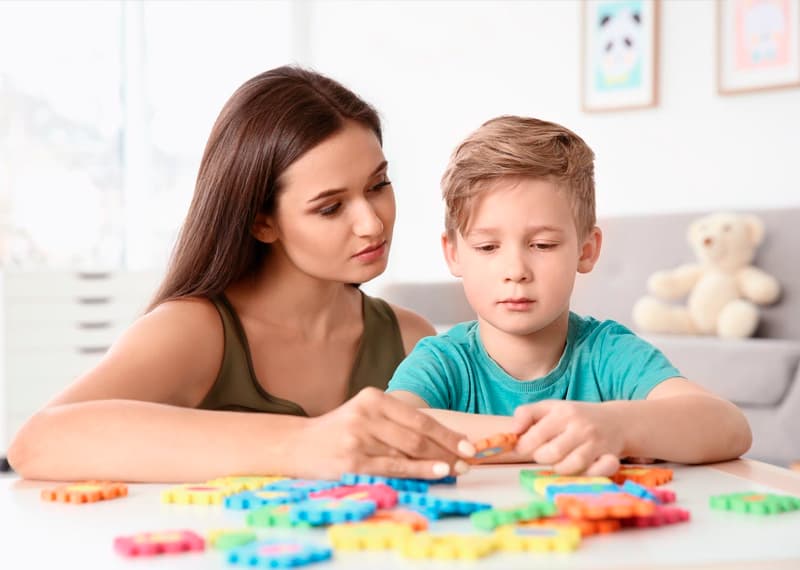
Everyday family life offers natural opportunities to practice communication, play, movement, and self-care. Autism therapy at home does not need to recreate a formal clinical session Instead, families can use familiar activities and adapt them to the child’s developmental level, interests, communication style, sensory needs, and therapy goals.

Follow the Child’s Lead During Play

Child-led play is one way to practice interaction and communication in a relaxed, familiar setting. The child chooses the activity or object, while the adult joins without immediately directing how the play should unfold.

During play-based autism therapy at home, an adult can:

  • join an activity the child already enjoys;
  • imitate the child’s action or sound;
  • describe what the child is doing using simple language;
  • pause to create an opportunity for communication;
  • introduce turn-taking without forcing participation.

The child may respond through a movement, sound, gesture, word, or continuation of the game. Play therapy for autism at home may support connection and communication while respecting the child’s individual way of interacting, without requiring eye contact or conventional forms of play.

Create Communication Opportunities Throughout the Day

Communication develops more naturally when a child has a meaningful reason to express a need, preference, or idea. Autism speech therapy at home can include offering a choice between two real options, pausing during a familiar song, or waiting before continuing an enjoyable activity. After creating the opportunity, give the child enough time to process and respond.

Autism communication activities should recognize all valid forms of communication, including speech, gestures, signs, pictures, and augmentative and alternative communication (AAC). AAC devices should remain accessible at all times and should never be withheld to encourage speech or used as a reward.

Use Sensory Activities Based on the Child’s Individual Needs

Sensory differences can affect a child’s ability to play, communicate, learn, and take part in everyday routines. Depending on the child’s observed needs, autism therapy at home for children with sensory differences may include:

  • access to a quiet space;
  • regular movement breaks;
  • headphones or ear defenders;
  • reduced lighting, noise, or visual clutter;
  • preferred textures or sensory materials;
  • weighted or resistance activities recommended by an occupational therapist.

Autism sensory regulation should be guided by the child’s responses rather than applied as a fixed routine. The aim is to reduce overwhelming input or provide the sensory input that helps the child feel regulated and ready to participate. When the benefits or safety of an activity are uncertain, families should seek professional guidance.

Practice Dressing, Eating, Hygiene, and Toileting Step by Step

Autism therapy at home for children with self-care goals should respect the child’s privacy, dignity, comfort, and developmental readiness. Rather than expecting the entire task to be completed independently, focus on the next achievable step and build from there.

Some difficulties require medical assessment rather than additional practice. These include pain during eating, choking, signs of dehydration, constipation, or persistent toileting problems.

Daily skillPossible home support
DressingBreak the task into steps and practice each step one at a time.
ToothbrushingUse a visual sequence and introduce sensations gradually.
EatingMaintain predictable mealtimes without forcing foods.
ToiletingUse consistent cues and track patterns while protecting privacy.
TidyingLabel storage areas with words or pictures.

These are starting points. A therapist can adapt the sequence when motor, sensory, communication, or medical factors affect the task.

How to Use Behavioral Strategies Respectfully in Home-Based Autism Therapy

Behavioral strategies should support communication, participation, and safety rather than focus solely on compliance. A respectful approach considers the child’s sensory needs, health, emotional state, and need to pause or refuse an activity. Before teaching an alternative skill, try to understand what the child’s response may be communicating and which factors may be contributing to it.

Understand What the Behavior May Be Communicating

A child’s behavior may signal that something in their body, environment, or current situation needs attention. Before trying to change a response, consider whether it may be related to:

  • pain or illness;
  • sensory overload;
  • fatigue or hunger;
  • anxiety or uncertainty;
  • difficulty communicating a need;
  • instructions or demands that are unclear or too difficult;
  • a need to leave the situation or take a break.

When distress escalates into a meltdown, the immediate priority is helping the child feel safe and regain regulation. Autism meltdown support may involve reducing demands, limiting sensory and verbal input, and allowing time and space for recovery—not punishment. If the child temporarily loses access to speech or other familiar skills, teaching should wait until the distress has passed.

Focus on One Useful Skill at a Time

A practical goal ofbehavioral autism therapy at homeis to help the child develop a reliable way to communicate a need. Once adults understand what a response may be expressing, they can teach one manageable alternative at a time. For example, if pushing materials away means that the child needs a break, this message could gradually be expressed through a picture, gesture, AAC selection, or word. The aim is to make communication easier and more consistent—not simply to stop the behavior.

Use Clear Prompts, Choices, and Meaningful Reinforcement

ABA strategies and other forms of behavioral autism therapy at home may use prompts, limited choices, and reinforcement recommended by a qualified professional. When a child communicates or practices a new skill, the response can be followed by specific praise, access to a preferred activity, a requested break, or the natural outcome of the communication. For example, asking for help should result in receiving appropriate help.

Reduce Prompts as the Child Becomes More Independent

Prompts should be reduced gradually as the child begins to complete more of the skill independently, rather than according to a fixed timetable:

  • 1

    Begin with only as much help as the child needs to complete the step safely.

  • 2

    Move gradually from more direct support to a demonstration, gesture, or visual cue.

  • 3

    Observe whether the child can complete the step before reducing support again.

Gradually reducing prompts supports independence and helps prevent the child from becoming dependent on adult assistance to complete the skill.

Make Home Practice Sustainable for the Child and Family

Sustainable practice fits family life without making every routine therapeutic. It reflects the child’s energy, regulation, and willingness, as well as the family’s resources. Consistency comes from manageable opportunities, not a rigid schedule.

Keep Practice Brief and Frequent

Home practice does not need to take the form of long, structured sessions. There is no universal daily schedule for home autism management; the length and frequency of each activity should depend on the child’s regulation, interest, and the skill being practiced. Several brief, positive opportunities throughout the day may be more helpful than one extended session. Autism therapy at home should also leave plenty of time for rest, free play, and ordinary family life.

Use the Child’s Interests and Strengths

A child’s interests can make communication, learning, and interaction more engaging and meaningful. For example, a favorite character might be included in a visual schedule, while a preferred topic could create opportunities for reading, conversation, or turn-taking. These interests are an important part of the child’s identity and should not be treated only as rewards that must be earned.

Notice Signs of Stress Before Overload

Possible signs that a child is becoming stressed or overwhelmed may include:

  • turning away or trying to leave;
  • covering the ears;
  • increased movement or repetitive behavior;
  • becoming unusually quiet or losing access to speech;
  • crying, shouting, or pushing materials away.

These responses may suggest that the activity, demands, or environment need to be adjusted. When signs of stress appear, pause the activity, reduce sensory or verbal input, and give the child time to recover before deciding whether to continue. Respectful in-home autism care should help reduce persistent distress rather than add to it.

Pause When the Child Needs to Regulate

Pausing does not mean that the activity has failed. It gives the child time to recover before any further expectations are introduced. Parents can reduce verbal input and instructions while offering access to a familiar quiet space, movement, or another form of regulation that the child finds helpful. The immediate priority is safety and comfort—not compliance.

Resume the activity in a simpler form only if the child appears settled and willing to continue. If distress continues, end the activity and try again at another time. Repeated difficulty may mean that the duration, sensory demands, instructions, or overall complexity needs to be adjusted.

Track Progress Without Turning Family Life Into Constant Therapy

Simple tracking can show whether a strategy appears useful. Parents can note a few changes linked to the child’s goals, then decide whether to continue, adjust, or discuss the approach with a professional.

Record What Happened Before, During, and After a Difficult Moment

For a recurring concern, a brief note may help capture:

  • what happened immediately beforehand;
  • the setting, expectations, and sensory conditions;
  • how the child communicated or responded;
  • what support the adult provided;
  • what happened afterward and what appeared to help.

The purpose is to identify patterns that can guide future adjustments—not to judge or score the child’s behavior. Families do not need to document every activity; a few clear examples may provide enough information to discuss with the child’s therapist or healthcare professional.

Look for Small Functional Changes

Progress may appear through small but meaningful changes in everyday life, such as:

  • requesting help more consistently;
  • completing an additional step in a familiar routine;
  • needing less time or support to recover after a transition;
  • using a new form of communication;
  • participating in an activity for slightly longer;
  • completing a skill with fewer prompts.

Share Observations With the Therapy Team

What happens at home can reveal patterns that may not be apparent during appointments. When speaking with the therapy team, describe the situation, how your child responded, what support was helpful, and how these patterns have changed over time.

Parent training can also help caregivers use supportive autism therapy at home—without expecting them to take on the role of a therapist.

What Does a Fulfilling Life Look Like for an Autistic Child?

Parents often wonder, “Can autistic children lead a normal life?” But there is no single definition of a fulfilling life or one measure of success. A more helpful question is, “What support will help this child communicate, participate in daily life, build relationships, develop greater autonomy, and experience well-being?”

Progress Is Individual

Development follows a unique path. A child may gain independence in one area while continuing to need support in another. Progress is best understood in relation to the child’s own starting point, needs, and quality of life—not by comparison with peers. Both early intervention autism services and ongoing support later in life can make a meaningful difference.

Support Needs Can Change Over Time

A child’s needs can also shift as their health, environment, or daily demands change. For this reason, autism therapy at home should be reviewed regularly and adjusted as the child grows and circumstances evolve.

The Goal Is Participation and Well-Being, Not Hiding Autism

Harmless repetitive movements, non-spoken forms of communication, and reduced eye contact do not automatically need to be changed. Instead, support should focus on reducing distress, promoting safety, removing communication barriers, and helping the child take part in activities that matter to them.

A fulfilling life will look different for every autistic person.

What Parents Should Not Try to Manage Alone

Some decisions fall outside safe home practice. Parents should not:

  • diagnose autism without a professional assessment;
  • stop prescribed medication or professional therapy without medical advice;
  • introduce a restrictive diet without nutritional and medical supervision;
  • force eye contact or suppress harmless self-regulation;
  • punish communication differences, distress responses, or sensory needs;
  • begin an unproven or potentially unsafe intervention without medical review. 
Alongside developmental and behavioral support, some families explore alternative treatments for autism to address additional aspects of the child’s health and well-being.

When Should Parents Ask for Professional Help?

In-home therapy for autism spectrum disorder is valuable, but it has clear limits. Medical, developmental, or safety concerns should be assessed by a qualified professional rather than addressed only by adjusting home-based activities.

Developmental or Behavioral Changes That Need Assessment

Seek a professional evaluation if your child experiences:

  • a loss of previously acquired skills;
  • a sudden or significant change in communication or behavior;
  • ongoing sleep difficulties;
  • severely restricted eating, weight loss, choking, or signs of dehydration;
  • signs of pain or discomfort;
  • self-injury or aggression that poses a safety risk;
  • frequent distress or increasing difficulty participating in everyday routines.

A child showing possible first signs of autism needs a developmental evaluation rather than a home diagnosis.

When Help May Be Urgent

Seek immediate local medical or emergency assistance when a child:

  • cannot be kept safe;
  • has serious breathing or swallowing difficulty;
  • is severely dehydrated;
  • has a seizure or sudden neurological change;
  • develops an abrupt and severe behavioral change that may reflect illness or injury.

Which Professional Can Help?

The right professional depends on the child’s needs and the healthcare services available locally. The table provides a practical starting point for choosing a professional who can assess the concern and recommend next steps.

ConcernProfessional who may help
CommunicationSpeech and language therapist
Sensory or self-care needsOccupational therapist
Movement difficultiesPhysiotherapist
Severe distress or behavioral concernsPsychologist or behavioral specialist
Feeding or swallowingPediatrician and feeding or swallowing team
Sleep, pain, regression, or medical changesPediatrician or relevant medical specialist

Where Stem Cell Therapy Fits Into Autism Support

When progress feels slow despite consistent therapy and home activities, families may begin looking for additional ways to support the child. 

Stem cell therapy for autism is one of them. It does not replace developmental support or teach communication, social, or everyday skills. Instead, regenerative approaches are being investigated for their potential to influence biological processes that may affect the child’s overall capacity to engage, learn, and participate in daily life.

What Stem Cell Therapy Aims to Support

Mesenchymal stem cells release growth factors, cytokines, and extracellular vesicles, including exosomes. These signals are studied for their potential immunomodulatory, anti-inflammatory, neuroprotective, antioxidant, and tissue-supporting properties. They may support cellular communication, blood-vessel function, and the environment surrounding nerve cells. However, these proposed mechanisms do not imply that treatment can cure autism or produce a predictable developmental change.

Swiss Medica Сlinic
Swiss Medica Procedure Room
Daily Comfort_SM_3
Clients SM
Clients SM
Swiss Medica is a multidisciplinary medical center designed to make the treatment experience as calm and manageable as possible for children with autism and their families. A clear daily schedule, adapted communication, caregiver involvement, and on-site accommodation help reduce disruption and support the child throughout the stay.

Regenerative Stem Cell Therapy for Autism at Swiss Medica

At the Swiss Medica clinic, our doctors review the child’s medical and developmental history, current health, previous interventions, and the family’s priorities before considering an individual regenerative program. Before treatment, the child is assessed for possible contraindications, while the cellular products are tested for identity, sterility, and viability.  

The autism treatment protocol usually combines mesenchymal stem cells with other regenerative components, including exosomes, secretome, or M2 macrophage therapy. 

The program may also include supportive approaches such as occupational or physical therapy and medical device-based procedures. The combination, dosage, and schedule are determined individually for each child.

A parent or caregiver can remain closely involved, while the medical team considers sensory sensitivities, preferred routines, communication style, and the child’s tolerance of unfamiliar environments. Private accommodation and 24/7 on-site support also help limit disruptive transfers and allow the family to stay together throughout the program.

An intranasal exosome spray may also be provided as part of the treatment protocol for continued use at home. Exosomes carry biological signals involved in communication between cells and are being studied for their potential to support processes related to immune regulation and nervous-system function.

Learn more about Swiss Medica and the principles behind our clinical approach.

Why Home Support Remains Important After Treatment

Stem cell therapy may help create more favorable conditions for a child to engage with developmental and behavioral support. If changes in attention, regulation, responsiveness, or willingness to participate appear, consistent home practice may help the child use these emerging capacities in everyday life.

For example, a child who becomes calmer or more attentive may:

  • remain engaged in an activity for longer;
  • respond more consistently during communication;
  • tolerate transitions or unfamiliar activities more easily;
  • participate more actively in play;
  • practice self-care skills with less distress.

Contact us

Every child’s needs and medical history are different. Families can submit the form to receive an initial review from our medical team and learn whether our program may be considered in their child’s case.

Dr. Alexandra
Dr. Aleksandra Fetyukhina, MD

Medical Advisor, Swiss Medica doctor


FAQ

List of References:

  1. American Academy of Pediatrics. The Importance of Family Routines. HealthyChildren.org. Updated 2024. https://www.healthychildren.org/English/family-life/family-dynamics/Pages/The-Importance-of-Family-Routines.aspx

  2. National Autistic Society. Autism and Communication. https://www.autism.org.uk/advice-and-guidance/about-autism/autism-and-communication

  3. National Autistic Society. Augmentative and Alternative Communication. https://www.autism.org.uk/learn/knowledge-hub/professional-practice/aug-alt-comm

  4. U.S. Food and Drug Administration. Important Patient and Consumer Information About Regenerative Medicine Therapies. 2021. https://www.fda.gov/vaccines-blood-biologics/consumers-biologics/important-patient-and-consumer-information-about-regenerative-medicine-therapies

  5. Mesenchymal stem/stromal cell-based therapies for autism spectrum disorder: from biological rationale to clinical translation. Journal of Translational Medicine. 2026. https://pubmed.ncbi.nlm.nih.gov/41862938/

More sources

Medical Advisor, Swiss Medica doctor

May interest you

Article
Video