swiss medicaXXI century S.A.
Another negative pregnancy test can make it harder to decide what to do next. Some couples have already tried fertility medication, surgery, or IVF, while others are still searching for the reason they cannot conceive. When standard fertility treatments do not lead to pregnancy, patients and their doctors may begin discussing additional approaches that could support reproductive health.
Stem cell therapy for infertility is being explored as a regenerative option in selected cases. In women, these may include reduced ovarian function and a thin endometrium. In men, research is focused on impaired testicular function. The main role of stem cells is to complement established fertility treatment, potentially enhancing its effects while giving the body additional support for recovery and regeneration.
Understanding Infertility and Why the Cause Matters
When pregnancy does not occur, the first step is to understand where support may be needed. This gives the couple a clearer path forward and helps doctors avoid unnecessary treatment.
Female, Male, and Combined Factors Require Different Approaches
Pregnancy depends on a sequence of interconnected processes, from egg and sperm development to fertilization, early embryonic development, and implantation. Difficulties at any point may be related to female factors, male factors, or a combination of both.
For women, a fertility evaluation may include ovulation, hormone levels, fallopian tube patency, endometrial health, and other factors. For men, it may include semen analysis, hormone testing, physical examination, and ultrasound of the testes and scrotum.
Looking at both partners’ health helps the medical team determine the most appropriate treatment direction, from established fertility treatments to regenerative approaches such as stem cell therapy for female infertility.
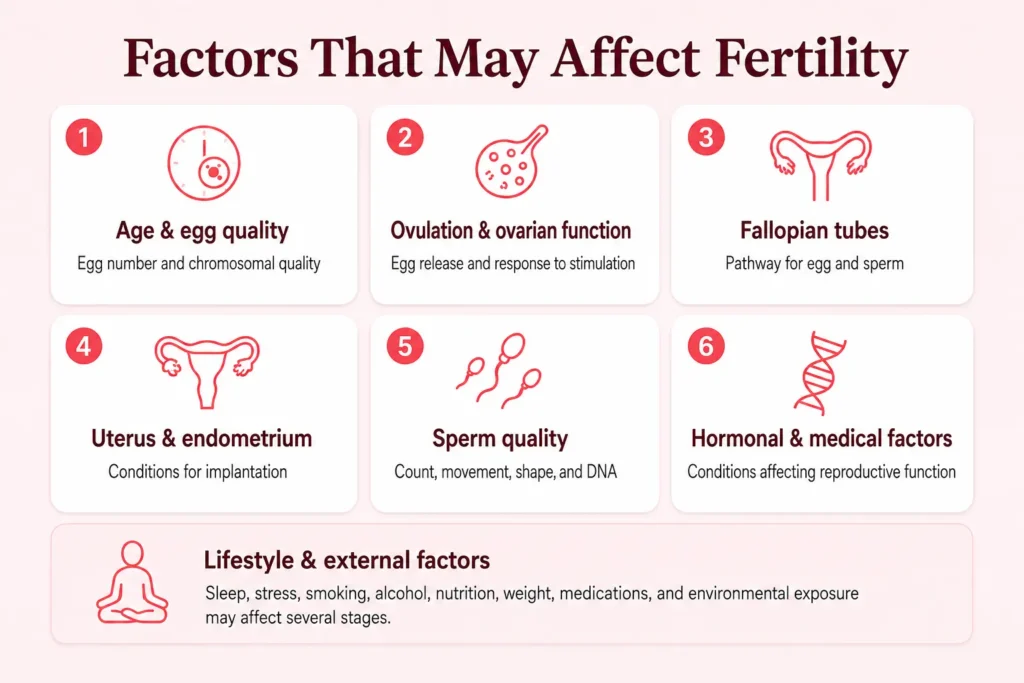
Everyday stress is another factor worth considering. Fertility difficulties can bring uncertainty, disappointment, and tension between partners, sometimes made harder by questions or pressure from relatives. Although stress is rarely the only cause of infertility, it can quietly affect sleep, hormonal balance, sexual well-being, and the ability to cope with treatment. Supporting emotional health is therefore an important part of the treatment plan.
Why Unexplained Infertility Still Requires Thorough Testing
In some cases, initial tests do not reveal the factors affecting fertility. Doctors refer to this as “unexplained infertility.” However, this does not necessarily mean that no relevant abnormalities are present or that further evaluation is unnecessary.
More often, testing reveals one or several factors that may reduce fertility, and each of these factors may reduce the likelihood of conception, implantation, or the continued development of a pregnancy but may not be the sole or direct cause of infertility.
Ongoing monitoring is therefore not simply a way to search for a “hidden cause.” It helps doctors determine which indicators remain unfavorable, observe how they change over time, assess the body’s response to treatment, and adjust the treatment plan when necessary.
Why Previous IVF History Can Change Treatment Decisions
IVF is both a treatment and a source of information about how the reproductive system responds at different stages. Each cycle provides data that can help doctors understand why previous attempts were unsuccessful and decide which options may be appropriate next.
For women, IVF records show how the ovaries responded to stimulation, how many mature eggs were retrieved, how the embryos developed, and whether the endometrium was ready for transfer. A poor ovarian response may indicate reduced ovarian function, while a persistently thin endometrium may suggest that the uterine lining needs further assessment.
For men, treatment decisions are based primarily on semen analysis, medical history, physical examination, ultrasound, hormone testing, and genetic tests when indicated. Previous IVF records may provide additional information, particularly if fertilization was consistently low or did not occur.
Based on the combined findings, doctors may adjust the IVF protocol, recommend medication, use assisted reproductive procedures, or treat an identified condition before another attempt.
If established treatments have not produced the expected result, the same information can help determine whether a regenerative approach such as stem cell therapy for fertility may be considered as part of the broader treatment plan.
What Is the Most Effective Treatment for Infertility?
There is no ideal treatment plan that works for every couple. Fertility depends on several connected processes, and difficulties may occur at more than one stage. For this reason, combining carefully selected approaches may be more helpful than relying on a single method.
Why Fertility Specialists Usually Begin With Established Options
Established fertility treatments are usually considered first-line care because their effectiveness and safety have been studied more extensively. Doctors also have clearer criteria for their use, standardized treatment protocols, and clinical guidelines that help match each option to a specific fertility problem.
Depending on the results of the couple’s evaluation, these options may include:
- medication to induce or regulate ovulation;
- IVF (in vitro fertilisation), in which eggs are collected and fertilised in a laboratory before an embryo is transferred to the uterus;
- ICSI (intracytoplasmic sperm injection), an IVF method in which a single sperm is injected directly into an egg;
- TESE (testicular sperm extraction) or micro-TESE, procedures used to retrieve sperm directly from testicular tissue;
- fertility preservation, such as freezing eggs, sperm, or embryos and, in selected cases, ovarian tissue;
- surgery for selected uterine, tubal, endometriosis-related, varicocele, or obstructive conditions.
Stem cell therapy for infertility has a regenerative rationale and is supported by a growing body of research. However, the available evidence is still more limited, and this approach is not routinely included in fertility treatment guidelines. For these reasons, it is generally considered only after a detailed individual assessment and in the context of established treatment options.
How Stem Cell Therapy May Support Male and Female Fertility Care
Stem cell therapy for male and female infertility may be considered when reproductive tissue needs additional support and established treatment has not produced the expected response. By supporting the body’s regenerative processes, it may help create more favorable conditions for the next stage of care, including another IVF attempt.
In women, treatment focuses on the ovaries or the endometrium—the inner lining of the uterus where an embryo implants. The potential role of stem cell therapy for female infertility also depends on how the woman has responded to previous fertility treatments.
In stem cell therapies for male infertility, research focuses mainly on supporting sperm production. The possible role of treatment depends on why sperm count or function is reduced and whether sperm can be found in the semen or retrieved from the testes.
What Current Research Suggests
Research in this field has been underway for several decades, and recent years have brought important findings about the potential use of stem cells in reproductive medicine. Much of this work focuses on mesenchymal stromal cells (MSCs). In studies involving women, they have shown regenerative potential and a favorable safety profile:
- A 2018 clinical study followed 26 women with recurrent intrauterine adhesions—scar tissue that can damage the uterine lining and interfere with embryo implantation. After the adhesions were removed, umbilical cord-derived MSCs were placed inside the uterus on a collagen scaffold. The researchers reported increased endometrial thickness, fewer adhesions, ten pregnancies, and eight live births during the 30-month follow-up.
- A 2020 scientific review analyzed findings from studies of MSCs in female reproductive conditions. The reviewed data indicated their potential to support tissue repair and cell protection in premature ovarian insufficiency, endometriosis, and Asherman’s syndrome.
- A 2020 clinical study involving 61 women with premature ovarian insufficiency reported improved follicular development and egg retrieval, four successful deliveries, and no serious treatment-related complications.
- A 2021 small pilot study in women with endometrial damage found increased average thickness and three live births.
Research into male infertility has also produced important early findings. A 2024 phase I study of stem cell therapy for azoospermia reported improvements in sperm concentration and hormone levels in some participants. However, larger controlled trials are still needed.
These studies do not imply that stem cell therapy can cure infertility; all evidence suggests that it can supplement standard treatments. Let’s look at how it can help.
To better understand how stem cells may work in the body, explore our collection of stem cell therapy studies and clinical research across different conditions.
Tissue Support and Regenerative Mechanisms Under Investigation
MSCs release biological signals that help regulate inflammation, improve blood supply, protect existing cells, and promote the body’s natural tissue-repair processes.
The process may involve several steps:
-
1
MSCs respond to the surrounding tissue. Inflammation, reduced blood supply, or tissue damage produces signals that affect MSC activity.
-
2
They release active molecules. MSCs secrete growth factors, cytokines, chemokines, and other signaling molecules that influence neighboring cells.
-
3
Inflammation and fibrosis may become more regulated. This may help protect existing ovarian or endometrial cells from further stress.
-
4
The tissue receives more support. Better blood flow and cell activity may help the ovaries or endometrium work more effectively.
In the ovaries, these effects are being studied for their potential to support follicular development and ovarian response. In the endometrium, they may help improve tissue thickness, blood supply, and recovery from inflammation or scarring.
What Improvements May Look Like in Fertility Treatment
Possible changes after stem cell therapy for female infertility, as well as in male cases, may appear gradually and are usually assessed through follow-up tests.
Potential Outcomes That May Be Discussed
Depending on the cause of infertility, possible changes may include:
- more follicles developing during ovarian stimulation,
- a thicker uterine lining and blood supply,
- reduced fibrosis in some endometrial conditions;
- greater readiness for IVF, ICSI, or embryo transfer;
- improved semen or hormone results.
Why Stem Cell Therapy Cannot Guarantee Pregnancy
These changes are important, but they represent only part of the reproductive process. Pregnancy also depends on the following:
- egg and sperm quality;
- embryo development and genetics;
- age and ovarian reserve;
- the condition of the uterus and fallopian tubes;
- hormonal balance;
- the timing and method of fertility treatment.
Stem cell therapy for infertility therefore remains part of a broader fertility plan and cannot replace care from a reproductive medicine specialist. Even when test results improve, outcomes vary between patients, so pregnancy or IVF success cannot be guaranteed.
Where Stem Cells May Fit in Female Infertility
The table below summarizes where stem cell support may fit and what doctors consider when planning further treatment.
| Fertility condition | What it means | What stem cell therapy may support | What doctors monitor |
| Diminished ovarian reserve | Fewer eggs remain in the ovaries | The ovarian environment and remaining ovarian function | Hormone levels, follicle count, age, and response to stimulation |
| Poor ovarian response | Few follicles develop during fertility treatment | Follicular development and response before another IVF cycle | Number and maturity of eggs, hormone changes, and previous IVF results |
| Premature ovarian insufficiency | Ovarian function declines before age 40 and may appear intermittently | Existing ovarian activity and follicular development | Menstrual changes, hormones, follicles, and egg retrieval results |
| Thin endometrium, reduced endometrial receptivity, or Asherman’s syndrome | The uterine lining remains thin or is affected by scarring | Tissue repair, thickness, and blood supply before embryo transfer | Endometrial thickness, blood flow, uterine anatomy, and implantation history |
Stem Cells and IVF: Support, Not a Shortcut
Stem cell therapy and IVF have different roles. IVF brings eggs and sperm together and allows embryos to develop in the laboratory, while stem cell therapy may support the ovarian, endometrial, or testicular environment before another attempt.
Can Stem Cell Therapy for Infertility Improve IVF Outcomes?
Stem cell therapy may help prepare the body for IVF. Better ovarian function may support the development of more follicles, while a healthier endometrium may improve readiness for embryo transfer. Changes take time and differ between patients, so doctors monitor the results and help choose the right moment for the next IVF cycle.
Why Egg Quality and Embryo Genetics Still Matter
The number of follicles is only one part of IVF success. Egg quality, sperm DNA, fertilization, embryo development, and genetics also influence whether an embryo can implant and develop.
For this reason, more follicles do not always lead to a suitable embryo. Likewise, improvement in the endometrium cannot overcome every problem affecting embryo viability.
Why Fertility Specialists Should Remain Part of the Process
Stem cell therapy cannot replace care from fertility specialists. Regenerative medicine and reproductive teams should review the same records, follow the same treatment goals, and coordinate the timing of each step. The aim is to use stem cell therapy as part of a coordinated fertility plan rather than as a separate route.
Where Stem Cells May Fit in Male Infertility
Stem cell therapy for male infertility remains an investigational, supportive approach. It does not replace established fertility treatments such as hormone therapy, sperm retrieval, or intracytoplasmic sperm injection (ICSI). Any potential use should be discussed with a fertility specialist as part of a broader, individualized treatment plan.
Understanding Azoospermia and Low Sperm Count
Azoospermia means that no sperm are detected in the semen. A low sperm count means that sperm are present, but in reduced numbers. Both conditions may be caused by either:
- A blockage that prevents sperm from entering the semen
- Impaired sperm production within the testes
This distinction is important because the appropriate treatment depends on the underlying cause.
Cell-based approaches cannot remove or repair a physical blockage. Their potential role is therefore being investigated mainly in cases involving impaired sperm production, including non-obstructive azoospermia.
If there is a blockage, doctors may repair it or retrieve sperm for ICSI. If sperm production is impaired, the next steps may include hormonal and genetic evaluation and, in selected cases, micro-TESE.
Why Semen Analysis Is Only the Beginning
Male fertility assessment usually includes a medical history, physical examination, semen analysis, and ultrasound of the testes and scrotum. A semen analysis assesses sperm count, motility—how well sperm move—and morphology, or shape. Depending on the results, doctors may repeat the analysis and evaluate:
- Reproductive hormone levels
- Testicular structure and function, including ultrasound when indicated
- Genetic factors
- Current and previous medications
- Infections
- Previous chemotherapy or other medical treatments
This broader evaluation helps doctors distinguish a blockage from impaired sperm production and identify factors that may be treated directly. Research into stem cells for sperm support and production does not replace this essential assessment.
Established Treatment Options Come First
Established methods remain the main options for addressing male infertility. If a blockage is present, doctors may consider repairing it or retrieving sperm for use in ICSI.
Depending on whether sperm are present or can be retrieved, the following options may be discussed:
- ICSI (intracytoplasmic sperm injection): A single sperm is injected directly into an egg. This procedure may be used when sperm are present in the semen or have been retrieved surgically.
- TESE (testicular sperm extraction) or micro-TESE: Sperm are collected directly from testicular tissue. These procedures may be considered for selected men, including those with non-obstructive azoospermia.
- Sperm freezing: Retrieved sperm may be frozen for later use, potentially avoiding the need for another retrieval procedure.
- Donor sperm: This may be considered if no suitable sperm are found and the couple wishes to explore this option.
The treatment plan should also address the most appropriate timing for sperm retrieval and the possibility that no usable sperm will be found.
Who May Be Reviewed for Infertility Stem Cell Treatment?
The decision to recommend stem cell therapy is made individually. Doctors hold a consultation and review the patient’s medical history, symptoms, previous fertility treatments, and available test results. If more information is needed, they may request additional examinations.
Stem cell therapy may be considered in cases involving:
- diminished ovarian reserve or poor ovarian response;
- premature ovarian insufficiency;
- a persistently thin endometrium or endometrial damage;
- previous failed IVF cycles with a clearly identified difficulty;
- selected forms of impaired testicular function.
Stem cell therapy for azoospermia also requires assessment by a reproductive urologist. This helps determine whether sperm production is reduced, whether an obstruction is present, and which established options should remain part of the plan.
When Stem Cell Therapy May Not Be Appropriate
Treatment may need to be postponed or another option may be more suitable when:
- the fertility evaluation is not yet complete;
- a condition that can be treated directly has not been addressed;
- urgent fertility preservation should take priority;
- an active infection or unstable health condition increases the risk;
- cancer treatment or a recent cancer diagnosis requires specialist guidance.
A careful medical review protects the patient from unnecessary delays and helps set realistic goals.
What Happens During Treatment at Swiss Medica?
Swiss Medica is more than an outpatient clinic. We operate a full hospital in Belgrade, Serbia, where patients can receive medical assessment, cell-based treatment, supportive care, and ongoing supervision in one place.
The application process begins before the patient travels to Belgrade.
1. Online Consultation and Review of Fertility Records
The process begins with a free online consultation. The patient discusses the diagnosis, previous treatment, current concerns, and fertility goals with a medical advisor. Doctors may then ask to review:
- hormone tests, including AMH
- pelvic ultrasound and antral follicle count
- semen analyses
- IVF stimulation and egg-retrieval records
- fertilization, embryo-development, and transfer reports
- endometrial measurements
- hysteroscopy and surgery reports
- genetic tests, when available
- current medication and relevant medical diagnoses
If important information is missing, the team may request additional tests.
Get a free online consultation
Looking for a clear medical opinion on whether stem cell therapy may support your fertility plan? We offer a free online consultation with a regenerative medicine doctor. Our goal is to give you clear information so you can make an informed decision, with no pressure or obligation to proceed.

Medical Advisor, Swiss Medica doctor
2. Medical Assessment After Arrival
After the patient arrives at Swiss Medica, doctors conduct an in-person examination. This allows them to compare the current condition with the records reviewed online and check whether anything has changed.
The assessment may include a physical examination, blood and urine tests, and other investigations required for the individual case. Doctors also check for temporary or permanent reasons why treatment should not proceed, such as an active infection. The preliminary plan may then be confirmed or adjusted.
3. Personalized Treatment Planning Based on Fertility History
Stem cell therapy is not offered as the same injection package to every patient. The plan depends on whether support is being considered for ovarian function, the endometrium, or male reproductive health.
Doctors determine:
- the type and source of the cell product
- the dose and number of administrations
- the most appropriate delivery route
- the treatment schedule
- any supportive procedures
- the tests needed to monitor changes
- how the program should be coordinated with IVF, ICSI, TESE, surgery, or another treatment provided by the patient’s fertility team
The timing is especially important. Regenerative treatment should fit into the existing fertility plan rather than delay an IVF cycle, sperm retrieval, or fertility-preservation procedure that should take priority.
4. Stem Cell Therapy and Supportive Care
Cells are usually administered by IV drip or intramuscular injection in a minimally invasive procedure. Patients remain under medical supervision in a full hospital with staff available 24/7.
When appropriate, doctors may add:
- IMR (intracellular metabolism recovery) therapy with an individually selected combination of nutrients and vitamins;
- physiotherapy;
- medical-device therapies.
Each option is selected according to the patient’s condition and established treatment protocol.
5. Follow-Up and the Next Stage of Fertility Care
Changes after treatment develop gradually, with the most noticeable effects usually appearing within three to six months. However, the timing and degree of response are individual.
After approximately six months, doctors may recommend a follow-up assessment. Swiss Medica may invite the patient to return for a free medical check-up to evaluate progress. This visit is for assessment only and does not include further therapy; the patient pays only for travel tickets.
Safety, Side Effects, and Ethical Considerations
MSC therapy has been studied for many years and has generally shown a favorable safety profile. A 2026 meta-analysis included 42 randomized trials and 2,280 adults who received intravenous umbilical cord-derived MSCs for different conditions. Fever occurred more often in the MSC groups, but researchers found no increased signal for the other monitored risks.
Possible Side Effects and What Research Shows
Short-term reactions after MSC administration are usually temporary. They may include:
- mild fever;
- headache or tiredness;
- muscle aches;
- nausea;
- redness, swelling, or discomfort at the administration site.
However, safety depends not only on the cells themselves but also on their source, preparation, delivery method, and the patient’s health.
For more information about possible reactions, cell-quality checks, and medical monitoring, read our guide to stem cell therapy safety and side effects.
Why Reproductive Medicine Requires Additional Care
Standard fertility treatments do not always achieve the desired result. IVF, ICSI, or embryo transfer can address a particular stage of conception, but they may not correct underlying problems affecting the ovaries, endometrium, or testes.
Stem cell therapy is being studied as a supportive approach that may help create a more favorable environment for fertility treatment by supporting tissue repair, blood flow, and reproductive function. These changes may improve the body’s readiness for standard procedures and potentially influence their outcome.
Questions Couples Should Ask Before Treatment
Before choosing a stem cell therapy clinic, make sure its medical team answers the following questions clearly and honestly:
- Is stem cell therapy appropriate for our diagnosis and treatment history?
- Which type of cells will be used, and where do they come from?
- How are the cells processed, tested, and tracked?
- Why has this delivery method been recommended?
- What side effects may come from the cells and from the procedure itself?
- Which changes will doctors monitor, and when?
- How will treatment fit with IVF or care from our fertility specialist?
- Will follow-up continue after we return home?
- Does the clinic avoid promises of guaranteed pregnancy or IVF success?
If you would like to learn more about the patient experience, you may find it helpful to explore testimonials or speak with former patients when possible.
We have brought together stories from our patients, each with their own challenges and their own small or significant victories. You can hear about their experiences in their own words on our YouTube channel.
Cost of Stem Cell Therapy for Infertility
At Swiss Medica, the cost of stem cell therapy for infertility covers the complete personalized program and can range from €7,700 to €45,000*. After the medical review, patients receive a detailed cost breakdown showing exactly what is included, with no hidden fees.
* Prices are indicative and based on 2026 estimates; they may vary depending on condition severity and required cell quantity.
Why Treatment Costs Depend on the Individual Case
A personalized estimate shows exactly what the individual program includes and gives a more accurate total than a flat website price. The final stem cell therapy cost may depend on:
- whether infertility involves female, male, or combined factors
- ovarian reserve, endometrial condition, or semen findings
- previous IVF outcomes
- the cell product, dose, and administration route
- required diagnostics and supportive care
- the length of the hospital stay
- country-specific costs
What Is Included in the Treatment Program at Swiss Medica
Some clinics quote only for a single cell injection or infusion. At Swiss Medica, we provide a private, full-hospital experience, including diagnostics, cell preparation and administration, supportive care, accommodation, and follow-up, so the quoted price covers more than individual procedures.
| Country / region | Approximate price range | What the price typically covers |
| Mexico | $2,400–$9,500 | One ovarian rejuvenation procedure; diagnostics, accommodation, and follow-up may cost extra |
| Turkey | €3,300–€9,100 | One treatment cycle; some providers include diagnostics and short-term follow-up |
| Germany | €5,300–€13,200 | Usually the procedure or a partial medical package; additional services vary by provider |
| United States | $15,000–$25,000 | Usually the procedure; accommodation and extended follow-up are often excluded |
| Serbia (Swiss Medica) | €7,700–€45,000* | A private full-hospital program with medical supervision, accommodation, tailored meals, and patient support |
Why Patients Choose Swiss Medica for Fertility Treatment
Since 2011, we at the Swiss Medica clinic have worked with patients whose conditions require careful medical review, individualized planning, and long-term support. We have helped more than 10,000 patients with different health conditions. Here is why patients choose Swiss Medica.
Individual Medical Assessment Before Treatment
Fertility treatment can be emotionally and physically exhausting, especially after unsuccessful attempts or unclear answers. We begin by reviewing each patient’s complete fertility history, so they don’t have to start over.
Our doctors follow established protocols while adapting the cell dose, delivery approach, and supportive care to the patient’s individual needs. Each patient receives a program based on their specific situation, rather than the same standard plan given to everyone with an infertility diagnosis.
In-House Cell Processing and Quality Control
When treatment involves cellular products, patients naturally want to know where the cells come from and how their quality is checked. We prepare and test our cell products in our own GMP-certified laboratory, where trained specialists work under controlled conditions and follow documented quality procedures.
Our medical team directly oversees cell identity, sterility, viability, activity, and dosage. With no third-party suppliers, unnecessary transportation delays, or extra handling steps, patients feel confident that their cell product remains under our control from preparation to administration.
Support for International Patients in Serbia
Traveling abroad for fertility treatment can feel like one more burden during an already emotional journey. At Swiss Medica, we try to make the stay feel less like a hospital visit and more like a calm place where patients and their partners can rest, have privacy, and feel supported. We provide:
- help with airport transfers, translation, medical documents, and everyday questions;
- accommodation and meals for the patient and one partner or companion;
- accessible facilities for patients with limited mobility;
- spacious grounds for quiet walks and time outdoors.




Read more about Swiss Medica—our clinics, medical approach, history, and the milestones behind our patient care.
Discuss Fertility Treatment Options With a Medical Advisor
A free online consultation with a regenerative medicine specialist can help you understand whether stem cell therapy may have a supportive role in your fertility plan. There is no pressure or obligation to proceed—the purpose is to provide clear guidance and help you understand the possible next steps.
Contact us
Book a free online consultation to discuss your fertility case.
Medical Advisor, Swiss Medica doctor
FAQ
1. Can stem cell therapy help with infertility?
Stem cell therapy may support ovarian function, the endometrium, or sperm production in selected patients. Most fertility applications remain investigational, so treatment should complement—not replace—care from a fertility specialist.
2. Can stem cells help women with diminished ovarian reserve?
Early research is exploring whether stem cell therapy can support remaining ovarian function and improve the response to stimulation. It cannot create an unlimited supply of new eggs or reverse age-related changes in egg quality.
3. Can stem cell therapy for male infertility help with azoospermia?
Stem cell therapy may have a potential role in selected cases of non-obstructive azoospermia, where sperm production is impaired, but it cannot correct a physical blockage. A small early study of stem cell therapy for azoospermia reported improvements in sperm concentration and hormone levels in some men. However, the evidence is limited, and a reproductive urologist should first investigate the underlying cause.
4. How does stem cell therapy for sperm production work?
The proposed role of stem cell therapy is to support the testicular environment and the cells involved in sperm development. Possible changes in sperm concentration or hormone levels vary between patients and cannot be guaranteed.
5. Can stem cell therapy for infertility improve IVF success?
It may support IVF indirectly if ovarian response or endometrial conditions improve. However, there is not yet reliable evidence that it increases live-birth rates for every patient group.
6. Does stem cell therapy replace IVF?
No, stem cell therapy does not perform fertilization, create embryos, or replace embryo transfer. It may be considered supportive treatment before IVF while a fertility specialist determines whether IVF, ICSI, surgery, or another option is still needed.
7. Can stem cell therapy help with fertility after menopause?
Stem cell therapy may help create more favorable conditions for fertility treatment by supporting the endometrium and preparing the uterus for embryo transfer. It cannot create new eggs or reverse menopause.
8. Is stem cell therapy for infertility safe?
Research across different conditions suggests that MSC therapy generally has a favorable safety profile, although temporary fever, fatigue, headache, or injection-site discomfort may occur.
9. What tests are needed before infertility stem cell treatments?
The medical team may review reproductive hormones and AMH, ultrasound results, semen analyses, previous IVF records, hysteroscopy or surgery reports, medications, and genetic tests when indicated. When applicable, both partners should be evaluated because infertility may involve female, male, or combined factors.
10. How long after treatment can a couple try IVF or pregnancy?
When a patient responds, the most noticeable changes are generally assessed within three to six months, but there is no universal waiting period. The fertility team should determine the timing of conception attempts, IVF, embryo transfer, or sperm retrieval from recovery and repeat test results.
11. How much does stem cell therapy cost for infertility?
At Swiss Medica, treatment is based on established protocols, with program estimates ranging from €7,700–€45,000*. After reviewing the patient’s medical records, doctors adapt the required cell quantity and additional procedures to the individual case and provide a clear estimate of everything included.
* Prices are indicative and based on 2026 estimates; they may vary depending on condition severity and required cell quantity.
List of References:
Esfandyari S, Chugh RM, Park H-s, Hobeika E, Ulin M, Al-Hendy A. Mesenchymal Stem Cells as a Bio Organ for Treatment of Female Infertility. Cells. 2020; 9(10):2253. https://doi.org/10.3390/cells9102253
Zhankina R, Zhanbyrbekuly U, Askarov M, Zare A, Jafari N, Saipiyeva D, Sherkhanov R, Akhmetov D, Hashemi A, Farjam M, Tanideh N, Aflatoonian B, Mussin NM, Kaliyev AA, Sultangereyev Y, Baneshi H, Shirazi R, Mahdipour M, Bakhshalizadeh S, Rahmanifar F, Tamadon A. Improving Fertility in Non-obstructive Azoospermia: Results from an Autologous Bone Mar-row-Derived Mesenchymal Stromal/Stem Cell Phase I Clinical Trial. Int J Fertil Steril. 2024 Jul 13;18(Suppl 1):60-70. doi.org/10.22074/ijfs.2023.2005045.1480
Yan L, Wu Y, Li L, Wu J, Zhao F, Gao Z, Liu W, Li T, Fan Y, Hao J, Liu J, Wang H. Clinical analysis of human umbilical cord mesenchymal stem cell allotransplantation in patients with premature ovarian insufficiency. Cell Prolif. 2020 Dec;53(12):e12938. doi.org/10.1111/cpr.12938
Wang J, Liu C, Fujino M, Tong G, Zhang Q, Li XK, Yan H. Stem Cells as a Resource for Treatment of Infertility-related Diseases. Curr Mol Med. 2019;19(8):539-546. doi.org/10.2174/1566524019666190709172636
Zhang Y, Shi L, Lin X, Zhou F, Xin L, Xu W, Yu H, Li J, Pan M, Pan Y, Dai Y, Zhang Y, Shen J, Zhao L, Lu M, Zhang S. Unresponsive thin endometrium caused by Asherman syndrome treated with umbilical cord mesenchymal stem cells on collagen scaffolds: a pilot study. Stem Cell Res Ther. 2021 Jul 22;12(1):420. doi.org/10.1186/s13287-021-02499-z
Wang, Y., Yi, H. & Song, Y. The safety of MSC therapy over the past 15 years: a meta-analysis. Stem Cell Res Ther 12, 545 (2021). https://doi.org/10.1186/s13287-021-02609-x


MD, Pediatrician, Regenerative Medicine Specialist