swiss medicaXXI century S.A.
Stem cell therapy is being explored for a growing range of conditions, bringing greater attention to what the process may involve in practice. Understanding stem cell therapy side effects is an important part of looking at treatment as a whole and forming realistic expectations before making a decision.
What Are the Most Common Side Effects of Stem Cell Therapy?
For most patients, the immediate concern is what they may feel during or shortly after treatment. Possible side effects of stem cell therapy may appear as general symptoms or as local reactions around the area where treatment is administered.
Common Short-Term Reactions
Clinical research provides a clearer picture of mesenchymal stem cell therapy side effects, particularly the short-term reactions reported in randomized trials:
- A 2024 meta-analysis of 152 randomized clinical trials involving 9,228 participants found transient fever to be the adverse event most consistently associated with MSC therapy across the studies analyzed.
- A 2021 meta-analysis of 62 randomized trials involving 3,546 participants also identified transient fever, along with associations with fatigue and administration-site reactions. The trials included different diseases and both intravenous and local MSC delivery, so these findings describe pooled research rather than the expected experience of every patient.
- More recently, a systematic review and meta-analysis of 42 randomized trials involving 2,280 adults examined intravascular umbilical-cord-derived MSCs. Fever was again reported more often after MSC administration, while no overall increase was found across the other serious adverse outcomes assessed.
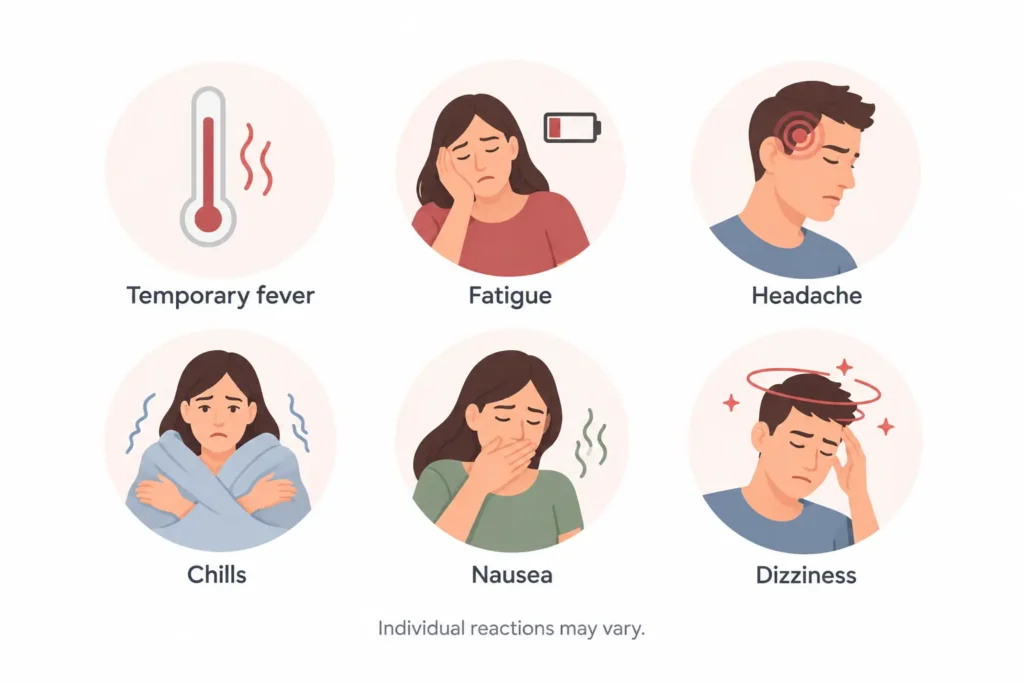
Swiss Medica’s clinical practice shows the same overall pattern. Short-term reactions are generally mild and temporary and may affect how a patient feels during the early recovery period. Some of the symptoms that patients may notice are listed below:
Want to explore the evidence further?
See our stem cell therapy clinical research resources. At Swiss Medica, we regularly review emerging clinical evidence to keep our treatment protocols aligned with developments in the field.
Do Side Effects Depend on How Stem Cells Are Given?
The route of administration can influence which short-term reactions are more likely because each method involves its own procedure and anatomical area.
| Route of administration | Where the cells are administered | Possible short-term reactions |
| Intravenous (IV) | Into a vein through an IV infusion | Temporary fever, chills, fatigue, or headache |
| Intramuscular | Into muscle tissue | Soreness, tenderness, or mild swelling at the injection site |
| Intra-articular | Directly into a joint | Temporary pain, pressure, stiffness, or swelling in the treated joint |
| Intrathecal | Into the cerebrospinal fluid space surrounding the spinal cord | Headache, back discomfort, or temporary soreness around the procedure site |
| Other local or targeted routes | Into or near a specific treatment area | Local discomfort, tenderness, or swelling depending on the procedure and treatment site |
Local Pain, Redness, or Swelling After an Injection
Among the more localized side effects of stem cell therapy, patients may experience pain, redness, tenderness, or swelling related to the administration procedure itself. The needle passes through tissue, while the injected material can temporarily increase pressure in the treated area. Some discomfort around an injection site can therefore occur without necessarily indicating a reaction to the MSCs themselves.
When Do Stem Cell Therapy Side Effects Start, and How Long Do They Last?
It is useful to know both which symptoms may occur and when they tend to develop. This gives patients a clearer picture of the early recovery period and what they may experience after treatment.
When Are Side Effects Most Likely to Appear?
In clinical trials, reported side effects of mesenchymal stem cell therapy have included transient fever and fatigue. Fever may occur within 48 hours after cell administration.
Local reactions at the administration site may include soreness, tenderness, redness, or mild swelling. They may start soon after an injection and become more noticeable later that day.
How Long Do Short-Term Reactions Usually Last?
Short-term reactions usually settle as the body recovers from the procedure, often within several hours or a few days. There is no single recovery timeline, and symptoms may last longer in some patients than in others.
The main thing to look for is improvement: mild reactions would generally be expected to become less noticeable with time.
What If I Notice a Symptom After Returning Home?
A symptom that appears later does not automatically mean it is a side effect of stem cell therapy. It may be related to your underlying condition or another health factor.
You can contact the clinic’s medical team for guidance after returning home. If a symptom is new, persists, or worsens, the team can help assess it and advise whether further evaluation is needed.
Why Side Effects Differ From Patient to Patient
Patients may respond differently even when receiving the same treatment. This individual variation is worth considering when discussing the adverse effects of stem cell therapy.
Cell Type and Source
Both patient’s own and donor-derived cells may be used in treatments, with sources including bone marrow, adipose tissue, umbilical cord, and placenta.
Using a patient’s own cells reduces concerns about donor-related immune compatibility, but processing and administration still require safety controls. Donor-derived MSCs have relatively low immunogenicity, although immune reactions remain possible. Donor screening and in-house laboratory checks—including cell identity, viability, sterility, mycoplasma, and endotoxin testing—help reduce preventable risks before administration.
Dose and Route of Administration
In intra-articular adipose-derived MSC therapy for knee osteoarthritis, higher doses were associated with more adverse events, primarily temporary pain and swelling at the injection site during the first few days after treatment. This does not mean that a higher MSC dose will always produce stronger side effects, as the relationship may differ with the cell product, condition, and administration method.
The route of administration adds another source of variation because different methods involve different tissues and procedures. As a result, two patients receiving MSC therapy may experience different short-term effects depending in part on how the cells are administered.
Patient Health and Medical History
The patient’s underlying condition and overall health also shape how they may feel after treatment. That is why doctors review the diagnosis, disease stage, overall health, and previous treatments. These individual factors may influence how the side effects of stem cell therapy are experienced, so the medical team considers them when planning treatment and follow-up.
What Serious Complications Can Occur After Stem Cell Therapy?
Serious complications are not typical after MSC therapy, but they are still part of the overall safety picture. This section looks at the risks of stem cell therapy that require more careful medical attention.
Severe Infection or Allergic and Immune Reactions
Infection can occur after any invasive procedure if sterile conditions are not maintained. Severe allergic or immune reactions have also been evaluated in MSC trials but have not emerged as typical adverse effects of stem cell therapy.
Across randomized trials, serious infections were not consistently associated with MSC treatment, while acute infusion reactions other than fever were uncommon.
Blood Clots and Other Vascular Complications
Blood clots and related vascular complications have been evaluated in MSC safety studies, particularly when cells are administered intravenously. A recent systematic review specifically monitored thrombotic and thromboembolic events and did not find an overall increase among MSC recipients compared with control groups.
Other Serious Procedure-Specific Complications
Some adverse effects of stem cell therapy arise from the administration procedure rather than from the MSCs themselves. Intrathecal administration, for example, involves a lumbar puncture, while intra-articular treatment requires a needle to enter the joint. As with other invasive procedures, this can introduce risks such as bleeding, infection, or other injection-related complications.
Despite this, serious complications such as infection have been reported only rarely with intra-articular MSC therapy, and randomized trials of intrathecal MSC administration have not shown a clear signal of serious procedure-related adverse events. In practice, much of the procedure-related risk can be reduced through proper sterile technique, experienced clinicians, and close medical monitoring before and after administration.
Learn more about the safety of MSC therapy, possible adverse reactions, and the factors that can influence them in our article on stem cell therapy safety.
MSC Therapy Side Effects Are Not the Same as Stem Cell Transplant Complications
When discussing the risks of stem cell therapy, it is important to distinguish MSC therapy from hematopoietic stem cell transplantation (HSCT). These approaches use different types of stem cells with distinct biological functions.
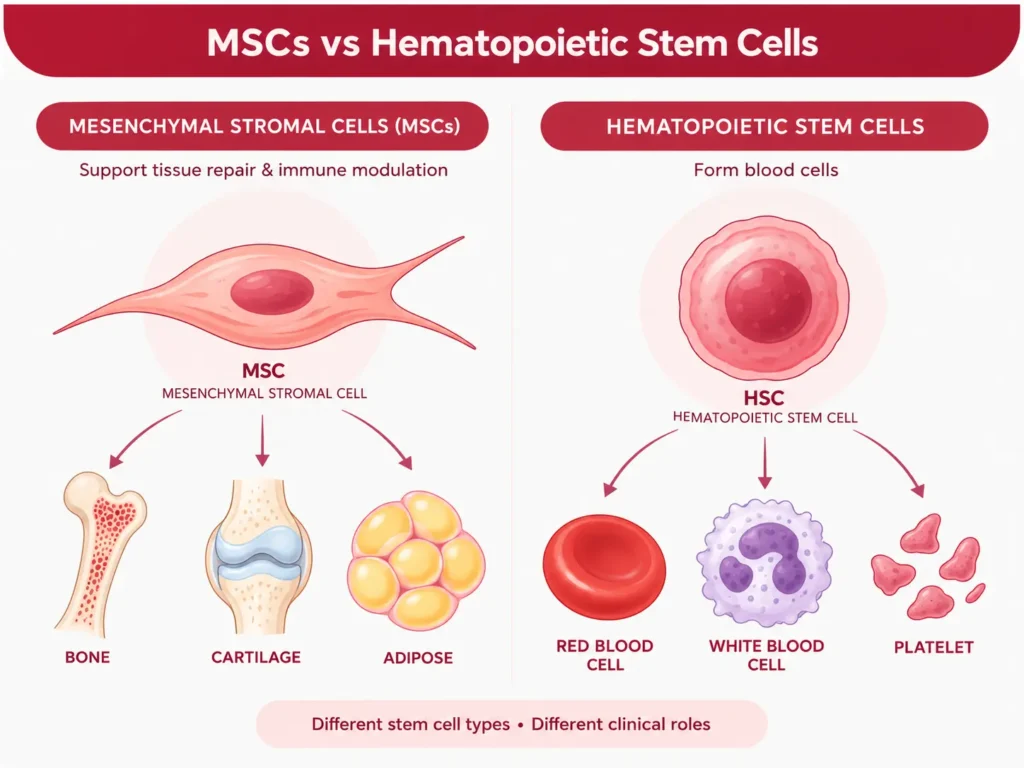
Although both approaches involve stem cells, they are fundamentally different procedures. The differences become clearer when their clinical roles, treatment processes, and safety profiles are compared directly.
| MSC therapy | Hematopoietic stem cell transplantation (HSCT) | |
| Cells used | Mesenchymal stromal cells (MSCs) | Blood-forming hematopoietic stem cells |
| Main purpose | Used or investigated in cell-based regenerative and immunomodulatory approaches | Restores or replaces the blood-forming system |
| Conditioning chemotherapy | Does not involve the conditioning chemotherapy used for HSCT | A conditioning regimen is given before stem cell infusion and can include chemotherapy or radiation |
| Immune-related transplant complications | MSC therapy does not involve donor immune system replacement | Allogeneic HSCT can cause graft-versus-host disease (GVHD), in which donor immune cells react against the recipient’s tissues |
| Typical safety concerns | Temporary fever, administration-site reactions, and procedure-specific effects | Infection during immune suppression, GVHD, and complications related to conditioning and transplantation |
Complications such as conditioning-related toxicity, immune suppression, and graft-versus-host disease should be understood in the context of HSCT rather than included among the side effects of stem cell therapy involving MSCs.
Are There Long-Term Side Effects of Stem Cell Therapy?
Evidence on the long-term side effects of stem cell therapy is still more limited than data on short-term reactions. So far, longer-term studies of MSC therapy have not identified clear safety concerns.
What Long-Term Studies Can—and Cannot—Tell Us
Longer-term safety research has examined possible negative effects of stem cell therapy, monitoring outcomes such as malignancy, infection, vascular complications, and mortality. An updated systematic review of intravascular MSC therapy did not find an increased risk of these outcomes compared with control groups.
What these studies cannot yet provide is the same level of certainty for very rare events or effects that may take many years to appear. This limited amount of very long-term safety data can be considered as one of the disadvantages of stem cell therapy from an evidence perspective. Long-term follow-up is available for fewer patients, so continued research is still important.
Why Long-Term Follow-Up Still Matters
After discharge, follow-up provides a structured way to evaluate persistent or delayed symptoms and determine whether they are more likely related to the treatment, the underlying disease, or another medical factor.
At Swiss Medica, patients stay in touch with the medical team after returning home, so the team can review any concerns during follow-up.
When Should You Contact a Doctor After Stem Cell Therapy?
Knowing which stem cell therapy side effects require medical attention is an important part of recovery. Patients should contact their medical team if a symptom is severe, continues to worsen, or is clearly different from what they were advised to expect after treatment.
Medical assessment is recommended for:
- high or persistent fever;
- severe pain or increasing swelling at the administration site;
- shortness of breath or difficulty breathing;
- chest pain;
- a significant allergic reaction, such as widespread hives or swelling of the face or throat;
- new neurological symptoms, including changes in sensation, movement, or marked weakness.
After intrathecal administration, severe or persistent headache, fever, or new changes in sensation or movement should also be reported promptly. Because warning signs can vary with the type of procedure, patients should follow the post-treatment guidance given by their medical team and report any symptoms that fall outside the expected recovery pattern.
How Can the Risk of Side Effects Be Reduced?
At Swiss Medica, safety is built into each stage of care rather than treated as a separate step. Since 2011, more than 10,000 patients with different conditions have received stem cell-based treatment at the clinic.
A stepwise approach is intended to reduce the risks of stem cell therapy and ensure that any concerns can be assessed promptly.
Medical Screening Helps Identify Individual Risk Factors
Before treatment, the medical team looks at the patient’s overall situation rather than the diagnosis alone. They review the stage of the condition, previous treatments, current symptoms, medical history, and any available test results. After that, they can decide whether treatment is suitable and how the plan needs to be adjusted to the patient’s needs.
Cell Quality and Laboratory Controls Matter
Before treatment, the cell product goes through several quality checks. Donors are screened first, and the final preparation is tested for sterility, viability, identity, and cell count before use. For the patient, this means the product has been checked at several stages. These controls are part of making sure the cells meet the clinic’s quality requirements before treatment begins.
At Swiss Medica, cell processing is carried out in the clinic’s own laboratory under controlled conditions, which limits additional transport and handling. The laboratory operates under EU GMP Grade A conditions and includes microbiological testing as well as routine monitoring of the processing environment.
Dose and Administration Is Planned for the Individual Patient
MSC dosing and administration are determined individually, as the appropriate approach depends on the patient’s diagnosis, body weight, overall health, treatment goals, and the characteristics of the biological product being used. Once these factors have been reviewed, the medical team determines the appropriate cell dose and route of administration.
At Swiss Medica, these decisions form part of a personalized stem cell treatment protocol built around the findings of the patient’s medical assessment and current clinical needs.
Medical Monitoring Helps Detect Reactions Early
Medical supervision continues throughout treatment so that any side effects of stem cell therapy can be evaluated without delay. After discharge, patients remain in contact with the Swiss Medica team to discuss recovery, new symptoms, or any other concerns that arise at home.
A complimentary follow-up visit is also offered, usually 3–6 months later, giving the medical team an opportunity to review the patient’s progress and assess any changes since treatment; patients only need to cover their travel expenses.



Considering treatment? Learn more about what may be included in a treatment program and the factors that influence stem cell therapy cost.
What Should You Ask Before Starting Stem Cell Therapy?
Before treatment, patients should know how the procedure will be planned for their individual case, what the early recovery period may look like, and when to contact the medical team.
The consultation is a good time to ask how the treatment may apply to your own situation, including any limitations or disadvantages of stem cell therapy that may matter in your case.
A few useful questions are:
- Does my medical history change how the treatment is planned?
- What reactions are most likely with the treatment I am having?
- How will I be monitored during and after the procedure?
- Which symptoms should I report?
- Who should I contact if I have concerns after I leave the clinic?
- What kind of follow-up will I need?
- Can my condition increase negative effects of stem cell therapy?
Talk to a Medical Advisor About Your Individual Treatment Risks
Understanding the possible disadvantages of stem cell therapy is only part of deciding whether treatment is appropriate. Your individual risk profile also depends on your diagnosis, medical history, overall health, and the treatment you are considering. A free confidential online consultation with a Swiss Medica medical advisor can help you understand which considerations are most relevant in your case.
Contact us
Send us your recent medical records, and the medical team will review your case, discuss the potential benefits and risks, and explain what you may expect during and after treatment. If stem cell therapy is appropriate for you, the team can advise you on next steps and answer your questions before you decide.

FAQ
1. What are the most common side effects of stem cell therapy?
Most side effects are mild and temporary. Patients may experience fever, fatigue, or reactions around the treatment site, as well as headache, chills, nausea, or dizziness. With injections, temporary soreness, tenderness, or swelling can also occur where the cells were administered.
2. How soon after stem cell therapy can side effects appear?
This can happen during treatment or within the first few hours afterward. Some local reactions, such as soreness or mild swelling, may become more noticeable later the same day. What you experience and when it starts can vary depending on the type of procedure.
3. How long do stem cell therapy side effects last?
Most short-term reactions last from several hours to a few days. The exact timing varies from person to person and also depends on the procedure. In general, mild symptoms should gradually improve.
4. Are stem cell injections painful?
Stem cell injections may cause some discomfort during the procedure and temporary soreness afterward. The sensation depends on where the injection is given and the administration method. The medical team can explain what level of discomfort is typically expected with the planned procedure.
5. Can stem cell therapy make symptoms temporarily worse?
Some patients may notice a short-term increase in fatigue, soreness, or general discomfort after treatment. These reactions are usually related to the treatment or administration procedure rather than a worsening of the underlying condition.
6. Does IV stem cell therapy have different side effects from local injections?
It can. After IV administration, temporary fever has been reported more often in patients receiving MSCs than in control groups. Local injections are more likely to cause discomfort, tenderness, or swelling around the treated area. This is why expected side effects partly depend on the route of administration.
7. Are donor stem cells associated with different reactions than autologous cells?
The main difference is that donor-derived cells can involve immune compatibility considerations, while autologous cells come from the patient’s own body. Donor-derived MSCs generally have low immunogenicity, and donor screening and laboratory testing are used to help reduce additional risks before treatment.
8. Who may have a higher risk of side effects?
The risk of side effects can vary depending on a patient’s overall health, underlying condition, previous treatments, and the type of procedure planned. The dose and route of administration may also play a role, which is why each patient should be assessed individually before treatment.
9. When should I contact a doctor after stem cell therapy?
Contact your medical team if you develop a high or persistent fever, worsening pain or swelling, difficulty breathing, chest pain, a significant allergic reaction, or new neurological symptoms. You should also get in touch if something feels unusual or is getting worse rather than improving.
10. Are there long-term side effects of stem cell therapy?
Long-term safety data are more limited than information on short-term reactions, which can be considered one of the disadvantages of stem cell therapy. Still, studies with longer follow-up have not identified clear safety concerns associated with MSC therapy.
References:
Wang Y, Mou Q, Yi H, Meng Z. Transient Fever: The Sole Treatment-Related Adverse Event Associated with Mesenchymal Stromal Cells and Solid Clues from the Real World. Current Stem Cell Research & Therapy. 2024;19(9):1263–1285. https://pubmed.ncbi.nlm.nih.gov/37909436/
Wang Y, Yi H, Song Y. The safety of MSC therapy over the past 15 years: a meta-analysis. Stem Cell Research & Therapy. 2021;12(1):545. https://pubmed.ncbi.nlm.nih.gov/34663461/
Hum C, Poliwoda J, Lalu M, et al. Safety of intravascular administration of umbilical-cord-derived mesenchymal stromal cells: an updated systematic review and meta-analysis. Stem Cells Translational Medicine. 2026;15(6):szag029. https://pubmed.ncbi.nlm.nih.gov/42246109/
Huang Z, Zhang S, Cao M, et al. What is the optimal dose of adipose-derived mesenchymal stem cells treatment for knee osteoarthritis? A conventional and network meta-analysis of randomized controlled trials. Stem Cell Research & Therapy. 2023;14(1):245. https://pubmed.ncbi.nlm.nih.gov/37697417/
Awad G, Saad JP, Hamyeh A, Boutros M. Efficacy and safety of intra-articular mesenchymal stem cell-based therapies in knee osteoarthritis: A systematic review and meta-analysis of randomized controlled trials. Clinical Rheumatology. 2026;45(5):2905–2942. https://pubmed.ncbi.nlm.nih.gov/41863718/
Mesa Bedoya LE, Camacho Barbosa JC, López Quiceno L, et al. The safety profile of mesenchymal stem cell therapy administered through intrathecal injections for treating neurological disorders: a systematic review and meta-analysis of randomised controlled trials. Stem Cell Research & Therapy. 2024;15(1):146. https://pubmed.ncbi.nlm.nih.gov/38764070/
Thompson M, Mei SHJ, Wolfe D, et al. Cell therapy with intravascular administration of mesenchymal stromal cells continues to appear safe: An updated systematic review and meta-analysis. EClinicalMedicine. 2020;19:100249. https://pubmed.ncbi.nlm.nih.gov/31989101/
Gyurkocza B, Sandmaier BM. Conditioning regimens for hematopoietic cell transplantation: one size does not fit all. Blood. 2014;124(3):344–353. https://pubmed.ncbi.nlm.nih.gov/24914142/
Maurer K, Soiffer RJ. The delicate balance of graft versus leukemia and graft versus host disease after allogeneic hematopoietic stem cell transplantation. Expert Review of Hematology. 2023;16(12):943–962. https://pubmed.ncbi.nlm.nih.gov/37906445/
Ankrum JA, Ong JF, Karp JM. Anti-Donor Immune Responses Elicited by Allogeneic Mesenchymal Stem Cells and Their Extracellular Vesicles: Are We Still Learning? https://pmc.ncbi.nlm.nih.gov/articles/PMC5705547/


MD, Pediatrician, Regenerative Medicine Specialist