swiss medicaXXI century S.A.
Erectile dysfunction (ED) is one of the most common male health conditions worldwide, and it may quietly affect confidence, intimate relationships, and overall quality of life.
Conventional treatments—PDE5 inhibitors, injections, and prosthetic devices—work for many men but not for all, especially when the underlying cause is vascular, neurological, or related to diabetes or post-surgical factors. In this context, stem cell therapy for erectile dysfunction is increasingly studied as an option that may address some underlying tissue changes rather than treat symptoms alone.
What Causes Erectile Dysfunction?
Understanding what is driving ED is the foundation of any treatment decision. Causes vary widely between men—vascular, neurological, hormonal, or psychological—and often more than one factor is at work in the same case, which is why a careful diagnostic conversation typically precedes any therapeutic recommendation.
ED Is More Than a Performance Issue
ED is rarely just a sexual concern—it often reflects underlying changes in vascular, nerve, hormonal, or psychological health and may be the first noticeable sign of a broader medical issue. Treating it in isolation, without examining what is driving it, tends to give limited and short-lived results.
Vascular, Neurological, Hormonal, and Post-Surgical Causes
ED can arise from several mechanisms, often more than one at the same time. The four most commonly identified categories are the following:
- Vascular—impaired blood flow to penile arteries, often linked to atherosclerosis, hypertension, or endothelial dysfunction;
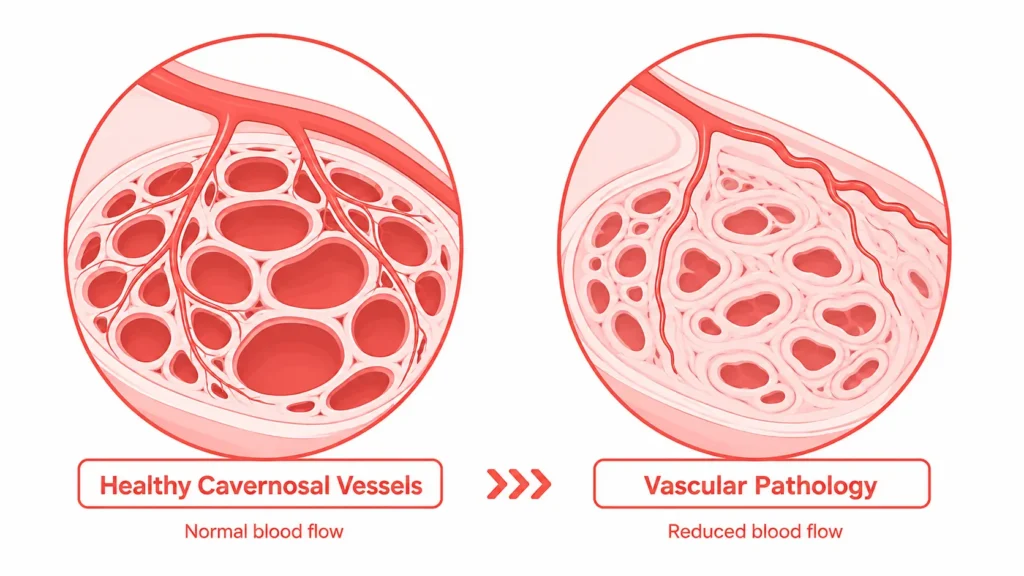
- Neurological — damage to cavernous nerves from prostate surgery, pelvic trauma, or spinal cord injury;
- Hormonal — low testosterone or endocrine imbalances affecting sexual desire and erectile capacity;
- Psychological—anxiety, depression, or chronic stress, which often coexist with physical causes rather than replace them.
Why Diabetes, Heart Disease, and Prostate Surgery Matter
Certain conditions sharply increase ED risk. Diabetes may damage the small blood vessels and nerves that control erection, and diabetic ED tends to be more severe and less responsive to oral medications.
Cardiovascular disease and ED often have similar underlying vascular mechanisms, such as endothelial dysfunction and atherosclerosis. Radical prostatectomy may injure the cavernous nerves, producing ED that does not always recover with time. In each case, the underlying cause shapes both prognosis and the choice of treatment.
How Stem Cell Therapy May Support Erectile Function
Regenerative approaches for ED are studied as a way to address the underlying tissue biology rather than only the symptom. The most-studied cell types are thought to act through paracrine signaling rather than direct tissue replacement, and the published evidence base is best developed for vascular and diabetic causes.
Supporting Blood Flow, Nerve Function, and Tissue Health: How Stem Cell Therapy for ED Works
Most research on this approach focuses on mesenchymal stem cells (MSCs) from adipose tissue, bone marrow, or umbilical cord. Stem cell therapy for ED works by influencing the local environment of the corpora cavernosa through paracrine signaling—releasing growth factors that may support endothelial cells, smooth muscle, and small nerve fibers. Proposed effects include improved blood vessel function, reduced fibrosis, and modulation of local inflammation.
Why Tissue Repair Does Not Mean a Guaranteed Cure
Stem cell therapy for ED can help support erectile function and overall sexual health, but it is not a guaranteed cure—and clinics that promise “100% restoration of function,” “permanent reversal of impotence,” or “complete cure in a single session” should be approached with caution. Cell-based therapy may, in selected cases, improve the biological environment that supports erection, but it does not erase the underlying cause, such as advanced diabetes or surgical nerve damage.
When Regenerative Treatment May Be Considered
The stem cell therapy procedure is most often discussed for men who have not responded sufficiently to PDE5 inhibitors, who have vascular or mild-to-moderate post-surgical causes, or who want to reduce dependence on short-term symptomatic therapies. It is always considered as a complement to medical evaluation, never a replacement.
Can Stem Cells Improve Erectile Dysfunction?
In ED, improvement generally means measurable functional change—stronger erections, better response to medications that had become insufficient, or reduced reliance on short-term symptomatic approaches. While stem cell therapy for impotence is not a direct tissue-replacement treatment, it may help optimize the biological conditions required for tissue repair and functional improvement.
You can explore how mesenchymal stem cells are being studied across a wide range of conditions—neurological, orthopaedic, autoimmune, metabolic—and what the cumulative evidence picture looks like this.
Read more on our page about stem cell therapy studies and clinical research.
What Current Research Suggests
Clinical research on stem cell therapy for impotence has grown steadily over the past few years, and recent trials are particularly relevant for diabetic and post-surgical ED.
-
1
A 2025 randomized controlled trial in placenta-derived MSCs combined with low-intensity shock wave therapy in 33 patients with refractory diabetic ED reported significantly improved erection hardness scores, with 70% of patients in the combined group achieving meaningful improvement at six months and no serious adverse events.
-
2
A Phase II trial of autologous bone marrow MSCs reported safety and sustained IIEF-5 improvements in diabetic ED.
-
3
A 2025 review found MSC-based approaches may show particular promise for ED related to diabetes, Peyronie’s disease, and cavernous nerve injury after prostate surgery—though no protocol is yet an established standard of care.
What Improvements May Look Like in Daily Life
Reported improvements after stem cell therapy for impotence tend to be gradual rather than dramatic. Among patients who respond, reported changes may include the following:
- stronger or more reliable erections;
- improved response to ED medication that was previously insufficient;
- better sexual confidence and reduced performance anxiety;
- improved intimacy and overall quality of life;
- reduced dependence on short-term symptomatic approaches in selected cases.
The timing and degree of improvement can differ considerably from one patient to another. While individual experiences may offer insight, they should not be interpreted as a predictor of future results.
Why the Cause of ED Shapes Individual Results
Outcomes of stem cell therapy for ED depend largely on what is driving the condition. When ED mainly relates to vascular changes or mild post-surgical dysfunction, the response may be more favorable because some functional pathways remain preserved.
In contrast, long-standing complete nerve damage or advanced diabetic small-vessel disease can limit the potential response of stem cell therapy for erectile disfunction, as the underlying structures involved in erection may be more severely affected.
However, even men with similar diagnoses and severity may respond differently, because age, vascular health, hormone status, medications, lifestyle, and consistency of follow-up can all influence the result.
This is why detailed medical evaluation comes before any discussion of treatment. It helps identify the main contributing factors, assess whether regenerative or supportive approaches are appropriate, and set realistic expectations.
What Is the Success Rate of Stem Cell Therapy for ED?
An honest discussion of what success means clinically tends to be more useful than a single quoted figure.
Why There Is No Single Success Rate
There is no universal success rate—published trials use different cell types, doses, delivery routes, and patient populations, so headline percentages rarely translate directly to an individual case.
Factors That May Influence Treatment Outcomes
Several variables shape how a patient may respond to regenerative medicine for ED, and these are usually discussed individually before treatment is recommended:
| Factor | Why it matters |
| Underlying cause of ED | Vascular and mild post-surgical cases respond more readily than advanced nerve damage or end-stage small-vessel disease |
| Severity and duration | Recent, mild-to-moderate ED tends to respond better than long-standing, severe cases |
| Metabolic and cardiovascular health | Well-controlled diabetes, good lipid profile, and absence of significant arterial disease support response |
| Prostate surgery history | Time since surgery and degree of nerve preservation shape recovery potential |
| Lifestyle and hormone status | Smoking, inactivity, and low testosterone tend to reduce response; addressed anxiety or depression supports it |
| Treatment protocol and follow-up | Cell type, delivery method, and ongoing supportive care shape long-term results |
How Swiss Medica Monitors Progress After Treatment
Treatments at Swiss Medica are based on established clinical protocols that are tailored to each patient’s condition, current health status, and treatment goals. After the in-clinic procedure, progress is monitored through structured remote follow-up in the months that follow, allowing the medical team to track changes the patient reports and adjust supportive measures based on individual responses.
Who May Be a Candidate for ED Stem Cell Treatment?
Not every man with ED is a candidate for cell-based therapy, and even among those who may be, the underlying cause and overall health profile shape whether and how treatment is approached.
Men With Persistent ED Despite Conventional Treatments
The most studied candidates are men whose condition has not responded sufficiently to oral PDE5 inhibitors, who experience side effects from medication, or who want to reduce long-term dependence on symptomatic approaches. Stem cell therapy for ED can help these patients explore an option that may address some underlying tissue mechanisms, though it remains complementary to standard care.
Cases That Require Careful Medical Assessment
Some cases may need more thorough assessment before any regenerative protocol is considered — including diabetic ED with poorly controlled glucose, advanced cardiovascular disease, low testosterone, post-radical-prostatectomy ED, or Peyronie’s disease. In each scenario, the underlying condition shapes whether and how regenerative treatment may be approached.
You can dive deeper into how mesenchymal stem cells and supportive modalities may help with penile fibrosis, plaque formation, and curvature and what the realistic goals of treatment may be.
Read more in our dedicated article on stem cells for Peyronie’s disease.
When Treatment May Not Be Recommended
Treatment is generally not considered when:
- there is an active infection in the genital or pelvic region;
- there is an active malignancy or recent history of certain cancers;
- uncontrolled systemic conditions make any intervention unsafe;
- severe and irreversible anatomical damage makes any functional goal unrealistic.
Every case is reviewed individually with transparent discussion of expected benefits and limitations.
What Happens During Treatment at Swiss Medica?
For patients traveling to Belgrade, the application process begins with a remote review of medical records and proceeds through several distinct stages on arrival, all handled with full discretion.
Private Medical Assessment and Personalized Treatment Planning
Based on established clinical protocols, doctors tailor the program to the specific case—specifying cell product, dose, delivery route, and supportive therapies.
On arrival, patients are examined by a multidisciplinary team—a urologist, endocrinologist when relevant, cardiologist, and other consultants depending on the case. Imaging and lab results are reviewed, hormonal and vascular assessment is performed, and the conversation is held privately.
Cell Therapy, Supportive Care, and Follow-Up
Before administration, the cell product is prepared under controlled laboratory conditions, with testing for identity, viability, sterility, and contamination.
Stem cell injections for ED are typically delivered via paracavernous injection—near the cavernous structures.
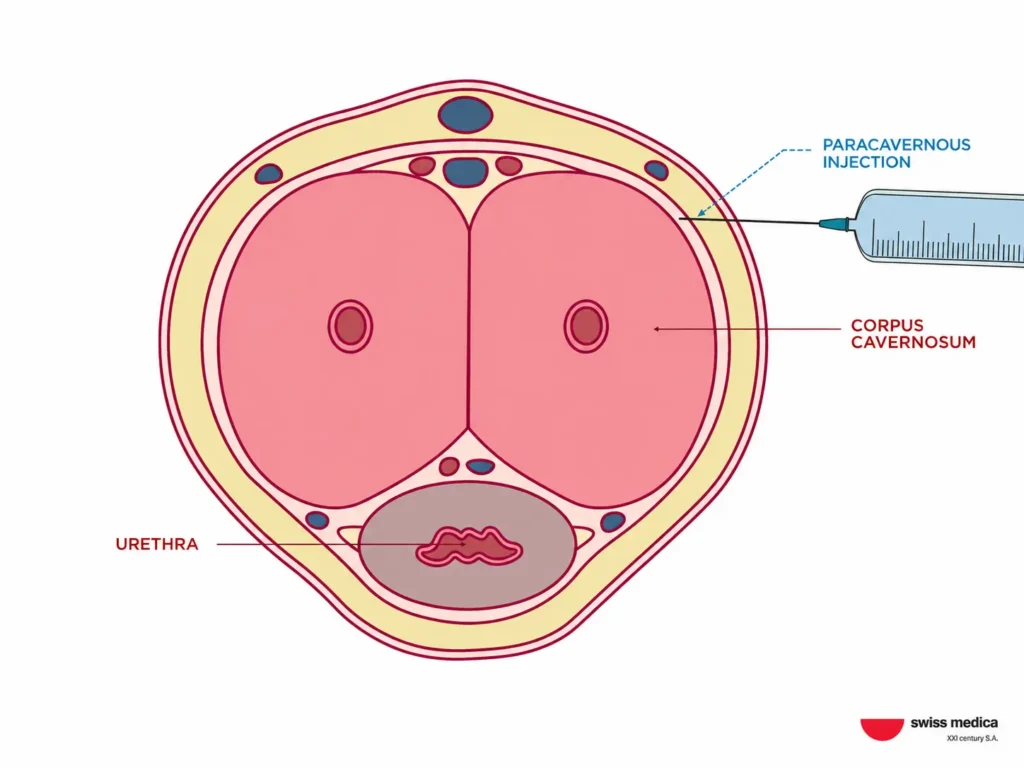
In selected cases, intravenous infusion of donor MSCs may be added for systemic effects, and the protocol may be combined with low-intensity shock wave therapy or platelet-rich plasma (PRP). The in-clinic program is followed by structured remote follow-up.
You can dive deeper into each stage of the program—from the first remote consultation through arrival and assessment to the in-clinic procedure and structured follow-up that continues after the patient returns home.
Learn more in our dedicated article explaining stem cell therapy step by step.
Questions Patients Should Ask Before Starting Treatment
Choosing a clinic involves more than evaluating the treatment offered. The way a clinic answers questions about medical assessment, cell quality, and ongoing care can reveal a great deal about the standard of care patients can expect. Useful questions may include:
- What cell type is used, and from which tissue source?
- Where are cells processed, and what quality control standards apply?
- What delivery route is recommended for this specific case, and why?
- What to expect from stem cell therapy?
- What follow-up and supportive care is included after the procedure?
Safety, Side Effects, and Regulatory Considerations
Reported adverse events in published clinical trials have generally been mild and short-lived, but transparent regulatory framing matters for any patient considering treatment abroad.
Possible Side Effects and Safety Monitoring
Like any interventional procedure, intracavernous stem cell injections for ED may carry some risk—though when MSCs are prepared in a controlled laboratory and administered by experienced clinicians, treatment is generally well tolerated.
Most reported side effects in published clinical trials tend to be mild and short-lived: temporary local discomfort at the injection site, mild swelling, or transient sensitivity that typically resolves within days. Serious adverse events have been uncommon across published studies.
You can dive deeper into the published clinical evidence on adverse events, the typical safety profile of MSC-based therapies, and the laboratory and procedural standards that minimize risk in regenerative medicine.
Read more in our article on stem cell therapy safety and side effects.
Why Cell Quality and Clinical Standards Matter
The most important safety determinant in cell-based therapy is not the cell type itself—it is how cells are sourced, processed, and delivered.
Stem cell therapy for ED in Europe, and particularly at Swiss Medica, is built around multiple safety layers: patient screening through multidisciplinary medical evaluation, in-house cell processing under EU GMP Grade A laboratory standards, sterility testing of every cell batch, and procedures performed by experienced urology and andrology specialists.
Cost of Stem Cell Therapy for Erectile Dysfunction
The stem cell therapy cost for ED varies between countries, clinics, and individual programs. The cost of stem cell therapy for erectile dysfunction in Europe — and at Swiss Medica specifically — reflects medical complexity, cell product quality, and supportive care, rather than promotional pricing.
What Is Included in the Cost of Stem Cell Treatment for Erectile Dysfunction?
At Swiss Medica, stem cell treatment for ED packages typically ranges from €7,700 to €45,000* depending on severity, underlying cause, and the personalized program. They generally include medical evaluation, hormonal and vascular workup, the cell-based procedure, supportive therapies, accommodation, meals, airport transfers, and translation services.
* Prices are indicative and based on 2026 estimates; they may vary depending on condition severity and required cell quantity.
Why Costs of Stem Cell Treatment for ED May Vary Between Patients
There is no single fixed price because each program is built around the patient’s specific case. The final cost reflects clinical complexity, the cell product used, and supportive care included
| Factor | How it affects the cost |
| Underlying cause and severity | Diabetic, post-surgical, and combined-cause ED often require more extensive evaluation and adjunctive therapies |
| Cell type and quantity | Autologous bone marrow, adipose-derived, or umbilical-cord donor MSCs differ in processing complexity and dose |
| Combined modalities | Adding shock wave therapy or PRP may influence the package price |
| Workup and follow-up | Hormonal and vascular testing, additional consultations, and longer monitoring may add to the package |
What to Compare Before Choosing a Clinic
Comparing prices alone rarely shows what patients actually receive. A clinic’s answers to specific questions—what is included, where cells are processed, and what follow-up is provided—usually tell more than the headline figure. A noticeably cheap stem cell shot for ED offered without detailed medical evaluation, transparent cell sourcing, or follow-up commitment should be approached with caution.
Why Patients Choose Swiss Medica for ED Treatment
Patients from 70+ countries have come to the Swiss Medica clinic in Belgrade for regenerative medicine for ED and other chronic conditions. The program is built around the same standards of cell quality, medical evaluation, and structured follow-up that govern other regenerative protocols.



Individual Medical Assessment Before Treatment
Treatment is based on established clinical protocols that are tailored to each patient’s underlying cause of ED, hormonal status, vascular health, and personal goals. Before recommending any cell-based therapy, doctors review the case individually and discuss realistic expectations.
In-House Cell Processing and Quality Standards
Cell products are processed in our in-house laboratory under EU GMP Grade A cleanliness standards. Keeping the process in-house eliminates risks associated with external suppliers or transport, and Serbia provides a cost-effective environment for this care under EU-aligned regulations.
You can dive deeper into the clinic background, the medical team, the in-house GMP-certified laboratory, and how international patient programs are organized for men traveling for ED treatment.
You can explore more on our separate page about Swiss Medica.
Personalized Follow-Up and Patient Support
Patients are followed remotely with structured check-ins at 1, 3, and 6 months. Each follow-up combines a brief medical assessment with a confidential conversation about progress, allowing the medical team to adjust supportive measures.
The program also includes one free follow-up visit to the clinic 3–6 months after treatment, giving patients an additional opportunity for in-person evaluation and further medical guidance.
International Patient Care in Serbia
The English-speaking team coordinates travel, accommodation, airport transfers, and translation. Conversations are handled with full discretion, and patients may bring one accompanying person.
Todd’s Experience at Swiss Medica
Todd, a patient from Seattle, came to Swiss Medica after carefully researching different treatment options and comparing clinic protocols. What stood out to him was not only the medical program but also the full support around the treatment: airport transfer, wheelchair-accessible transport, English-speaking communication, clean hotel-like accommodation, prepared meals, and a structured daily schedule.
“Everything was exactly as they explained before I arrived. I was met at the airport and brought to the clinic in a comfortable van with wheelchair access, and the room felt like a nice hotel room—clean, modern, and well prepared. Everyone spoke English, communication was easy, and over these 10 days I felt that the whole facility and the procedure were top-notch.”
Todd also highlighted the physiotherapy program and medical team, describing the rehabilitation support as an important part of preparing the body for cell therapy. He said the doctors were professional, the procedure was more comfortable than expected, and the overall experience gave him confidence that he had done everything possible for his health.

More real patient stories and video reviews are available on the Swiss Medica YouTube channel.
Speak Privately With a Medical Advisor About ED Treatment Options
The next step for patients considering this treatment option is a free, confidential medical consultation. Our doctors will review your medical history, explain realistic options, and help you understand how our established treatment protocols can be tailored to your specific case.
Get a free online consultation
Fill out the form below, or send your medical records to our team — all conversations are handled with full discretion.

FAQ
1. Can stem cells repair erectile dysfunction?
Stem cells may support the underlying tissue mechanisms involved in erection—blood vessels, smooth muscle, and small nerves—but they do not regenerate severed nerves or fully reverse advanced damage. In selected cases, cell-based therapy can help improve erectile function, though it does not replace medical evaluation.
2. Is stem cell therapy for ED a cure?
No, it is not a cure. This is a regenerative approach that may improve the biological environment supporting erection. In selected cases it can reduce dependence on short-term medications, but underlying causes such as advanced diabetes or surgical nerve damage cannot be eliminated.
3. What is the success rate of stem cell therapy for ED?
There is no single success rate. Published trials report variable improvement in carefully selected patients, particularly in diabetic ED. Results depend on the underlying cause, severity, duration, and overall health. Any clinic quoting a fixed universal rate should be questioned.
4. Can stem cell therapy help ED after prostate surgery?
Post-prostatectomy ED is among the most studied indications for cell-based therapy, since cavernous nerve damage drives the dysfunction. Preclinical and early clinical evidence suggests potential benefit, particularly when treatment is offered relatively soon after surgery, though no protocol is yet considered an established standard.
5. Can stem cell therapy help diabetic erectile dysfunction?
Recent randomized and Phase II trials in diabetic ED have reported safety and meaningful improvements in erection hardness and IIEF-5 scores. Diabetic ED appears to be one of the more responsive indications, though glucose control and overall metabolic health remain essential to outcomes.
6. Who may be a candidate for ED stem cell treatment?
Men whose ED has not responded sufficiently to PDE5 inhibitors, those experiencing medication side effects, post-prostatectomy patients, and selected patients with diabetic or vascular ED may be considered for stem cell therapy for ED after detailed medical evaluation. Excellent overall health is not required, but each case is reviewed individually.
7. How long does it take to notice changes after treatment?
Most patients report gradual changes rather than immediate results. Some men notice early improvements within the first weeks; others see more substantial change over three to six months. Combined protocols with shock waves or PRP may show an earlier response in some cases, but individual outcomes vary considerably.
8. Is stem cell therapy for ED FDA-approved?
No—mesenchymal cell-based therapy for ED is not FDA-approved as a standard therapy in the USA. Regulatory approval requires sufficient clinical evidence demonstrating effectiveness, consistency of results, and overall benefit in the intended patient population. Because studies in regenerative medicine often use different cell sources, treatment protocols, and patient populations, additional research is needed to better understand outcomes and identify which approaches may be most beneficial.
9. What are the side effects of stem cell therapy for ED?
Most reported side effects of an intracavernous stem cell shot for ED in published trials tend to be mild and short-lived: temporary local discomfort at the injection site, mild swelling, or transient sensitivity that typically resolves within days. Serious adverse events have been uncommon when cells are prepared under proper laboratory conditions and administered by experienced clinicians.
10. How much does stem cell therapy for erectile dysfunction cost?
At Swiss Medica, the treatment cost typically ranges from €7,700 to €45,000* depending on the cause, severity, and individual program. Prices in the USA, Switzerland, and the UK are generally higher due to operational and regulatory expenses.
* Prices are indicative and based on 2026 estimates; they may vary depending on condition severity and required cell quantity.
References:
Ji YH, Zhang YF, Tan X, et al. High-activity placenta-derived mesenchymal stem cells combined with low-intensity extracorporeal shock wave therapy for diabetic erectile dysfunction: a prospective randomized controlled trial. Stem Cell Research & Therapy. 2025;16(1):359. https://pubmed.ncbi.nlm.nih.gov/40629484/
Al Demour S, Adwan S, Jafar H, et al. Stem cell therapy in diabetic men with erectile dysfunction: a 24-month follow-up of safety and efficacy of two intracavernous autologous bone marrow-derived mesenchymal stem cell injections, an open-label phase 2 clinical trial. Basic and Clinical Andrology. 2024;34(1):13. https://pubmed.ncbi.nlm.nih.gov/38965462/
Fu X, Sheikholeslami A, Zhanbyrbekuly U, et al. Advances in stem cell therapy for erectile dysfunction: preclinical evidence and emerging therapeutic approaches. Frontiers in Medicine. 2025;12:1519095. https://pubmed.ncbi.nlm.nih.gov/40241900/
Nguyen Thanh L, Dam PTM, Nguyen HP, et al. Can Autologous Adipose-Derived Mesenchymal Stem Cell Transplantation Improve Sexual Function in People with Sexual Functional Deficiency? Stem Cell Reviews and Reports. 2021;17(6):2153–2163. https://pubmed.ncbi.nlm.nih.gov/34129158/

Medical Advisor, Swiss Medica doctor

MD, Pediatrician, Regenerative Medicine Specialist