swiss medicaXXI century S.A.
Peyronie’s disease often affects men on two levels at once—visible changes such as curvature and pain are one part, but the impact on confidence, intimacy, and sense of normality often runs deeper. When pain, deformity, or erectile dysfunction begins to interfere with daily life, the key question becomes, “What can realistically be done—and at which stage of the disease?”
Stem cell therapy for Peyronie’s disease is being investigated as a regenerative approach that may help to reduce inflammation, influence scar formation and support erectile function in selected patients, particularly during the active phase of the disease or when considered alongside standard urological care.
Understanding Peyronie’s Disease
Peyronie’s disease is a fibrotic condition of the penis. It develops when scar tissue forms inside the tunica albuginea — the connective sheath surrounding the erectile chambers of the penis. This scar tissue, often called a plaque, does not stretch in the same way as healthy tissue. During erection, this uneven flexibility can lead to curvature, narrowing, indentation, shortening, or pain.
Plaque Formation, Fibrosis, Curvature, and Pain
The central process in Peyronie’s disease is fibrosis. After repeated microtrauma or abnormal wound healing, the body may produce excessive collagen in the tunica albuginea. Over time, this can form a firm plaque.
Depending on its size and location, the plaque may cause:
- penile curvature during erection;
- pain, especially in the early stage;
- narrowing or indentation;
- shortening;
- reduced rigidity;
- difficulty with penetration;
- anxiety or avoidance of sexual activity.
Not every man experiences all of these symptoms. Some mainly notice pain, while others are more affected by curvature or erectile dysfunction.
Active Phase vs Stable Phase
Peyronie’s disease does not behave the same way throughout its course. The phase of the condition helps clinicians understand whether the process is still changing or has become more settled.
| Aspect | Active phase | Stable phase |
| What is happening in the tissue | Inflammation and fibrotic remodeling are still ongoing. The plaque and curvature may continue to change. | The fibrotic plaque has become more established, and the deformity is usually no longer progressing. |
| What the patient may notice | Pain is more common, especially during erection. Curvature may worsen, improve, or fluctuate over several months. | Pain often decreases or disappears. The curvature remains relatively consistent over time. |
| How predictable the condition is | Less predictable, because the disease process is still evolving. | More predictable, because the deformity has usually settled. |
| Clinical focus | Reducing active inflammation, monitoring progression, and considering approaches aimed at influencing tissue remodeling. | Assessing the stable anatomical change and choosing management based on severity, function, and patient-specific factors. |
This distinction is important because most regenerative research in Peyronie’s disease focuses on the active phase, when the inflammatory and fibrotic processes are still biologically active and may be more relevant targets for investigation.
Why Erectile Dysfunction Often Occurs Alongside Peyronie’s Disease
A substantial portion of men with Peyronie’s disease also experience erectile dysfunction. The reasons overlap. Fibrotic changes in the tunica, vascular impairment, mechanical effects of the plaque, pain, and psychological stress can all contribute.
For this reason, a proper evaluation should not look at curvature alone. It should also assess erectile function, vascular health, medication use, and the patient’s sexual goals. In some cases, men also discuss stem cell therapy for erectile dysfunction as part of the same conversation.
What Is the Most Effective Treatment for Peyronie’s Disease?
There is no single most effective treatment for Peyronie’s disease. This is why treatment decisions are usually made after urological assessment rather than from a generic protocol.
The Best Treatment Depends on Disease Phase, Curvature, and Erectile Function
Treatment in the active phase is mostly oriented toward reducing inflammation, controlling pain, and limiting progression of curvature. In the stable phase, the focus shifts to correcting deformity, restoring erectile function, or both.
Mild cases may be observed, while severe stable deformity with significant erectile dysfunction is usually managed surgically. The choice of treatment also takes into account the patient’s age, vascular health, and what level of function he is aiming to recover.
Standard Treatment Options Patients Commonly Discuss
Before regenerative treatment is considered, patients usually discuss established urological options such as:
- observation in mild cases where curvature does not affect sexual function;
- pain management during the active phase;
- penile traction therapy to reduce curvature and length loss over months of consistent use;
- collagenase intralesional injections for selected patients with stable disease and palpable plaque;
- surgery, including plication, grafting, or plaque-related procedures, for stable severe deformity;
- penile prosthesis when severe erectile dysfunction is also present.
Each of these options has its indications, success profile, and trade-offs, which a urologist who has examined the case in person usually weighs.
Where Stem Cell Therapy May Fit Into Peyronie’s Disease Care
The stem cell therapy procedure for Peyronie’s disease is not positioned as a replacement for traction therapy, collagenase, or surgery, nor as a way to bypass urology care. It is studied as a complementary option—particularly during the active phase, when inflammation and fibrotic remodeling can still be influenced, or in men whose response to standard treatments has been incomplete.
How Stem Cell Therapy May Support Patients With Peyronie’s Disease
Mesenchymal stem cells, or MSCs, are not used because they directly replace penile tissue. The biological rationale for using stem cell therapy in Peyronie’s disease centers on two related effects: dampening the active inflammation that drives plaque formation in the first place and influencing the fibrotic remodeling of the tunica albuginea before it becomes permanent.
What Current Research Suggests
Research on stem cell therapy for Peyronie’s disease is still developing. A 2024 narrative review summarizing clinical work to date reports that human studies with mesenchymal stem cells have shown reductions in curvature and plaque size in treated patients, while remaining classified as experimental by leading urology guidelines.
The same review notes that stem cell and platelet-rich plasma approaches have demonstrated a reasonable safety profile across published trials, which is part of why interest in regenerative options has continued to grow.
Anti-Inflammatory and Anti-Fibrotic Mechanisms Under Investigation
MSCs work primarily through paracrine signaling—releasing growth factors, anti-inflammatory cytokines, and extracellular vesicles (exosomes) that influence the immune activity in nearby tissue and activate the body’s own regeneration potential.
Stem cell treatments for Peyronie’s have been shown to reduce fibroblast activation and increase an intracellular regulator that slows down fibrotic remodeling of the tunica. The effect tends to be stronger when MSCs are administered during the active phase rather than after plaque has fully consolidated—which is why timing is one of the central considerations when discussing whether a regenerative protocol may be useful.
Penile Tissue Health and Erectile Function Support
Because Peyronie’s disease and erectile dysfunction frequently coexist, the same regenerative mechanisms relevant to plaque biology are also being investigated for their effect on erectile tissue itself.
Published research describes potential benefits of MSC paracrine signaling on the smooth muscle of the corpus cavernosum, on local endothelial function, and on vascular signaling pathways such as VEGF and BDNF—all of which are involved in maintaining a healthy erection.
What Stem Cell Therapy Cannot Promise
Cell-based therapy is studied as a complementary option in Peyronie’s disease, working alongside standard urology care rather than replacing it. It is not framed as a guaranteed correction of curvature, a way to physically dissolve established plaque, or a cure for the underlying condition.
Clinics that present the best stem cell therapy for Peyronie’s disease as a definitive cure, or that promise complete curvature reversal regardless of stage, should be approached with skepticism.
Want a broader view of the clinical evidence behind stem cell therapy?
Learn how MSCs are being investigated across many medical indications—from autoimmune and orthopedic conditions to urological diseases—and where the stem cell therapy studies and clinical research stand.
What Improvements May Look Like in Daily Life
When improvements occur after stem cell therapy for Peyronie’s disease, they usually develop gradually, measured against the patient’s own baseline rather than against a hypothetical “pre-disease” state.
For some men, meaningful progress may mean less pain during erection. For others, it may mean improved confidence, better response to erectile dysfunction medication, or more comfortable sexual activity. Structural changes, when they occur, are usually more likely in selected active-phase cases than in long-standing stable disease.
Why Results Can Differ Between Men
Several variables influence how a man may respond to a regenerative program for Peyronie’s:
- active phase versus stable phase at the time of treatment;
- plaque size, location, and degree of calcification;
- degree of curvature and any narrowing or indentation;
- severity of any coexisting erectile dysfunction;
- age and overall vascular health;
- history of diabetes, smoking, or other conditions affecting microcirculation;
- previous intralesional injections or surgery;
- duration of disease at the time of treatment.
Active-phase disease without significant calcification and patients without major vascular comorbidities generally have a wider window for biological response than long-standing stable disease.
Potential Improvements Patients May Notice
Possible outcomes documented in clinical work include:
- reduced penile pain and discomfort during erection;
- improvement in erectile function in selected cases;
- some softening or reduction of curvature, particularly in active-phase disease;
- improved confidence and intimacy with a partner;
- improved quality of life;
Depending on the patient’s symptoms and disease stage, doctors may also recommend established options such as traction therapy, PDE5 inhibitors, injections, or other urological treatments as part of a broader care plan.
Who May Be Considered for Peyronie’s Stem Cell Treatment?
At Swiss Medica, candidacy for stem cell therapy for Peyronie’s disease is based on the specific clinical picture, prior treatment history, and individual goals—rather than on a general checklist. The review happens before any program is proposed.
Men With Confirmed Peyronie’s Disease and Clear Treatment Goals
The most commonly discussed candidates for stem cell therapy for Peyronie’s disease are men who have a confirmed diagnosis and clear goals, such as
- reducing pain;
- supporting erectile function;
- influencing early fibrotic activity;
- improving sexual confidence;
- complementing standard urological care.
Men in the stable phase may also be considered, with the understanding that the realistic goal in that case is more often functional support than significant structural change.
When Stem Cell Therapy May Not Be Recommended
Stem cell therapy for Peyronie’s is generally not considered when:
- the patient has active urological or systemic infection;
- there is active malignancy or recent history of certain cancers;
- the plaque is heavily calcified and the primary problem is mechanical, where surgical correction is more appropriate;
- severe stable curvature is preventing penetrative intercourse and the patient’s goal is full anatomic correction rather than biological support;
- the patient’s overall health makes any cell-based intervention unsafe.
Each case is reviewed individually, with realistic expectations discussed before any decision.
Medical Records and Tests Swiss Medica Reviews
Before any treatment is offered, the medical team reviews a defined set of records the patient submits ahead of arrival. These typically include:
- recent urology consultation reports;
- penile ultrasound, where available, particularly to assess plaque calcification;
- history of previous intralesional injections (collagenase, verapamil, interferon);
- previous penile surgery, if any;
- erectile function assessment, including current use of PDE5 inhibitors;
- relevant general medical history, including diabetes and cardiovascular conditions.
The pre-arrival review shapes the initial program proposal that the patient receives before traveling.
What Happens During Treatment at Swiss Medica?
For patients traveling to Belgrade, the application process begins before arrival. The medical team first reviews the patient’s records remotely. Once the patient arrives at the clinic, the proposed program is confirmed or adjusted after in-person assessment.
Medical Review and Assessment Before Treatment
After arrival, the patient undergoes an in-person medical review. The team may confirm the original treatment plan or adjust it if examination findings, current symptoms, or new test results suggest that changes are needed.
Particular attention is paid to:
- active or stable phase of the disease;
- plaque characteristics;
- pain level;
- erectile function;
- prior treatment response;
- general vascular and metabolic health;
- the patient’s expectations.
Personalized Treatment Planning Based on Symptoms and Prior Treatment History
The proposed program depends on the patient’s specific picture—predominantly pain and active inflammation, structural curvature, erectile dysfunction, or a combination of these — and on what the patient is hoping to achieve.
Men who have already had collagenase injections, traction therapy, or surgery are not excluded; their prior treatment history shapes how the regenerative program is layered onto what they have done before.
Stem Cell Therapy and Supportive Care
Before administration, the cell product is prepared in the in-house laboratory, with checks for identity, viability, sterility, and contamination.
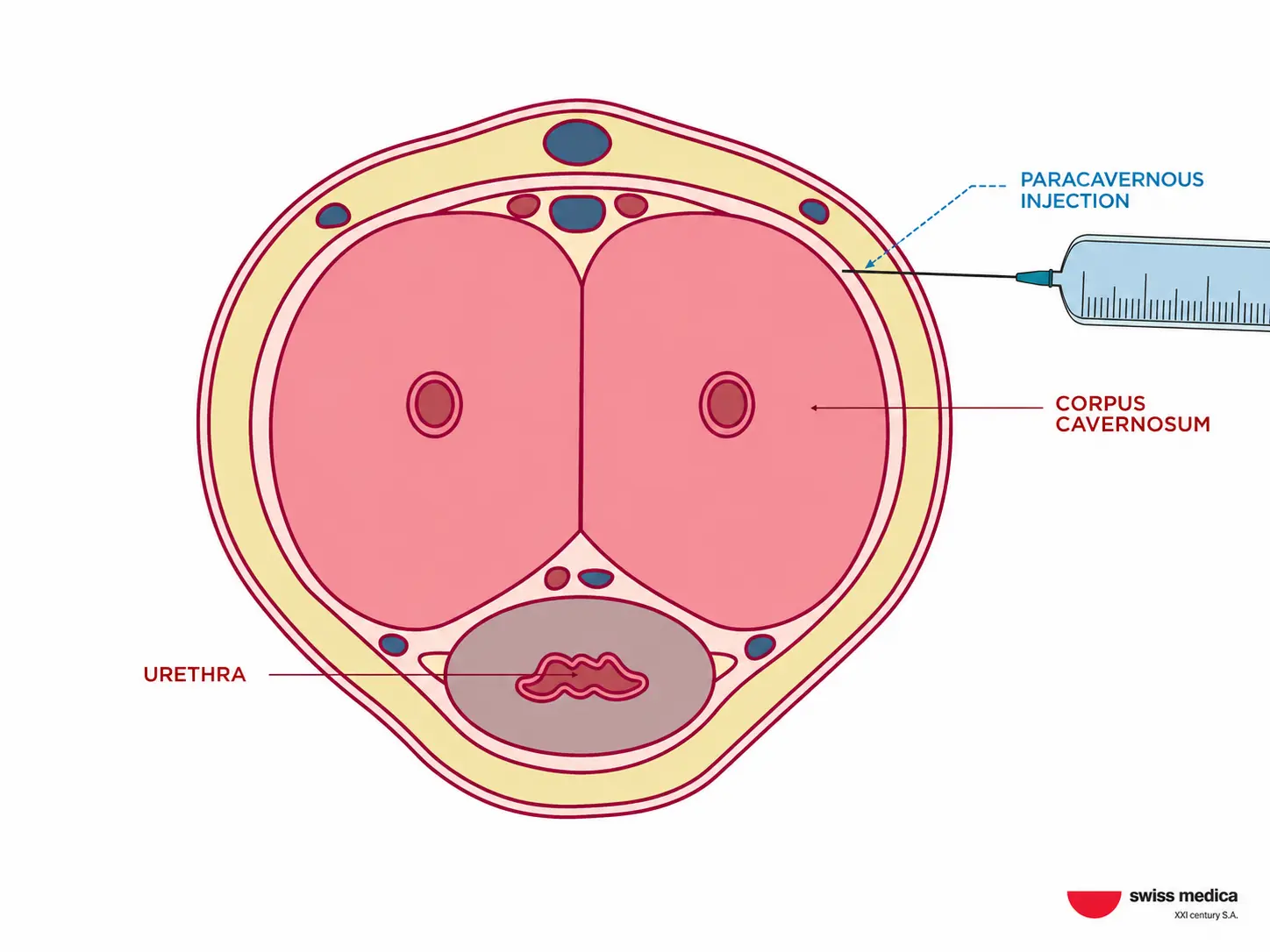
In Peyronie’s disease, MSCs are most often delivered through intralesional injection into or around the plaque, so the biological activity is focused on the area of fibrosis. Intravenous administration may be considered in selected protocols for broader systemic support, but the primary route remains local when the plaque itself is the main treatment target.
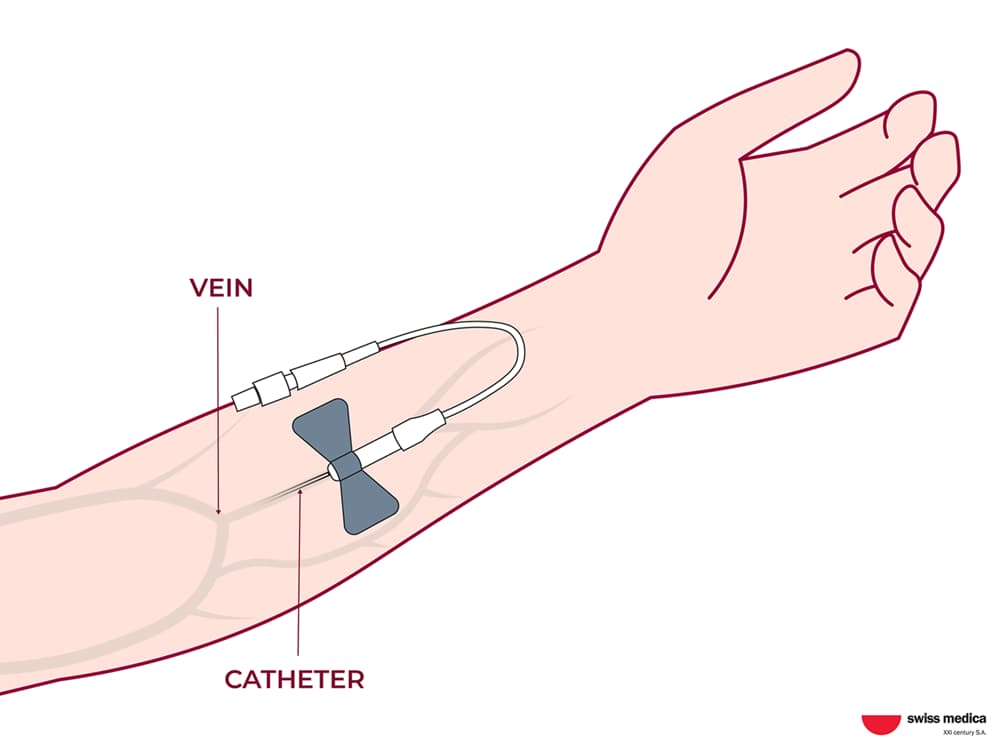
Supportive therapies that may accompany stem cell treatment for Peyronie’s depend on the individual case and are selected only after the medical team reviews the patient’s history and current status. Depending on the case, supportive care may include the following:
- Intracellular Metabolism Recovery (IMR), including intravenous drips with vitamins and antioxidants, when additional metabolic and recovery support is considered appropriate;
- General supportive therapies aimed at helping the patient tolerate the program better, maintain energy, and support recovery during the in-clinic stage.
Supportive care does not replace standard urology management and is not presented as a stand-alone treatment for Peyronie’s disease. Its role is to complement the regenerative part of the program when medically appropriate.
Follow-Up
Treatment does not end when the patient leaves the clinic—follow-up is part of how outcomes are tracked over time. Patients may be advised to repeat relevant assessments in the months that follow, including curvature measurements, erectile function questionnaires, pain levels, and sexual quality-of-life scoring, so that changes can be compared with the pre-treatment baseline.
Wondering what the treatment experience actually looks like — from preparation through follow-up?
A separate guide walks through what patients usually go through before traveling, what to expect from stem cell therapy at Swiss Medica, and during the months that follow.
Safety, Side Effects, and Evidence Limitations
Safety in stem cell treatment for Peyronie’s disease depends on the quality of the cell product, careful patient selection, and a realistic conversation about what current evidence can and cannot tell us.
Possible Side Effects of Stem Cell Therapy
In published clinical work on regenerative therapy in Peyronie’s disease, reported side effects have generally been mild and short-lived. They may include:
- local discomfort, bruising, or swelling at the injection site;
- short-term low-grade fever after intravenous administration;
- transient fatigue;
- mild general discomfort during recovery.
Serious adverse events have been uncommon when cells are prepared under proper laboratory conditions and administered by experienced clinicians.
Want a closer look at how safety is verified across stem cell protocols?
Learn the typical safety profile of MSC-based therapies and the laboratory and procedural controls used to keep risks low. For a detailed discussion of safety, read the stem cell therapy safety and side effects page.
Why Evidence Is Still Developing
Peyronie’s disease is an area where regenerative evidence is still developing. Most published work includes small human studies, preclinical models, and early clinical protocols. Major urology guidelines currently classify stem cell therapy for Peyronie’s disease as experimental.
At the same time, ongoing research continues to expand our understanding of how regenerative approaches may support patients, and many men are interested in these options as part of a broader treatment plan. It is important to view stem cell therapy as a developing field with growing clinical experience rather than a finalized standard.
Why Cell Quality and Clinical Standards Matter
How a cell product is sourced, prepared, and checked has a direct impact on both safety and reproducibility. At Swiss Medica, quality control during preparation focuses on:
- identity — confirmation that the cells are what they should be;
- viability — confirmation that enough living cells are present to be biologically active;
- sterility — confirmation that the product is free of contamination.
These controls matter because regenerative outcomes depend not only on the procedure itself but also on how the cell product is prepared and checked before administration.
Cost of Stem Cell Therapy for Peyronie’s Disease
The stem cell therapy cost varies meaningfully between countries and clinics, and a personalized estimate prepared after medical record review tends to describe what the patient will actually receive far more accurately than a flat package price.
At Swiss Medica, the stem cell therapy for Peyronie’s disease cost typically falls within a €7,000–€45,000* range, with the exact figure shaped by the phase of the disease, complexity of the case, and structure of the proposed program.
* Prices are indicative and based on 2026 estimates; they may vary depending on case complexity, presence of coexisting erectile dysfunction, and required cell quantity.
Why Treatment Costs Depend on the Individual Case
Several variables shape the final figure for a Peyronie’s regenerative program. These are discussed openly with the patient before any commitment and may include the following:
- phase of disease (active vs stable);
- severity of curvature and plaque characteristics;
- presence and severity of erectile dysfunction;
- diagnostic testing required (penile ultrasound, function assessment);
- cell source and preparation;
- route and number of administrations;
- treatment duration on-site;
- supportive therapies included in the program;
- accommodation and length of stay;
- duration of post-treatment follow-up.
Why a Personalized Estimate Is More Reliable Than a Flat Price
Because Peyronie’s disease varies meaningfully from man to man—from mild active inflammation to long-standing stable curvature with coexisting erectile dysfunction—a quoted figure produced after record review tends to describe what the patient will actually receive far more accurately than a generic package price. The stem cell treatment cost for Peyronie’s disease depends on what the case actually requires.
What the Treatment Program May Include at Swiss Medica
A regenerative program at Swiss Medica is planned individually after reviewing the patient’s diagnosis, current symptoms, prior treatments, and overall health. While the cell-based therapy is the central element of the program, its effect depends on many supporting factors—inflammation level, vascular health, the timing within the disease course, and the body’s general capacity to respond.
For this reason, the best stem cell therapy for Peyronie’s disease at Swiss Medica is often delivered together with supportive medical measures designed to create more favorable conditions for biological response.
Why Patients Choose Swiss Medica for Peyronie’s Disease Treatment
The Swiss Medica clinic has worked in regenerative medicine since 2011 and has treated more than 10,000 patients. Its Belgrade hospital combines medical assessment, cell processing, and supportive care in one clinical setting, which helps international patients move through the program with clearer coordination.
Individual Medical Assessment Before Treatment
Every case at Swiss Medica is reviewed individually, with the program adapted to the patient’s disease phase, plaque characteristics, erectile function, prior treatment response, and personal goals—rather than applied as a fixed template.
In-House Cell Processing and Quality Standards
Swiss Medica prepares cell-based products in its in-house laboratory, allowing the medical team to maintain oversight of the products used in therapy. Quality control focuses on identity, viability, sterility, and contamination control.
This is important because the safety and biological effect of regenerative therapy depend not only on the procedure itself but also on the way cells are processed and checked before administration. This integrated model helps support safety, consistency, and individualized care—and patients can learn more about Swiss Medica.
Personalized Follow-Up
Stem cell treatment for Peyronie’s does not end when the patient leaves the clinic—the team continues to support the patient through structured remote follow-up. Patients may be advised to repeat curvature measurements, erectile function questionnaires, or imaging in the months that follow so that progress can be compared with the pre-treatment baseline.
Swiss Medica also offers a free in-clinic follow-up at 3-6 months, during which the patient can discuss recovery, ask questions about next steps, and receive guidance on tracking changes over time.
Looking for a more detailed picture of the full treatment journey?
Explore stem cell therapy step by step from initial remote consultation and arrival to the in-clinic assessment and procedure and the structured follow-up after the patient returns home.
International Patient Support in Serbia
International patients are coordinated by Swiss Medica’s English-speaking team from the first inquiry through the months that follow treatment. Travel and accommodation, airport transfers, meals, and translation are organized in advance.
The hospital is designed to support patients throughout the stay, with balanced meals tailored to individual dietary preferences, quiet and comfortable rest areas, and spacious outdoor areas for calm walks and recovery between procedures. To create a more comfortable atmosphere and ensure emotional well-being, patients may bring one accompanying person.
A Patient’s Experience at Swiss Medica
Ulrich, a patient from Denmark, came to Swiss Medica with a chronic condition that had been progressing for around 20 years, affecting his walking and balance. He had continued physical training several times a week but wanted to explore an additional approach that could help him maintain mobility and continue the activities he loves, including scuba diving.
“I was looking for treatment in Europe, and Swiss Medica came up very quickly. Serbia felt close and comfortable to travel to, with a direct flight from Copenhagen. After only three days here, I felt even more convinced—the team was prepared for my arrival, the service was excellent, and everyone was very attentive.”

More real patient stories and video reviews are available on the Swiss Medica YouTube channel.
Speak Privately With a Medical Advisor About Peyronie’s Disease Treatment Options
Peyronie’s disease is a sensitive topic to discuss, and the first conversation about regenerative care should feel private and unhurried.
Get a free online consultation
Every treatment program begins with a free online consultation. Send your recent urology reports and a brief treatment history, and the medical team will review your case, discuss whether regenerative therapy may be appropriate, and explain how stem cell therapy for Peyronie’s disease has been investigated for similar profiles. Use the form below or submit your records directly. Every conversation is handled with full discretion.

Medical Advisor, Swiss Medica doctor
FAQ
1. Can stem cells cure Peyronie’s disease?
No. Cell-based therapy should not be framed as a cure. It is studied as a way to reduce active inflammation, influence fibrotic remodelling, and support erectile function—particularly during the active phase of disease—alongside standard urology care, not as a replacement for it.
2. What is the most effective treatment for Peyronie’s disease?
There is no single most effective treatment. The right approach depends on the phase of disease, severity of curvature, and whether erectile dysfunction is present. Standard options include observation, traction therapy, collagenase injections, and surgery, with regenerative therapy considered as an experimental complement in selected cases.
3. Can stem cell therapy reduce penile curvature?
In published clinical work, mesenchymal stem cell therapy has been associated with some reduction of curvature in selected patients, particularly when administered during the active phase. The effect is not guaranteed and varies between cases, but the data have been encouraging enough for the approach to remain under active study.
4. Can stem cells remove Peyronie’s plaque?
Stem cell therapy is not framed as a way to physically dissolve or remove established plaque. The proposed mechanism is biological, influencing local inflammatory and fibrotic processes, rather than mechanical. Some softening or reduction in size may occur in selected cases, but full plaque removal should not be expected.
5. Is stem cell therapy for Peyronie’s disease proven?
Major urology societies currently classify regenerative therapy for Peyronie’s disease as experimental. Early human studies and preclinical work have been encouraging, but larger, controlled trials are still needed before stem cell therapy can be considered an established treatment.
6. Who may be a candidate for Peyronie’s stem cell treatment?
Men with confirmed Peyronie’s disease, particularly in the active phase, with clear treatment goals—pain control, curvature improvement, erectile function support, or a combination. Candidacy is decided individually after review of the urology assessment, prior treatments, and overall medical picture.
7. What are the side effects of stem cell therapy for Peyronie’s disease?
Reported side effects in clinical work have generally been mild—local discomfort or bruising at the injection site, transient low-grade fever after IV administration, and short-term fatigue. Serious adverse events have been uncommon when cells are prepared and administered under proper standards.
8. Does stem cell therapy replace collagenase, traction therapy, or surgery?
No. Cell-based therapy is studied as a complement to established urology treatments, not as a replacement. Collagenase, traction therapy, and surgery remain the standard options where they are clinically indicated, and decisions about discontinuing them should be made with the treating urologist.
9. What medical records are needed before consultation for stem cell treatment for Peyronie’s ?
Most consultations begin with recent urology notes, penile ultrasound where available, history of previous injections or surgery, and an erectile function assessment. Additional records may be requested if the case requires clarification.
10. How much does stem cell therapy for Peyronie’s disease cost?
At Swiss Medica, programs typically range from €7,000 to €45,000* depending on disease phase, complexity of the case, cell quantity, administration route, diagnostics, supportive care, and length of stay. Prices in the USA, Switzerland, and the UK are generally higher than in Serbia due to operational and regulatory expenses.
* Prices are indicative and based on 2026 estimates; they may vary depending on case complexity, presence of coexisting erectile dysfunction, and required cell quantity.
References:
Mesquita FC, Barros R, Lima TFN, et al. Evidence of restorative therapies in the treatment of Peyronie disease: A narrative review. International Brazilian Journal of Urology. 2024;50(6):703-713. https://doi.org/10.1590/S1677-5538.IBJU.2024.9920
Wang W, Ding W, Zhang X, et al. Intratunical injection of rat-derived bone marrow mesenchymal stem cells prevents fibrosis and is associated with increased Smad7 expression in a rat model of Peyronie’s disease. Stem Cell Research & Therapy. 2022;13(1):390. https://doi.org/10.1186/s13287-022-03090-w
Fu X, Sheikholeslami A, Zhanbyrbekuly U, et al. Advances in stem cell therapy for erectile dysfunction: preclinical evidence and emerging therapeutic approaches. Frontiers in Medicine. 2025;12:1519095. https://doi.org/10.3389/fmed.2025.1519095
Kaltsas A, Hatzichristou D. Erectile dysfunction and Peyronie’s disease: from biologics to nanomedicine-enabled therapies. Sexual Medicine. 2026;14(3):qfag019. https://doi.org/10.1093/sexmed/qfag019
Wiborg MH, Krøijer R, Laursen BS, Lund L. Treatment with stromal vascular fraction of Peyronie’s disease – a study protocol. Danish Medical Journal. 2023;70(10).
Wang W, Liu Y, Zhu ZB, Pang K, Wang JK, Gu J, Li ZB, Wang J, Shi ZD, Han CH. Research Advances in Stem Cell Therapy for Erectile Dysfunction. BioDrugs. 2024 May;38(3):353-367. doi: 10.1007/s40259-024-00650-9


MD, Pediatrician, Regenerative Medicine Specialist