swiss medicaXXI century S.A.
Hearing loss affects communication, confidence, and daily life in ways hearing aids and cochlear implants do not always fully address, especially when the underlying problem is damage to the inner ear or auditory nerve.
For these cases, stem cell therapy for hearing loss is being studied as a regenerative option that may, in selected situations, support the cellular biology behind hearing rather than only compensate for sound. The evidence base is still developing, but the field has moved meaningfully in recent years.
Understanding the Type of Hearing Loss You Have
Before any treatment option is discussed, the first step is to understand the type and cause of hearing loss. The type determines whether a regenerative approach is even biologically plausible, and ignoring this distinction is one of the more common mistakes patients encounter when researching options online.
Why the Cause of Hearing Loss Changes Treatment Options
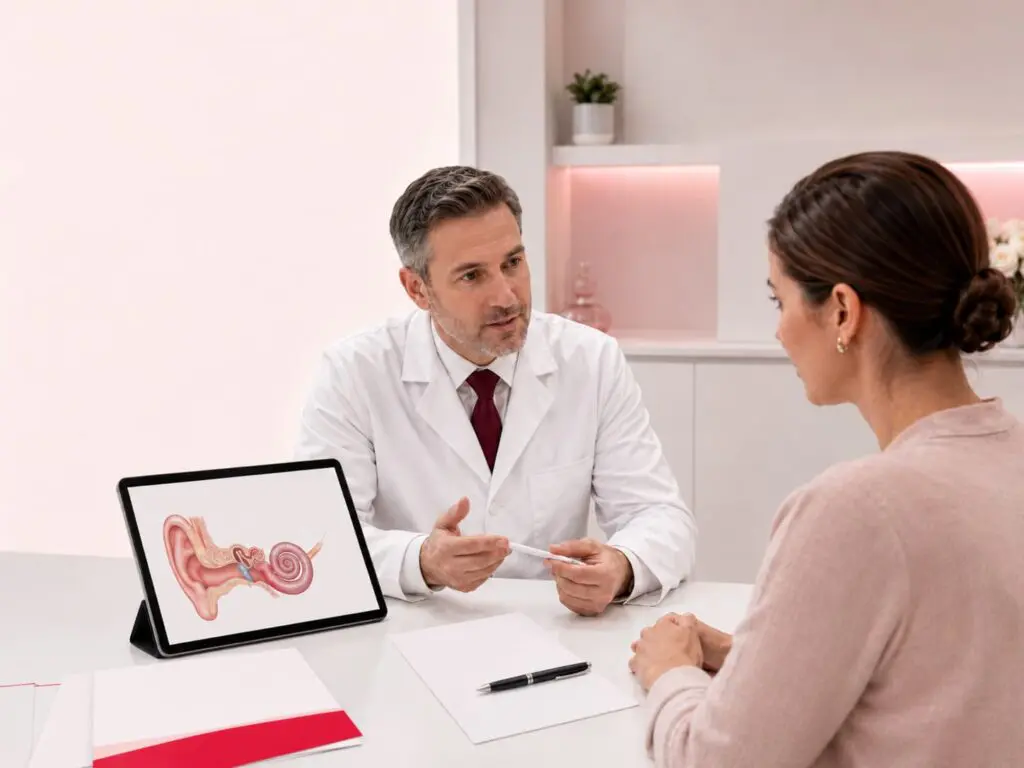
Hearing loss is not a single condition. It can come from age-related changes, noise exposure, ototoxic medications, infections, head trauma, autoimmune processes, sudden idiopathic events, or genetic causes.
Each may affect different parts of the hearing pathway—outer ear, middle ear, inner ear (cochlea), or auditory nerve—and the part affected is what shapes what may or may not be reversible.
Sensorineural Hearing Loss and Inner Ear Damage
Sensorineural hearing loss (SNHL) is the most common form and the one most studied for regenerative approaches. It typically reflects damage to the cochlear hair cells, the spiral ganglion neurons, or the auditory nerve. The inner ear has very limited natural repair capacity. When cochlear hair cells are damaged by aging, noise exposure, certain medications, or inflammation, the body cannot easily replace them, which is one reason sensorineural hearing loss often becomes long-term or progressive.
Conductive Hearing Loss Is a Different Condition
Conductive hearing loss involves the outer or middle ear—ear canal blockages, eardrum perforation, or ossicular chain problems—and is typically addressed by ENT surgery, hearing devices, or treatment of the underlying middle ear pathology. Cell-based therapy is not aimed at this form of hearing loss, and clinics that promise it for conductive cases should be approached with skepticism.
Have a confirmed diagnosis, but unsure if stem cell therapy could be an option?
Complete the form below to receive a free online consultation with our regenerative medicine specialist. Our team will carefully review your case, explain the available regenerative options, and help you understand your potential suitability for treatment.

How Stem Cell Therapy May Support Hearing Function
Regenerative approaches for hearing loss and stem cell therapy for deafness are not about replacing inner ear structures wholesale. The biology of interest is more subtle: whether mesenchymal stem cells (MSCs) and related cells can deliver growth factors, modulate inflammation, and create a local environment in which surviving cells function better.
Can Stem Cells Restore Hearing Loss?
Restoration in this context generally means functional improvement—measurably better hearing thresholds, clearer perception, or reduced reliance on devices—not full reconstruction of the inner ear.
Stem cell therapy for hearing loss can repair some of the local cellular damage in selected cases, but it does not rebuild a destroyed cochlea. Clinics promising complete hearing restoration, permanent reversal of deafness, or guaranteed return of normal hearing misrepresent what the science currently supports.
A separate article walks through the biology of mesenchymal stem cells in more detail—paracrine signaling, the immune-modulating effect, and the regenerative pathways relevant across different conditions.
Read more in our separate article on the stem cell therapy procedure.
What Researchers Are Trying to Protect or Restore
Most ongoing research focuses on three layers of the auditory system:
- Inner ear structures—cochlear hair cells and their supporting cells, the stria vascularis, and the structural integrity of the organ of Corti;
- Auditory nerve pathways—spiral ganglion neurons and the synapses that connect hair cells to the nerve;
- Cochlear function more broadly—local blood supply, ionic balance of cochlear fluids, and the immune environment around damaged tissue.
What Current Research Suggests: Regenerative Signaling and Tissue Support
The proposed mechanism by which MSCs support the inner ear is primarily paracrine—released growth factors and immune-modulating molecules act on surrounding tissue rather than the cells themselves replacing damaged structures.
Published work has documented MSC-driven upregulation of immune-modulation, hypoxia-response, and apoptosis-regulation pathways in cochlear tissue, as well as reduced apoptosis and enhanced autophagy in damaged sensory cells after MSC-derived exosome administration.
A recent systematic review concluded that, taken together, cellular therapy may have a protective and modulating effect on sensorineural hearing loss, though no protocol is yet an established standard of care.
However, most of the current evidence remains preclinical, which means these findings are used to understand possible mechanisms rather than to predict outcomes in patients.
You can dive deeper into how mesenchymal stem cells are being studied across a range of chronic conditions and what the cumulative evidence picture looks like across the field.
Explore stem cell therapy studies and clinical research on our separate page.
Why Stem Cell Therapy May Not Help Every Type of Hearing Loss
The same body of evidence that supports interest in regenerative approaches also defines their limits. Stem cell therapy for deafness that has been long-standing and profound—with extensive loss of hair cells and spiral ganglion neurons—is far harder to influence than recent, partial, sensorineural damage where surviving cellular receptors remain.
Conductive losses, surgical or structural problems, and certain genetic syndromes affecting the broader auditory anatomy are also outside the realistic scope of cell-based therapy.
What Improvements May Look Like in Daily Life
Reported improvements after stem cell therapy for deafness and sensorineural hearing loss tend to be gradual and partial rather than dramatic. Patients describe small functional changes that accumulate over months, and these are most meaningful when measured against the patient’s own baseline rather than against a hypothetical “normal” hearing curve.
Possible outcomes may include:
- improved hearing clarity in selected cases;
- better sound perception, particularly in higher frequencies;
- changes in hearing test markers such as audiogram thresholds;
- improved use of existing hearing aids or assistive devices;
- easier communication in everyday situations and group settings;
- improved confidence and quality of life.
The pace and extent of change vary, which is why the medical evaluation before treatment matters—it helps frame what may be realistic given the specific audiogram, cause, and duration.
Stem Cell Therapy, Hearing Aids, and Cochlear Implants
A common misconception is that stem cell therapy for hearing loss and audiology care are competitors. In practice, they address different layers of the same problem, and the most realistic clinical picture usually combines them rather than choosing between them.
Why Regenerative Therapy Should Not Replace Audiology Care
Hearing aids and cochlear implants remain the standard of care for most patients with significant hearing loss, and they remain so throughout any regenerative protocol because they work at different levels of the same problem.
Devices act on sound delivery—they amplify or convert sound the patient needs to perceive today, every day. Cell-based therapy acts on biology—it may, over weeks and months, support the cochlear environment so that surviving cells function better. One does not substitute for the other: a regenerative protocol does not deliver sound, and a device does not influence the underlying biology.
Discontinuing a working hearing device on the assumption that stem cell therapy for hearing loss will replace it is not supported by current data, and any clinic that recommends doing so should be viewed with caution. Realistic regenerative protocols are framed as a complement to audiology care, not as a substitute.
Can Stem Cell Therapy Be Used Alongside Hearing Devices?
In most cases discussed for cell-based protocols, patients continue to use their existing hearing aids or cochlear implants during and after treatment.
Where measurable improvements in cochlear function occur, the existing device often becomes more effective rather than redundant—sound input that was poorly resolved before may become clearer, and the patient’s audiologist may adjust device programming to match the new baseline.
Who May Be Considered for Hearing Loss Stem Cell Treatment?
At Swiss Medica, candidacy for stem cell therapy for hearing loss is based on the specific audiogram, hearing history, suspected cause, and overall medical picture, rather than a general checklist. Each case is reviewed individually before any treatment program is proposed.
Patients With Sensorineural Hearing Loss or Auditory Nerve Damage
The most studied candidates for using stem cells to treat hearing loss of sensorineural origin or with auditory nerve damage are patients with documented inner ear or auditory nerve damage—particularly those whose loss is partial rather than profound, where supporting cells and neural structures remain present even if hair cells are partially damaged. Patients with auditory neuropathy spectrum disorder may also be discussed individually, depending on the underlying mechanism.
Medical Records and Hearing Tests Swiss Medica Reviews
Before any treatment is offered, the medical team reviews a defined set of records the patient submits ahead of arrival. At Swiss Medica, these typically include:
- recent audiograms (pure-tone audiometry and, where available, speech audiometry);
- a detailed hearing history (onset, course, suspected cause);
- ENT examination notes;
- imaging of the inner ear (MRI or CT) where available;
- a record of previous treatments and hearing devices in use.
This pre-arrival review shapes the initial program proposal that the patient receives before traveling.
When Treatment May Not Be Recommended
Stem cell therapy for hearing loss is generally not considered when:
- the hearing loss is purely conductive or surgically correctable;
- there is an active infection in the ear or systemic infection;
- there is active malignancy or recent history of certain cancers;
- structural or anatomical damage to the inner ear is so extensive that no realistic regenerative goal exists;
- the patient’s overall health makes any cell-based intervention unsafe.
Each case is discussed individually and transparently—both potential benefit and limitation are part of the conversation.
What Happens During Treatment at Swiss Medica?
For patients traveling to Belgrade, the application process begins with a remote review of medical records and proceeds through several distinct stages once the patient arrives, with continuity of care after departure.
Medical Assessment and Hearing Evaluation Before Treatment
Before the patient even travels, the medical team works through the submitted records to draft a preliminary program—already informed by established clinical protocols and the specifics of the audiogram, history, and prior treatments.
After arrival, the patient undergoes a repeat hearing assessment at the clinic. This helps the team compare the current results with the submitted documents and, if needed, adjust the treatment program before it begins.
Stem Cell Administration and Supportive Therapies
The cell product is prepared in the in-house laboratory, with testing for identity, viability, sterility, and contamination before administration. Without going into excessive procedural detail, the typical program uses two administration routes:
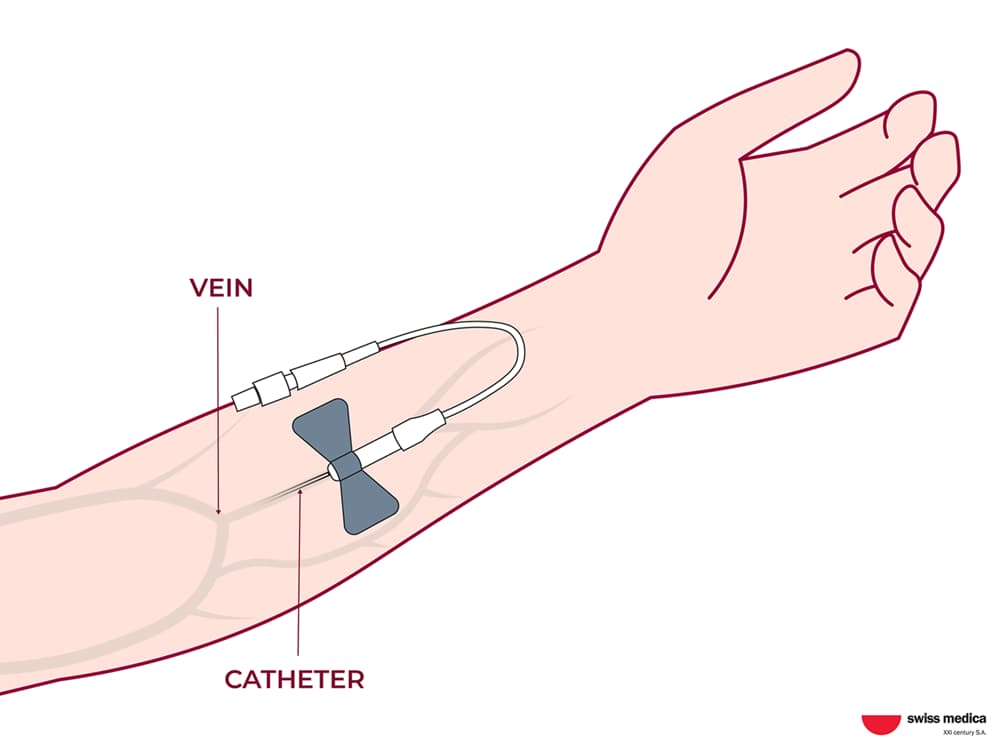
- intravenous infusion of MSCs for systemic immune-modulating and signaling effects
- in selected cases, local injection into the tissue around the ear is used to deliver stem cells closer to the inner ear region.
Supportive therapies may include anti-inflammatory protocols, vitamin and antioxidant support, and audiology follow-up planning. The in-clinic portion is individually determined based on the case rather than a fixed length.
Explore each stage of the program—from the first remote consultation through arrival and assessment to the in-clinic procedure and the structured follow-up that continues after the patient returns home.
Learn more in our separate article: Stem Cell Therapy Step by Step.
Monitoring Progress and Follow-Up After Treatment
At Swiss Medica, care does not end when the in-clinic procedure is completed. After treatment, our medical team continues to monitor the patient’s recovery and track any changes in their condition over the following months.
Usually within three to six months, the patient is invited to the clinic for a free in-person follow-up examination, where our doctors can review their response, assess current progress, and provide further recommendations to support their condition where appropriate.
Safety, Side Effects, and Regulatory Considerations
The safety of cell-based therapy depends on several key factors, not only on the type of cells used. These include:
- how the cells are sourced and selected;
- whether the biological material is tested for sterility, identity, and viability;
- how the cells are processed and stored before administration;
- how the treatment is planned for the patient’s clinical condition;
- which route of administration is used;
- how the patient is monitored before, during, and after the procedure.
At Swiss Medica, these steps are part of a controlled medical process. We assess both the quality of the cell-based product and the patient’s overall condition before treatment.
Possible Side Effects and Safety Monitoring
Reported adverse events associated with stem cell injections for hearing loss have generally been mild and temporary. They may include:
- short-term fatigue;
- mild discomfort;
- temporary local reactions after administration;
You can dive deeper into the typical safety profile of MSC-based therapies and the laboratory and procedural standards that minimize risk in regenerative medicine.
For a detailed discussion of stem cell therapy safety and side effects, read our separate article.
Why Clinical Standards and Follow-Up Matter
The quality of the regenerative care is determined long before the patient sees a doctor—it begins with how the cell product is obtained, characterized, and handled.
The Swiss Medica infrastructure addresses this through several specific practices:
- every patient is assessed by a multidisciplinary team that includes ENT and regenerative medicine specialists;
- cells are produced under EU GMP Grade A cleanroom conditions in the clinic’s own laboratory rather than sourced from third-party providers;
- each batch is subjected to viability, identity, and sterility verification before release;
- post-treatment period is structured around defined follow-up windows so that any side effect or change in hearing can be documented and acted on.
Follow-up is also part of this quality system. A free follow-up visit is included in every program so our doctors can review the patient’s response, discuss any changes in hearing, balance, general well-being, or daily function, and adjust supportive recommendations where appropriate. These safeguards are not unique to hearing protocols—they form the foundation of every regenerative program at the clinic.
What Patients Should Know About FDA Approval and Clinical Research
Mesenchymal stem cell therapy for hearing loss is not FDA-approved as a standard therapy in the USA—formal approval of any new biological treatment typically requires multi-center clinical trials, large patient populations, and several years of follow-up data.
The current evidence base is still being built across the field, and ongoing trials—both in academic centers and through industry-sponsored programs—are expected to clarify which patient populations may benefit most and which cell types and delivery routes carry the strongest signal.
For patients researching the field, what country treats hearing loss with stem cells is less important than whether a clinic is transparent about its cell source, dosage, and follow-up protocols.
How Much Does Stem Cell Therapy for Hearing Loss Cost?
The stem cell therapy cost varies between countries, clinics, and individual programs and reflects medical complexity, cell product quality, and supportive care rather than a single fixed list price.
Why Treatment Costs Depend on the Individual Case
Several variables shape the final cost of a regenerative program for hearing loss, and the clinic typically discusses these individually with the patient before any commitment. Factors may include:
- type of hearing loss (sensorineural, mixed, auditory neuropathy);
- severity and audiogram pattern;
- duration since onset;
- diagnostic testing required (audiometry, OAE, ABR, imaging);
- cell source and preparation (autologous vs allogeneic, processing complexity);
- delivery method (IV, local, combined);
- treatment duration and number of administrations;
- supportive care included;
- accommodation, transfers, and translation;
- length and structure of follow-up.
Why a Personalized Cost Estimate Is More Reliable Than a Flat Price
Because individual cases differ meaningfully, a personalized estimate prepared after medical record review tends to reflect what the patient will actually receive—and pay for—more accurately than a flat “package price” advertised online.
At Swiss Medica, stem cell therapy for hearing loss costs typically range from €15,000 to €20,000* depending on the cause, severity, and program details.
* Prices are indicative and based on 2026 estimates; they may vary depending on condition severity and required cell quantity.
What to Compare Before Choosing a Clinic
Headline prices alone rarely show what is actually included in regenerative care. The more useful comparison points are operational: what diagnostic testing is built into the program, where and how cells are produced, what supportive therapies are included, and what follow-up commitment the clinic makes after the patient returns home.
A noticeably low quote that comes without an audiology review, transparent sourcing, or a scheduled post-treatment plan deserves additional questions before any payment is made.
Why Patients Choose Swiss Medica for Hearing Loss Treatment
The Swiss Medica clinic in Belgrade, has hosted patients from 70+ countries across a range of regenerative indications, including sensorineural hearing loss and tinnitus.
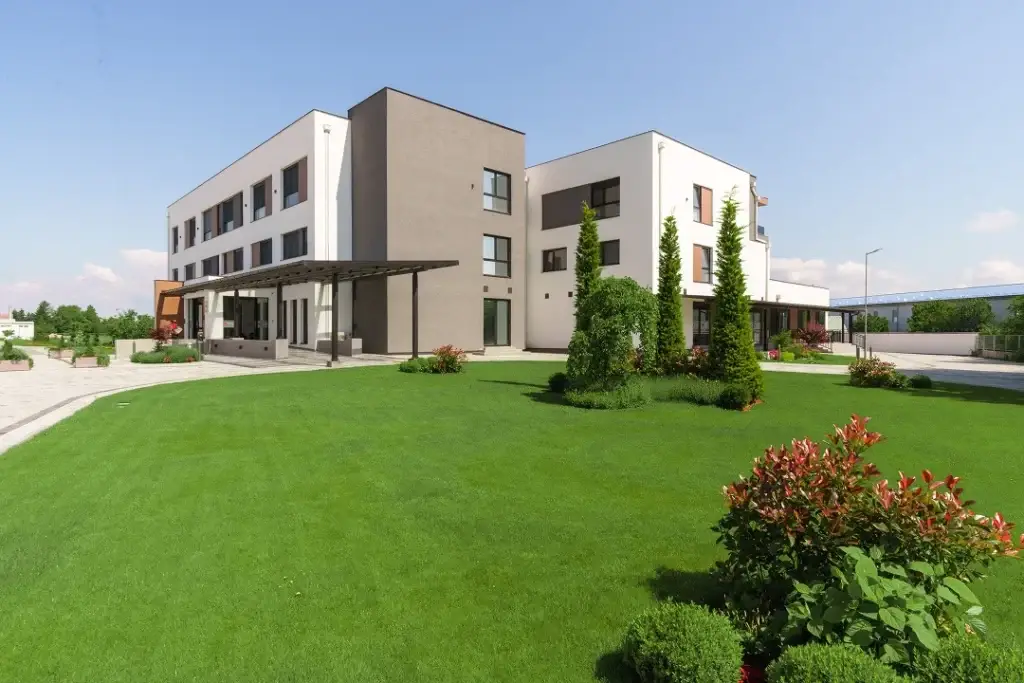
Individual Medical Assessment Before & After Treatment
Every hearing-loss case is reviewed against an established clinical protocol that is adapted to the patient’s audiogram pattern, suspected cause, hearing history, and personal goals. The medical team works through the case individually before any program is offered, sets expectations explicitly, and re-assesses progress at structured intervals after treatment to fine-tune supportive measures and document outcomes.
In-House Cell Processing and Quality Standards
Cell preparation does not leave the Swiss Medica. The on-site laboratory operates under EU GMP Grade A cleanroom standards, which removes the variability and transport risks that come with third-party suppliers and keeps the production process under the same medical oversight that handles the patient’s care. Serbia, where the clinic is based, provides a cost-effective setting for regenerative work under EU-aligned regulatory frameworks.
Multidisciplinary Approach to Patient Care
Hearing loss is rarely isolated in its biology. It often co-exists with vascular disease, autoimmune processes, metabolic factors, or systemic inflammation, and a treatment plan that ignores these connections tends to underperform. The clinic’s standing practice is to bring ENT specialists, internal medicine, and regenerative medicine clinicians into the same case discussion—so the program reflects the patient’s full clinical picture, not only the audiogram.
A dedicated page describes the team behind Swiss Medica, the GMP-certified in-house laboratory, and how patient programs for hearing-related and other regenerative care are coordinated for visitors from abroad.
Read about Swiss Medica
International Patient Support in Serbia
International patients at Swiss Medica are supported by an English-speaking team before arrival, during their stay in Serbia, and after they return home. A dedicated patient manager remains in contact to help with practical questions, schedule coordination, and communication with the clinic.
Before the visit for stem cell therapy for hearing loss, our team can assist with travel planning, airport transfers, and translation support. During the stay, patients receive assistance with everyday needs, including meals and dietary preferences where possible, so the focus can remain on consultations, treatment, and recovery. Patients may bring one accompanying person free of charge.
A Patient Experience at Swiss Medica
Mr. Phillips came to Swiss Medica after living with tinnitus and gradually noticing signs of hearing loss, especially in high-pitched sounds. His symptoms began after exposure to loud music, and over time the tinnitus became most noticeable at night, when everything was quiet. After a hearing test suggested possible damage to the cochlear hair cells, he started researching stem cells to treat hearing loss and tinnitus and found Swiss Medica’s article on stem cell therapy.
“I probably didn’t realize I was losing some hearing. I was losing the high notes. So I looked it up on hearing loss and tinnitus, and Swiss Medica came up. I read the article, and it was very comprehensive and straightforward. I could understand it, and I thought I could relate to this.”
During his consultations with the Swiss Medica team, Mr. Phillips discussed IV stem cell infusion and local stem cell injections around the ear area. He said the explanations helped him understand the process before arrival, including the type of stem cells, the treatment schedule, and what to expect from stem cell therapy. Although he had only recently started treatment at the time of the interview and was still waiting to see the results, he described the clinic experience as well organized and reassuring.
“The service is excellent. You get picked up from the airport and brought to a room, and the food and the consultation… all of that has been excellent. At this stage, I’ve only started having the stem cells, so I think I’ve got to give it time for the process to work.”

More real Swiss Medica patient stories and video reviews are available on the Swiss Medica YouTube channel.
Speak With a Medical Advisor About Hearing Loss Treatment Options
For patients who want to understand whether regenerative care may be a fit, the next step is a confidential video consultation at no charge.
Contact us
Send us your recent audiograms and a brief medical history, and our medical team will review the case, discuss what realistic outcomes might look like for your specific audiogram pattern, and walk through how the effectiveness of stem cell therapy for hearing loss has been documented for similar profiles. Use the form below or submit your records directly—every conversation is handled with full discretion.
FAQ
1. Can stem cells restore hearing loss?
Stem cells may, in selected cases, support some of the cellular biology behind hearing—local signaling, anti-inflammatory effects, and protection of surviving cochlear cells. Currently, evidence does not support full restoration of profoundly damaged inner ear structures. The results depend on the cause, severity, and duration.
2. Is stem cell therapy for hearing loss a cure?
No, it is not a cure. Cell-based therapy is a regenerative approach that may improve the local environment supporting hearing function. In selected cases it can lead to measurable functional improvement, but it does not rebuild a destroyed cochlea or reverse long-standing profound hearing loss.
3. Can stem cell therapy help sensorineural hearing loss?
Sensorineural hearing loss is the most-studied indication for cellular treatment. Preclinical and limited human evidence suggests that preserving hair cells and supporting neural structures may provide a possible benefit, particularly in noise-induced and ototoxic forms. Outcomes vary by individual case.
4. Can stem cell therapy help deafness caused by nerve damage?
Auditory nerve damage and auditory neuropathy spectrum disorders are discussed individually. Research suggests cell-based approaches may help in selected cases where neural structures are partially preserved, but profound nerve loss is much harder to influence. Detailed medical evaluation is required before any recommendation.
5. What type of hearing loss may be considered for stem cell therapy?
Sensorineural hearing loss—particularly noise-induced, ototoxic, sudden idiopathic, and some auditory neuropathy cases—is most often discussed. Conductive hearing loss, surgically correctable cases, and most genetic structural anomalies are not appropriate indications. The individual audiogram and medical history shape the final decision.
6. Is stem cell therapy for hearing loss FDA-approved?
No—mesenchymal cell-based therapy for hearing loss is not FDA-approved as a standard therapy in the USA. Formal approval of a new biological treatment typically requires multi-center clinical trials and years of follow-up data, and the broader evidence base needed for that recognition is still being built.
7. Does stem cell therapy replace hearing aids or cochlear implants?
No. Hearing aids and cochlear implants remain the standard of care for most patients with significant hearing loss. Stem cell treatment for hearing loss is studied as a complement to audiology care, not a replacement—patients typically continue using their devices, which may become more effective if cochlear function improves.
8. What tests are needed before consultation?
Most consultations begin with recent audiograms, hearing history, ENT examination notes, and, where available, imaging of the inner ear (MRI or CT) and records of previous treatments. Additional testing, such as otoacoustic emissions or auditory brainstem response, may be added later during the medical evaluation.
9. How long does it take to notice changes after treatment?
Changes after stem cell therapy for deafness and sensorineural hearing loss tend to develop gradually rather than immediately. Some patients report early subjective changes within the first weeks; more substantial audiometric changes, when they occur, are typically observed over three to six months of structured follow-up.
10. How much does stem cell therapy for hearing loss cost?
At Swiss Medica, the cost typically ranges from €15,000 to €20,000* depending on cause, severity, and individual program. Prices in the USA, Switzerland, and the UK are generally higher due to operational and regulatory expenses.
* Prices are indicative and based on 2026 estimates; they may vary depending on condition severity and required cell quantity.
References:
Henao Rincón MA, Pulido Arias EA, Pachon Rojas C, et al. Exploring the Potential of Stem Cells: A Systematic Review on Cellular Therapy for Sensorineural Hearing Loss. Cureus. 2025;17(1):e77286. https://doi.org/10.7759/cureus.77286
Creber NJ, Muzaffar J, Gowrishankar S, et al. Current and emerging approaches to cochlear immunosuppression with translation to human inner ear stem cell therapy: A systematic review. PLoS One. 2025;20(2):e0318165. https://doi.org/10.1371/journal.pone.0318165
Warnecke A, Harre J, Shew M, et al. Successful Treatment of Noise-Induced Hearing Loss by Mesenchymal Stromal Cells: An RNAseq Analysis of Protective/Repair Pathways. Frontiers in Cellular Neuroscience. 2021;15:656930. https://doi.org/10.3389/fncel.2021.656930
Han R, Yu N, Qi G, et al. Mesenchymal stem cell-derived exosomes ameliorate gentamicin-induced vestibular hair cell injury by regulating the SNARE pathway and enhancing autophagy. Stem Cell Research & Therapy. 2025;17(1):20. https://doi.org/10.1186/s13287-025-04819-z
Tsai SC, Lin FC, Chang KH, et al. The intravenous administration of skin-derived mesenchymal stem cells ameliorates hearing loss and preserves cochlear hair cells in cisplatin-injected mice. Hearing Research. 2021;413:108254. https://doi.org/10.1016/j.heares.2021.108254


MD, Pediatrician, Regenerative Medicine Specialist