swiss medicaXXI century S.A.
Glaucoma can affect everyday life, making driving, reading, and moving confidently more difficult as vision changes. It may also remain hard to control despite correct use of eye drops, regular monitoring, laser treatment, or surgery.
For people following the latest news on a glaucoma cure, stem cells remain an area of interest. However, no stem cell treatment has yet been proven to cure glaucoma, and research is still ongoing on how to combine established care with this new approach.
In this article, we explain how glaucoma develops, review established treatments, and explore the supportive role stem cell therapy for glaucoma may play.
Understanding How Glaucoma Affects Vision
Glaucoma can develop in different ways. The main types include:
- Open-angle glaucoma, which usually progresses slowly as the eye’s drainage system becomes less effective.
- Angle-closure glaucoma, which occurs when the drainage angle becomes narrowed or blocked. A sudden, acute attack is a medical emergency and requires immediate treatment.
- Normal-tension glaucoma, in which optic nerve damage develops even though eye pressure remains within the normal range.
- Secondary glaucoma, which develops because of another eye condition, injury, medication, or medical procedure.
Let’s look more closely at how these different forms of glaucoma develop and affect vision.
Eye Pressure: An Important Factor, but Not the Disease Itself
The eye constantly produces aqueous humor, a clear fluid that nourishes its internal structures. This fluid usually leaves the eye through the trabecular meshwork, a drainage tissue located near its front. When the outflow is restricted, the fluid accumulates and increases intraocular pressure (IOP).
Elevated intraocular pressure is the main damaging factor in most forms of glaucoma. Over time, it can damage the optic nerve, cause the loss of retinal nerve fibers, and gradually reduce the visual field.
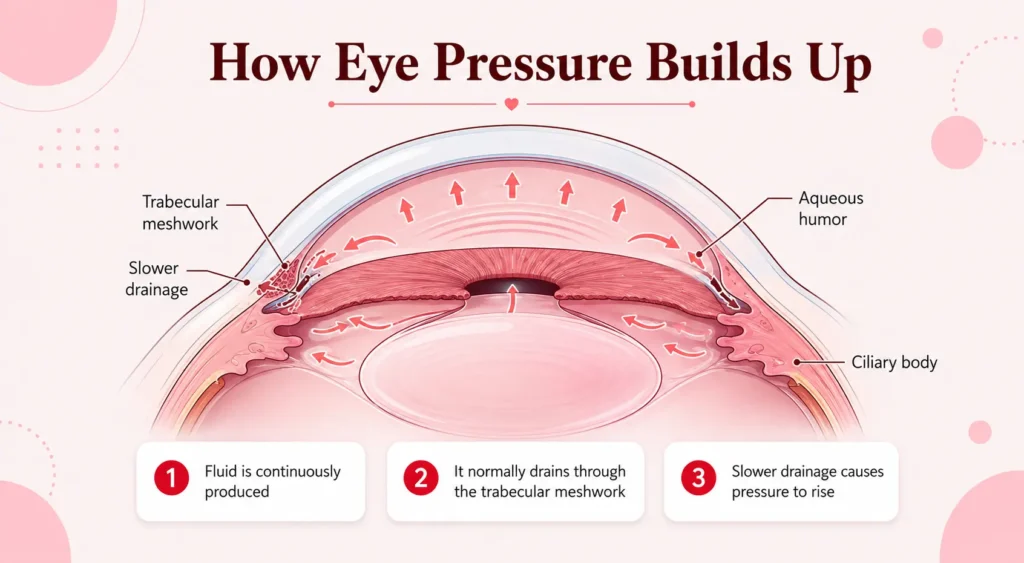
Eye pressure can change throughout the day, sometimes reaching peaks that a single measurement may miss. This means that one normal reading does not necessarily rule out elevated pressure at other times.
At the same time, glaucoma can sometimes progress even when eye pressure stays within the normal range. That is why doctors also examine the optic nerve, retinal nerve fibers, and visual field for signs of damage.
Optic Nerve Damage: The Defining Change in Glaucoma
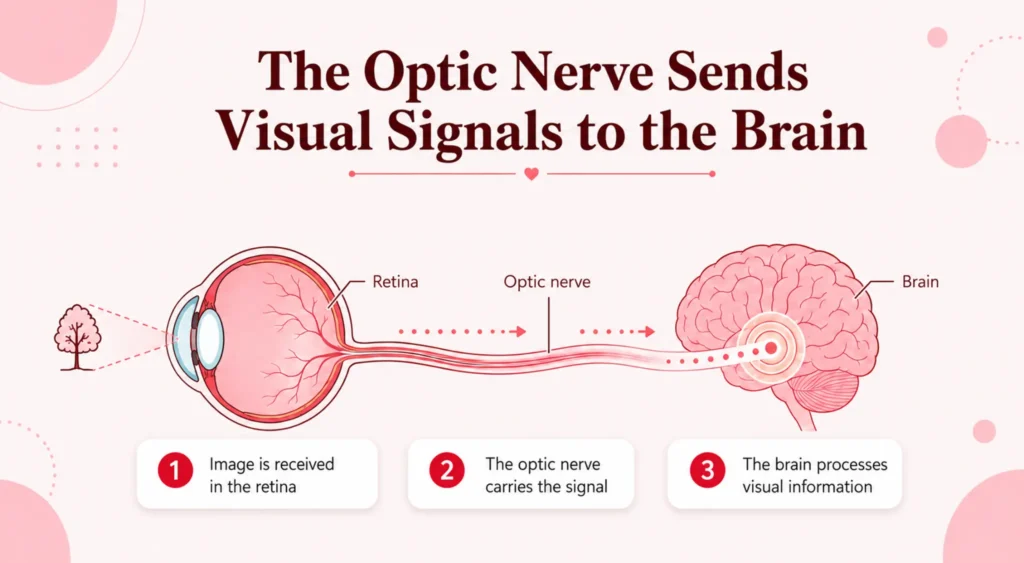
Each retinal ganglion cell has a long fiber. Together, these fibers form the retinal nerve fiber layer (RNFL), the inner layer of the retina that carries visual signals. The fibers then gather at the back of the eye to form the optic nerve.
Glaucoma gradually damages retinal ganglion cells and their fibers. As more of these cells are lost:
- the retinal nerve fiber layer becomes thinner;
- the natural hollow at the center of the optic nerve becomes larger or deeper—a change known as optic nerve cupping;
- fewer visual signals reach the brain.
Doctors use optical coherence tomography (OCT) to detect these structural changes. This painless, non-invasive scan produces detailed images of the retina and optic nerve.
Visual Field Loss Often Begins Before Symptoms Are Noticed
As more nerve cells are damaged, fewer visual signals reach the brain. Open-angle glaucoma, the most common type, typically damages side vision first, while central vision remains unaffected until later stages.
A person may begin missing objects, bumping into obstacles, or finding stairs and driving more difficult. Because the brain can compensate for small gaps, these changes may first appear on a visual field test that checks vision in different areas. This is why regular testing is important even when vision seems unchanged.
The Treatment That Still Comes First: Lowering Eye Pressure
Glaucoma care begins with regular monitoring. To understand whether the disease is stable or progressing, the doctor assesses the following:
- eye pressure and how it changes over time;
- the appearance of the optic nerve;
- OCT scans showing the retinal nerve fiber layer;
- visual field test results.
Based on these findings, the doctor typically recommends treatments to lower intraocular pressure.
Drops, Laser, and Surgery Have One Main Goal
Established treatments lower IOP by reducing fluid production or helping fluid leave the eye:
- Eye drops reduce fluid production or improve its drainage.
- Selective laser trabeculoplasty (SLT) uses laser energy to improve drainage through the trabecular meshwork.
- Glaucoma surgery creates or improves a drainage pathway when other treatments do not lower pressure sufficiently.
All three approaches aim to lower intraocular pressure, prevent further damage to the optic nerve, and preserve the remaining vision.
When Patients Begin Exploring Additional Options
To support and potentially improve the results of standard treatment, some patients may consider adding newer approaches, such as stem cell treatments for glaucoma. These methods are still being studied and may only be considered in selected cases, alongside regular ophthalmic care, pressure control, and ongoing monitoring.
When Stem Cell Therapy for Glaucoma May Fit
Stem cell therapy for glaucoma is being studied mainly for neuroprotection—the possibility of helping surviving nerve cells tolerate damaging conditions for longer.
Much of this research involves mesenchymal stromal cells (MSCs). These adult multipotent cells release biological signals that may influence inflammation and cell survival. The aim is not to create a new drainage pathway or directly replace glaucoma medication. It is to investigate whether the environment around vulnerable retinal ganglion cells can be made more supportive.
How MSCs Work: Neuroprotection and Tissue-Support Mechanisms
Mesenchymal stem cell therapy for glaucoma may support the eye in several ways:
-
1
MSCs respond to the surrounding environment. Inflammation, oxidative stress, and reduced blood flow change the environment around retinal ganglion cells. MSCs may detect and respond to these changes.
-
2
They release active molecules. These include growth factors, cytokines, chemokines, and other signaling molecules that can influence nearby tissues.
-
3
The local environment may become less damaging. These signals may help regulate inflammation, reduce cellular stress, and support blood vessels that supply the eye.
-
4
Existing nerve tissue may receive additional support. Neurotrophic and vascular signals may contribute to cell survival and the maintenance of remaining function.
Similar mechanisms may also be relevant to other conditions affecting the optic nerve. Read more in our article on optic nerve atrophy, stem cell treatment, and current approaches.
Current Research and Latest News on Glaucoma Cure with Stem Cells
Research into mesenchymal stem cell therapies for glaucoma has shown signs of neuroprotective activity. In a small clinical study involving two patients, retinal electrical responses remained stable for 48 weeks in one patient, suggesting that retinal function did not deteriorate during follow-up. However, visual acuity and visual fields did not improve.
A 2025 review also described signs of retinal repair and functional improvement in some ocular diseases. For glaucoma, the main potential lies in supporting surviving retinal ganglion cells, but larger human studies are needed to confirm whether this leads to measurable vision improvements.
These findings support the potential protective role of mesenchymal stem cell therapy for glaucoma, but they do not yet prove that it can stop the disease or restore vision.
To better understand how stem cells are being investigated in different conditions, explore our collection of stem cell therapy studies and clinical research.
What Improvements May Look Like in Glaucoma Treatment
At the Swiss Medica clinic in Belgrade, Serbia, we have worked with patients who have complex chronic conditions, such as glaucoma. When needed, our doctors assess treatment outcomes by comparing follow-up examinations with previous eye-pressure measurements, OCT scans, and visual field tests. This helps identify measurable changes rather than relying only on patients’ impressions.
What Improvements May Look Like in Real Life
Among some patients with glaucoma treated at Swiss Medica, we have observed:
- more stable remaining vision;
- slower changes in the visual field;
- greater stability in retinal nerve fibre measurements;
- better ability to read, move independently, and manage daily activities.
Most importantly, even modest changes in vision and independence can make everyday life feel entirely different.
A Patient’s Experience With Glaucoma Treatment
Patrick, a Swiss Medica patient from Singapore, reported that his eye pressure became more stable after his broader treatment program and that independent travel became easier for him.
“Before coming to Swiss Medica, my vision had fallen below 10%, and traveling alone was extremely difficult. After my visits, I began seeing brighter light, more objects, and clearer details. I can now move around Singapore, travel to Belgrade by myself, work more, and even run marathons. The team explains every step clearly, and after three visits, Swiss Medica feels like my second home.”
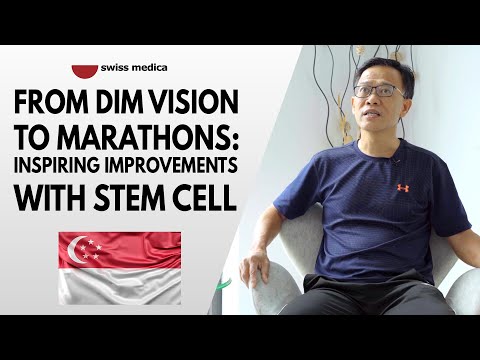
Note: Every patient has a different diagnosis, starting point, and treatment journey, so results may vary. You can hear how Swiss Medica patients describe their experiences in their own words on our YouTube channel.
Learn more about how stem cell therapy for eye diseases works, which conditions may be considered, and what results may be expected in our separate article.
Who May Be Reviewed for Glaucoma Stem Cell Treatment?
At Swiss Medica, we consider stem cell therapy individually and only alongside standard glaucoma treatment. It may be appropriate when:
- glaucoma has been confirmed by an ophthalmologist;
- the affected eye still has useful vision;
- intraocular pressure is being managed with prescribed eye drops or has been addressed surgically when indicated;
- OCT scans or visual field tests show optic nerve damage or disease progression;
- the patient’s general health allows treatment to be carried out safely.
Patients should continue their pressure-lowering treatment and regular follow-up with an ophthalmologist. If the available medical records are insufficient, we may request additional examinations before making a decision.
When Stem Cell Therapy May Not Be Appropriate
Treatment may need to be postponed or another option may need to take priority when:
- urgent laser treatment or surgery is required to control pressure;
- available records do not confirm glaucoma or show progression;
- no useful visual function remains to protect;
- an active infection or unstable medical condition increases risk;
- active cancer or a recent cancer diagnosis requires specialist guidance;
- the patient has angle-closure glaucoma; an acute attack is a medical emergency requiring immediate ophthalmic care;
- the main expectation is that lost vision will return.
Our priority is to determine whether treatment is medically appropriate without delaying established glaucoma care that may help preserve vision.
Glaucoma is not the only condition that can damage the optic nerve. Other forms of degeneration may have different causes and require their own approach to assessment and care. Learn more in our article on optic nerve degeneration and stem cell therapy.
What Happens During Treatment at Swiss Medica?
Swiss Medica operates a full hospital in Belgrade, Serbia, where patients can receive medical assessment, cell-based treatment, supportive care, and ongoing supervision in one place. The application process begins before the patient travels.
1. Online Consultation and Review of Eye Records
The process begins with a free online consultation. The patient discusses the diagnosis, previous treatment, current difficulties, and treatment goals with a medical advisor. Doctors may then ask to review:
- recent visual field tests;
- OCT scans with RNFL measurements;
- optic nerve photographs;
- IOP readings collected over time;
- the current list of glaucoma drops;
- records from selective laser trabeculoplasty or other laser procedures;
- reports from glaucoma surgery;
- information about other eye conditions;
- current medications and relevant medical diagnoses.
Dated serial tests are more useful than one isolated result because they show whether the disease is changing.
Get a free online consultation
Looking for a clear medical opinion on whether stem cell therapy may support you in your glaucoma care? We offer a free online consultation with a regenerative medicine doctor. The purpose is to review your records, explain realistic goals, and help you make an informed decision, with no pressure or obligation to proceed. Book the consultation here.

Medical Advisor, Swiss Medica doctor
2. Personalized Treatment Planning Based on Vision History
At Swiss Medica, each treatment program is based on established clinical protocols while being adapted to the patient’s individual condition. Doctors also select additional procedures according to the patient’s needs, medical history, and treatment goals. The plan takes into account:
- the type and source of the cell product;
- the addition of exosomes to enhance the therapy;
- the dose, number of administrations, and delivery route;
- supportive procedures;
- general health and contraindications.
The timing is especially important. Regenerative treatment should fit around the existing glaucoma plan and must not delay pressure-lowering treatment that the ophthalmologist considers urgent.
3. Medical Assessment After Arrival
After the patient arrives at Swiss Medica, doctors perform an in-person assessment. This allows us to compare the current condition with the information reviewed online and check whether anything has changed.
The assessment may include a physical examination, blood and urine tests, and other investigations required for the individual case. The preliminary plan can then be confirmed or adjusted.
4. Stem Cell Therapy and Supportive Care
At Swiss Medica, treatment includes a coordinated program of procedures rather than stem cell administration alone. We primarily use MSCs derived from umbilical cord and placental tissue.
Depending on the patient’s condition, the program may combine cell-based treatment with additional components, including:
- physiotherapy and, where indicated, supportive procedures such as intravenous laser blood irradiation (ILBI) and ozone therapy;
- exosomes and other stem-cell-derived products;
- peptide therapy;
- IMR—an individualized combination of vitamins and nutrients.
Each component is selected individually to support the overall treatment goals.
5. Follow-Up and Continued Ophthalmic Care
Patients are monitored throughout their stay, with medical staff available 24/7. Before discharge, our doctors provide personalized recommendations for continued care. Patients should also remain under the supervision of their ophthalmologist and follow their recommendations for ongoing glaucoma management.
What Changes Should Be Tracked After Treatment?
After discharge, patients continue regular follow-up with their ophthalmologist. Swiss Medica doctors remain in contact for three to six months and use the results of these examinations to track:
| What we monitor | What it shows |
| Intraocular pressure | Whether eye pressure remains within the target range set by the ophthalmologist |
| Visual field | Whether functional vision remains stable or continues to change |
| OCT and RNFL | Whether retinal nerve fibres remain stable or continue to thin |
| Optic nerve imaging | Whether there are structural changes in the optic nerve |
| Daily visual function | Whether the patient notices changes in reading, mobility, or everyday activities |
Six months after treatment, the patient may return to Swiss Medica for a free check-up, covering only the cost of travel tickets.
Safety, Side Effects, and Eye-Specific Considerations
MSC therapy has been studied across different medical conditions and has generally shown a favorable safety profile. A 2021 meta-analysis of 62 clinical trials found that MSC therapy had a generally favorable safety profile. The most consistently reported reaction was a temporary fever. However, safety depends on the cell product, preparation, dose, route of administration, and the patient’s health.
Possible Side Effects of Systemic MSC Administration
Short-term reactions are usually mild and temporary. They may appear shortly after treatment and generally pass within several hours under medical supervision. These may include:
- mild fever;
- headache or tiredness;
- muscle aches;
- nausea;
- redness, swelling, or discomfort at the administration site.
For more information about possible reactions, cell-quality checks, and medical monitoring, read our guide to stem cell therapy safety and side effects.
Cost of Stem Cell Therapy for Glaucoma
At Swiss Medica, the cost of stem cell therapy for glaucoma usually ranges from €7,700 to €45,000*. Doctors determine the final cost after assessing the diagnosis, remaining vision, treatment history, and available medical reports.
* Prices are indicative and based on 2026 estimates; they may vary depending on condition severity and required cell quantity.
Why a Personalized Estimate Is More Reliable Than a Price Range Alone
A general price range cannot show what a particular patient will actually need. The final stem cell therapy cost may depend on:
- the type and stage of glaucoma
- how quickly vision is changing
- previous medication, laser treatment, or surgery
- the amount of useful vision that remains
- additional medical conditions
- the required length of stay and level of support
After the medical review, the patient receives a detailed estimate showing what the program includes.
How Stem Cell Therapy Costs Compare Between Countries
Prices of stem cell treatments for glaucoma vary considerably between regions, but the figures are not always directly comparable. Some clinics quote only for the procedure, while accommodation, examinations, extended monitoring, meals, and follow-up may cost extra.
| Country / region | Approximate advertised price | What the price may cover |
| Mexico | $6,500–$12,000 per injection | Usually the procedure, initial evaluation, nursing care, and short-term follow-up. Accommodation, meals, and extended monitoring are commonly excluded. |
| Turkey | $15,000–$50,000 | Packages may include examinations, the procedure, transfers, and a short hospital stay. Accommodation and follow-up vary between providers. |
| Germany | $10,550–$70,000 | Medical and hospital fees may be included, while laboratory tests, hotel accommodation, meals, and travel are often separate. |
| United States | $10,000 to $35,000 per injection | Usually advertised as a self-pay procedure. Accommodation and extended support are generally separate. |
| United Kingdom | From $54,000 | There is no standard package price of stem cell therapy for glaucoma in the UK. Published estimates vary considerably, while diagnostics, accommodation, meals, and follow-up may be charged separately. |
| Serbia — Swiss Medica | €7,700–€45,000* | A private full-hospital experience with continuous doctor monitoring, on-site accommodation, tailored meals, and client support throughout the stay. |
* Prices are indicative and based on 2026 estimates; they may vary depending on condition severity and required cell quantity.
Why Patients Choose Swiss Medica for Glaucoma Treatment
Since 2011, more than 10,000 patients with complex health conditions have received care at Swiss Medica. They especially value our personalized treatment programs, continuous medical supervision, comfortable hospital environment, and support throughout their treatment journey.
Individual Medical Assessment Before Treatment
The online consultation allows patients to understand whether stem cell therapy for glaucoma may be appropriate and potentially beneficial in their case without leaving home. After the assessment, the patient receives a clear explanation of the medical decision, a personalized treatment plan, and a complete price with no hidden fees. The team also explains the next steps, from preparing medical documents to arranging the visit to Swiss Medica.
Patients often say they feel genuinely valued and receive the time and attention needed to discuss their concerns. This personal support helps reduce the stress and uncertainty of choosing a clinic abroad.
In-House Cell Processing and Quality Control
Patients feel confident in the quality of Swiss Medica cell products because each product undergoes thorough testing in our own GMP-certified laboratory in accordance with international standards. Specialists verify cell identity, sterility, viability, activity, dosage, storage conditions, and full traceability.
Because the entire process takes place on-site, patients also know there are no unnecessary delays or additional handling caused by transportation between external laboratories. The medical team maintains direct quality control at every stage.
Monitoring Based on the Patient’s Baseline
Patients appreciate knowing that their progress is assessed using objective results rather than impressions alone. Regenerative specialists assess changes by comparing new IOP measurements, OCT images, and visual field results with the patient’s initial findings. This gives patients a clearer understanding of what has changed, what remains stable, and what steps may be needed next.
Support for International Patients in Serbia
Traveling abroad can feel especially difficult when vision is limited. At Swiss Medica, patients are never left to manage the process alone. From the moment patients arrive until they leave the hospital, our team handles the practical details, allowing them to concentrate fully on treatment and recovery.
The program includes:
- help with airport transfers, translation, medical documents, and everyday questions;
- accommodation and tailored meals for the patient and one companion;
- accessible facilities for people with limited vision or mobility;
- comfortable rooms and spacious grounds for rest between procedures.
Everything is coordinated in one place, with our team available whenever the patient needs assistance.
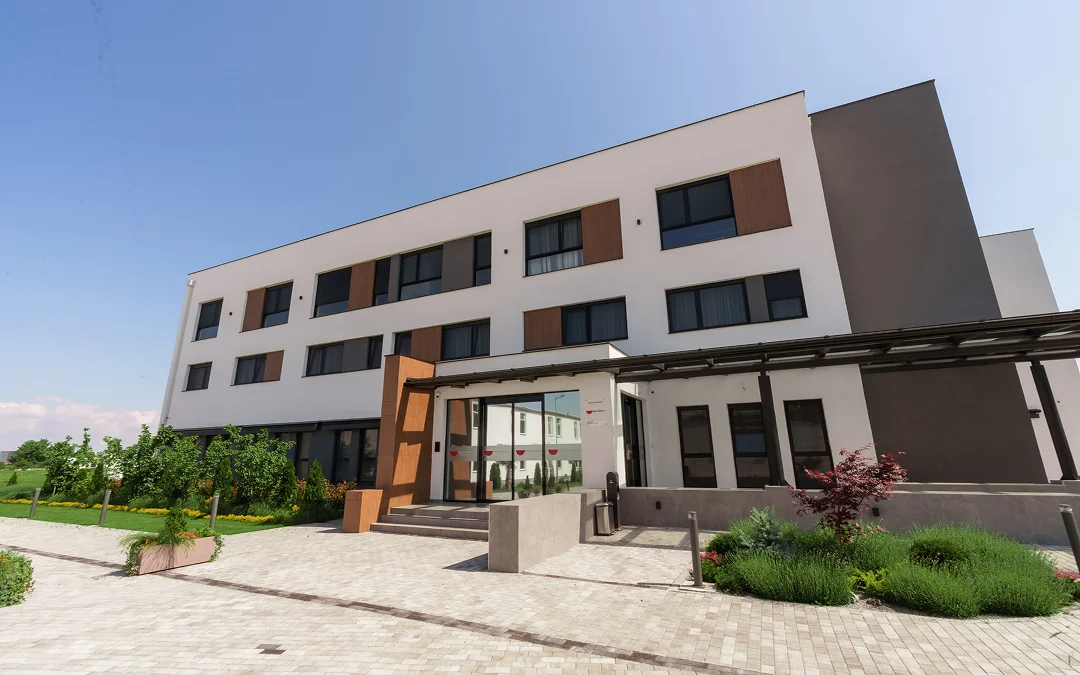
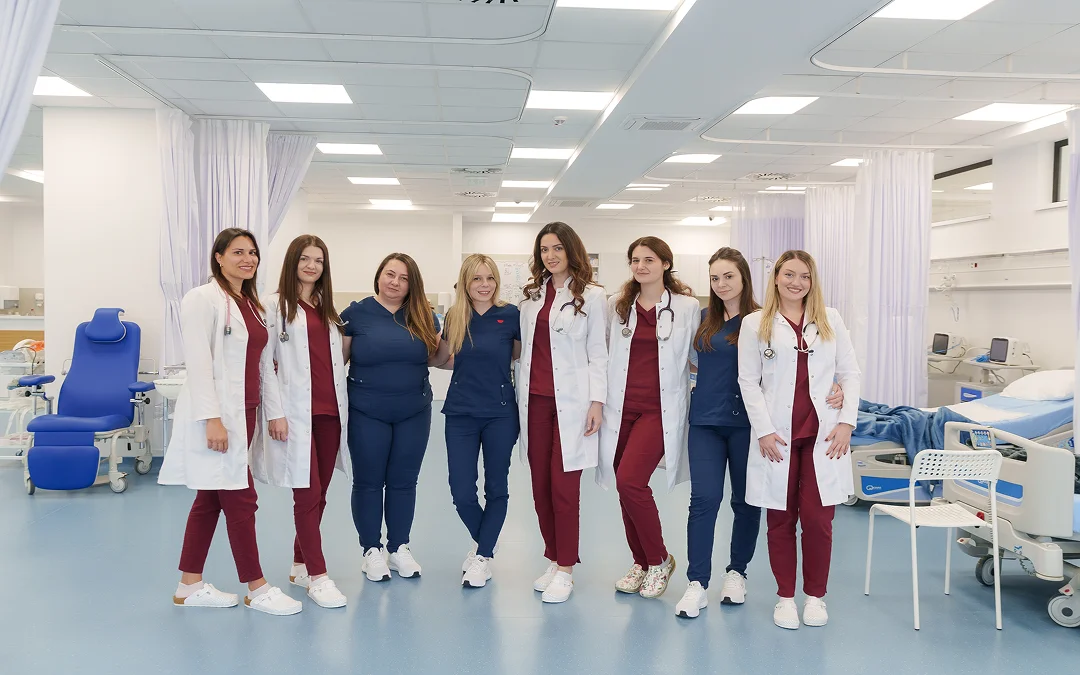
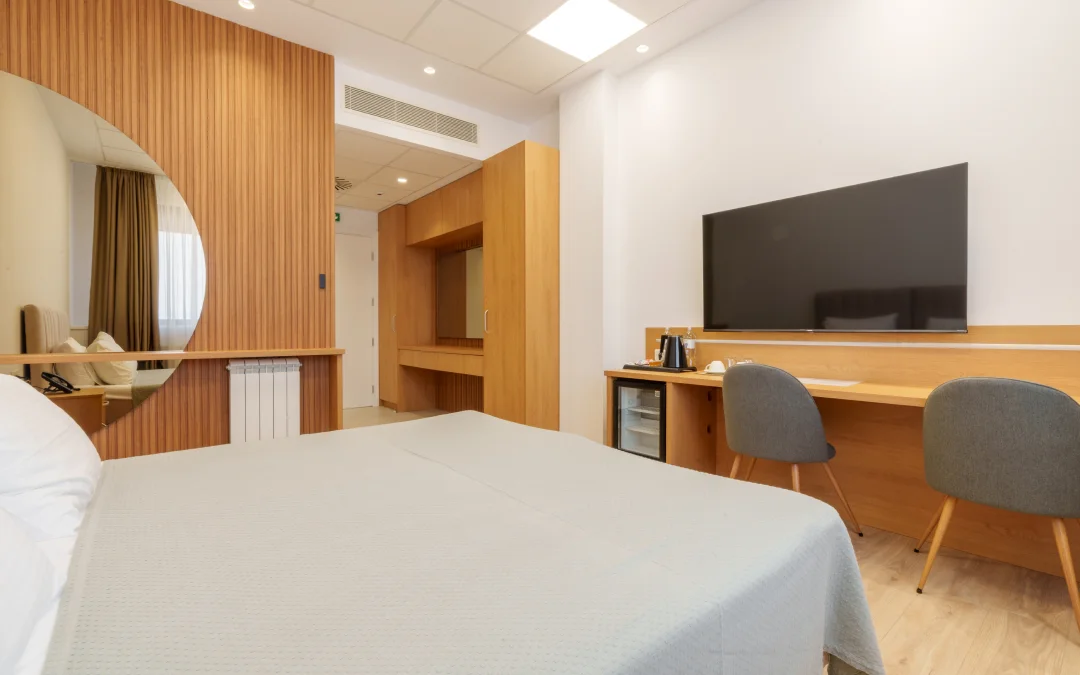
Read more about Swiss Medica, our history, the opening of our hospital, and the milestones we have reached along the way.
Discuss Glaucoma Treatment Options With a Medical Advisor
A free online consultation with a regenerative medicine specialist is a simple way to learn whether stem cell therapy for glaucoma may support your current treatment plan. The doctor will review your medical records, discuss realistic expectations, and explain the possible next steps.
There is no obligation to continue with treatment. You can take the time you need to consider the information while continuing the care prescribed by your ophthalmologist.
Contact us
Book a free online consultation to discuss your glaucoma case.
Medical Advisor, Swiss Medica doctor
FAQ
1. What is the latest news on a glaucoma cure with stem cells?
Research remains active, and some small human studies have reported encouraging changes or stabilization in selected measures of retinal function. However, the evidence is still limited, and larger clinical trials are needed before stem cells can be considered a proven cure or a reliable way to restore vision.
2. Can stem cells reverse glaucoma?
Patients often ask whether stem cell therapy can cure glaucoma. Current evidence says no. It cannot promise glaucoma reversal, guaranteed vision restoration, or freedom from drops, laser, or surgery.
3. Does stem cell therapy for glaucoma lower eye pressure?
Stem cell therapy is not a primary treatment for lowering IOP. Its potential supportive effects are best considered alongside standard glaucoma care, while prescribed eye drops, laser procedures, or surgery continue to control pressure and protect the optic nerve.
4. Can stem cells repair the optic nerve in glaucoma?
So far, there have been no confirmed cases of complete optic nerve restoration in people with glaucoma after stem cell therapy. Current treatment focuses on supporting the remaining nerve cells, which may help preserve functional vision and maintain reading, mobility, and everyday independence for longer.
5. Who may be reviewed for glaucoma stem cell treatment?
Doctors may review patients with confirmed glaucoma, remaining functional vision, and documented progression despite appropriate pressure-lowering treatment. Decisions also depend on OCT and visual-field findings, overall health, prior surgery, treatment goals, and contraindications.
6. What are the risks of stem cell therapy for glaucoma?
Most short-term reactions are mild and temporary, such as a slight fever, tiredness, headache, nausea, or discomfort at the administration site. The medical team at Swiss Medica monitors the patient throughout treatment and explains any additional risks related to the selected delivery method.
7. How much does stem cell treatment for glaucoma cost?
The price cannot be estimated responsibly without a medical review. It varies with the cell product, dose, administration route, supportive care, monitoring, and length of stay. Ask for a written estimate that distinguishes a single procedure from accommodation, physician supervision, meals, travel support, and follow-up.
8. What eye tests are needed before consultation?
Useful records include recent visual-field tests, OCT scans with RNFL measurements, optic nerve photographs, IOP readings over time, a list of glaucoma drops, and reports from laser treatment or surgery. Sending dated serial tests is more informative than one isolated result.
References:
Wu D, Liu Y, Zhang X, Zhang R, Wang S, Lu H, Yue T. Efficacy and safety of stem cells in the treatment of glaucoma: systematic review and meta-analysis based on animal experiments. Front Pharmacol. 2025;16:1587440. https://doi.org/10.3389/fphar.2025.1587440
Xia Q, Chang KC, Sun Y, et al. Retinal ganglion cells induce stem cell-derived neuroprotection via IL-12 to SCGF-beta crosstalk. Stem Cell Res Ther. 2025;16(1):90. https://doi.org/10.1186/s13287-025-04198-5
Liu F, Li Q, Yang Y, Lu F. Advances in Stem Cell Therapies for Ocular Diseases: Progress in Clinical Trials and Future Perspectives. Stem Cell Rev Rep. 2025;21(8):2386-2406. https://doi.org/10.1007/s12015-025-10949-x
Akkan F, Gorgun E. Sector-dependent device discordance of RNFL measurements: A prospective cross-sectional study of cross-platform variability and interchangeability in glaucoma monitoring. Medicine (Baltimore). 2026;105(28):e49704. https://doi.org/10.1097/MD.0000000000049704
Wang Y, Yi H, Song Y. The safety of MSC therapy over the past 15 years: a meta-analysis. Stem Cell Res Ther. 2021;12:545. https://doi.org/10.1186/s13287-021-02609-x
Vilela, C.A.P., Messias, A., Calado, R.T. et al. Retinal function after intravitreal injection of autologous bone marrow-derived mesenchymal stromal cells in advanced glaucoma. Doc Ophthalmol 143, 33–38 (2021). https://doi.org/10.1007/s10633-021-09817-z


MD, Pediatrician, Regenerative Medicine Specialist